A powered blade in a hand covered in slime is one of the few genuinely dangerous tools in fishing. Grip and trigger design matter more than blade length.
We earn a commission when you buy through our Amazon links, at no extra cost to you. It never changes the order of the picks, and we say so when the cheaper thing is the better buy. How this works.
An electric fillet knife turns a cooler of panfish from an hour of work into fifteen minutes, and that is a real argument. It also puts a reciprocating blade in a hand covered in fish slime, which is why grip design and trigger safety matter more here than in any other knife category on this site.
The three decisions: corded or cordless, which is really a question about where you clean fish. Blade length, which should match your species — 6 to 7 inches for panfish, 8 to 9 for walleye and bass, 10 or more for salmon and large saltwater fish. And power, because a knife that bogs down mid-fillet is worse than a sharp manual knife.
One note before the list: if you clean a dozen fish a year, a $20 manual fillet knife and a sharpener will serve you better than any of these. The electric knife is a volume tool.
Cordless lithium performance at a third of the premium price — the sensible choice for anyone who fillets a cooler at a time rather than a boat at a time.
A reciprocating blade in a wet hand is one of the few genuinely dangerous tools on this whole site. This one costs about what the Old Timer does, and the Old Timer documents a trigger lock and a named warranty. This listing documents neither.
#ad · Live prices from the Amazon Creators API, as of October 19, 2026. Where we have no verified live price we show none — a gap beats a number that has rotted.
In detail
The picks, in full
01
Best overall
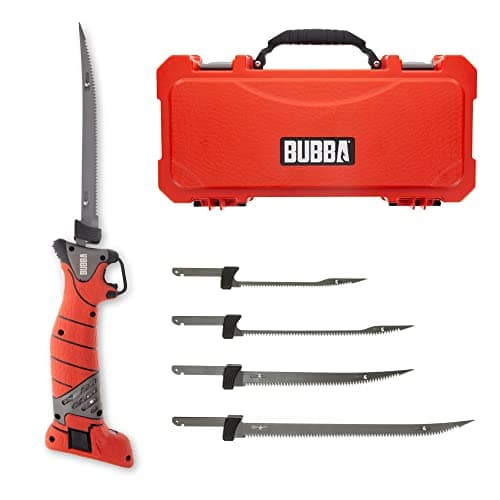
BUBBA Pro Series Lithium-Ion
Lithium-ion cordless4 Ti-nitride bladesNon-slip gripCharger and case
8.2/10
Four blade lengths, a non-slip grip designed for wet hands, and the torque to work through a cooler of fish without bogging down.
Cutting power
10
Grip when wet
9
Battery life
8
Blade quality
9
Value
5
What's good
+Four blade lengths cover panfish through to large saltwater species
+Titanium-nitride coating resists corrosion and reduces drag through flesh
+The grip is genuinely designed for slime-covered hands, which most are not
+Enough torque that it does not stall in a big fish
What's not
−By far the most expensive option here
−Heavy compared with a manual knife
−Battery is a consumable that eventually needs replacing
Skip it if…
…you fillet a few fish a year. A $20 manual fillet knife and a sharpener do that job perfectly.
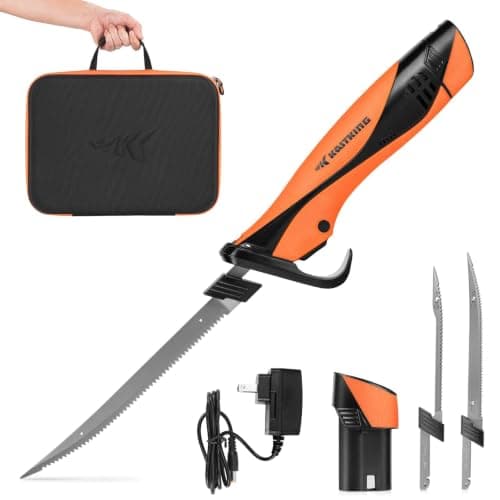
Cordless lithium performance at a third of the premium price — the sensible choice for anyone who fillets a cooler at a time rather than a boat at a time.
Cutting power
8
Grip when wet
7
Battery life
7
Blade quality
7
Value
9
What's good
+Genuinely cordless, so no generator or inverter at the cleaning station
+Multiple blade options included
+KastKing's warranty is responsive
What's not
−Less torque than the BUBBA on large fish
−Battery runtime is shorter
Skip it if…
…you clean fifty fish at a sitting. Battery runtime is the limit and a corded knife has none.
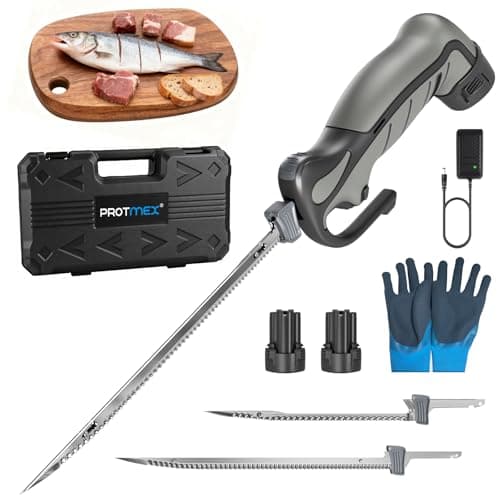
Protmex Cordless Electric Fillet Knife, 8in and 10in Blades
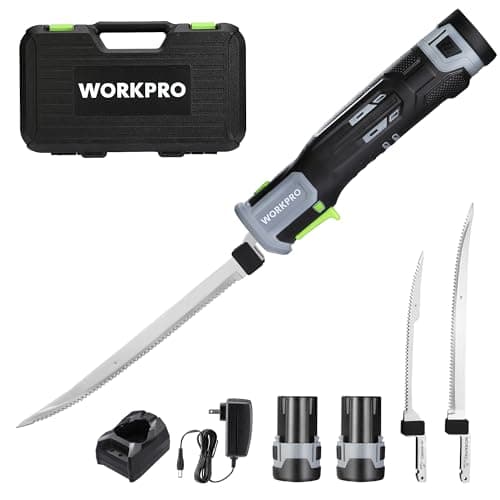
Cordless, 12V charger8" flexible and 10" stiff bladesTwo 2.0Ah batteries
5.4/10
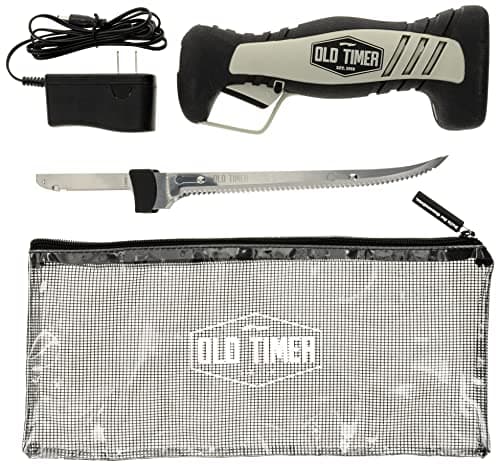
A reciprocating blade in a wet hand is one of the few genuinely dangerous tools on this whole site. This one costs about what the Old Timer does, and the Old Timer documents a trigger lock and a named warranty. This listing documents neither.
Cutting power
6
Grip when wet
5
Battery life
7
Blade quality
5
Value
4
What's good
+Two blade lengths, flexible and stiff, in the box
+Two batteries rated at up to an hour each, so one charges while you use the other
What's not
−The listing's safety lock is described as locking the battery in place — it does not document a trigger lock, which is the safety feature that matters on a powered blade
−No warranty terms are stated on the listing; the Old Timer names its limited warranty
−Priced at or above the Old Timer at the last check, so the saving that usually justifies a marketplace brand is not there
−The listing itself advises resting the tool to cool down after about twenty minutes of continuous use
Skip it if…
…you value your fingers. On a powered blade, buy from a listing that documents a trigger lock and a warranty, and this one documents neither.
Price as of October 19, 2026. Prices move — Amazon's is the one that counts.
#ad · we may earn a commission from this link to Protmex Cordless Electric Fillet Knife, 8in and 10in Blades
Using one safely and well
Grip is the safety feature
Your hands will be covered in slime, blood and water. A textured, contoured grip with a finger guard is not a comfort feature on a reciprocating knife — it is the thing that stops your hand sliding forward onto a moving blade. Judge this above blade count and battery life.
Let the knife do the work
Reciprocating blades cut by moving, not by pressure. Guide it along the backbone with light contact and let the blade travel. Forcing it makes the cut worse, stalls the motor and is how the blade jumps.
Blade length by species
Blade
Species
6–7 in
Crappie, perch, bluegill
7–8 in
Walleye, bass, trout
9–10 in
Salmon, pike, catfish
10 in+
Large saltwater species
Corded or cordless
Corded knives never run out and need mains power, which is fine at a cleaning station and impossible at a boat ramp. Cordless goes anywhere and is limited by battery. If you clean at a dock with power, corded is cheaper and more reliable.
Clean it immediately
Fish slime and blood are corrosive and get into the blade housing. Rinse the blades under running water the moment you finish, dry them, and never store them wet. Most electric fillet knives that fail, fail because of corrosion in the drive mechanism.
How these were picked
I haven't handled these. Here's what I did instead.
Everyone in this category says they tested twenty of these. I haven't tested any, and I say so. What I do instead: read the manufacturer's manual and published specification, compile the numbers that decide the purchase, do the arithmetic in the open, check the live price, and name one product to skip. The scores above are judgments from that research against a published rubric — they are not measurements I took, because I do not have a lab and I am not going to pretend otherwise.
Questions
Frequently asked
What size fillet knife blade do I need?+
Six to seven inches for panfish, seven to eight for walleye and bass, nine to ten for salmon and pike. Blades should be roughly as long as the fish is deep so you can make one continuous cut along the backbone.
Are electric fillet knives worth it?+
If you clean more than about a dozen fish at a time, yes — they turn an hour into fifteen minutes. If you clean a few fish a year, a manual fillet knife and a sharpener will do a better job for a fraction of the money.
Corded or cordless electric fillet knife?+
Corded if you clean at a station with power — cheaper, more powerful, never runs out. Cordless if you clean at the water or on a boat, where a cord is not an option.
How do I sharpen a fillet knife?+
Manual fillet knives are thin and flexible, so use light pressure and a shallow angle around 15 to 17 degrees per side. Electric fillet knife blades are generally replaced rather than sharpened — the serrations are not practical to restore.
We do not run a testing lab and we do not pretend to. Where a measured number came from a manufacturer's published specification or someone else's lab, we name them and link them. Where we could not verify something, we say so on the page rather than quietly leaving it out. Read the full method.