About
About Steve's Outpost
One person, six categories he is genuinely interested in, a garage and a range full of his own projects, and a rule against claiming anything he cannot back up.
Last updated
Who writes this
Stephen V. — An enthusiast who's genuinely into this gear. I read the manuals, compile the published specs, and do the math. No lab coat.
That framing is deliberate and it is worth being explicit about why. A lot of gear sites open with a paragraph about decades of experience and a wall of credentials. I am not going to do that, because it would not be true across six categories and because the version of it you usually read is not true either. What is true is that I am interested in this equipment, I read the manuals, and I do the arithmetic that the specification sheets imply but never spell out.
You will not find the words expert, veteran, seasoned or long-time attached to my name anywhere on this site. Nobody is credibly a long-time specialist in pocket knives and fishing reels and rooftop tents and rifle optics. Curiosity spans all six. Expertise does not, and pretending otherwise is exactly the thing a reader spots first.
There is one place where I do claim something more than curiosity, and it is at the bottom of this page rather than the top, because it is about networks and not about knives.
Why six categories
Because they are the six things I am actually interested in, and because they share a buyer. The person shopping for a hunting pack in September is frequently the same person who wants a cooler in June and a recovery strap in January. Almost no site in this space covers all six, which means nobody is writing the pages that connect them — what size cooler an elk quarter actually needs, why the sharpener you buy for a fillet knife is the wrong one for a hunting knife, whether your roof can carry the tent you are looking at.
- Knives & EDC — The gear that lives in your pocket every day, ranked on the three things that actually decide it: the steel, the lock, and how much you notice carrying it.
- Hunting — Boots, packs, glass and cameras, judged on the specifications that decide whether you stay out all day or turn back at noon.
- Camping — Tents, sleep systems, stoves and coolers, sorted by whether you are carrying them on your back or lifting them out of a truck bed.
- Fishing — Rods, reels, line and electronics, matched to the water you fish rather than the one in the catalog photo.
- Overlanding — Rooftop tents, recovery kit, air and 12-volt power, checked against your vehicle's actual ratings before anything gets recommended.
- Shooting Gear — Optics, cases, cleaning kit, slings, rests and hearing protection — the accessories, judged on their published numbers.
What I compete with
I shoot 3-gun and action-shooting matches, and four guns do that work. Each has its own page with the real parts list, the real numbers I paid and the reasoning behind each choice — and not one of those pages links or prices a firearm, because Amazon does not sell them and this site does not pretend otherwise.
- A 16in .223 Wylde SPR-style AR — Aero receiver set, Ballistic Advantage stainless midlength barrel, RISE LE145 trigger, Magpul PRS Lite and a Vortex Strike Eagle 1-8x. The 3-gun rifle with a precision habit.
- A suppressed 300 Blackout SBR — short, quiet, entirely FDE, and built around an adjustable bleed-off gas block, which is the part that actually makes a suppressed gun behave. Lawfully registered, and the page says exactly what that means.
- A cerakoted Rock Island TAC Ultra FS HC in 9mm — the budget double-stack 1911, refinished from black to tan and black, with Taylor Freelance basepads and magwell. The 2011 itch on a working budget.
- A Mossberg 940 Pro — the competition shotgun, whose whole argument is that the loading-port work is already done when it arrives.
The sport those four get used for is written up properly in the 3-Gun and tactical games cluster — divisions, what a match day actually looks like, and what it really costs to start.
What I shoot long range with
Competition guns are built around a clock. These two are built around a distance, and they are the opposite discipline with the same person behind them — slow, heavy, and set up to put one round somewhere very far away.
- A DPMS-pattern LR-308 — a 20in Criterion match barrel, an Odin Works KMod forend, a Magpul PRS, a LaRue MBT-2S and a Vortex Viper PST 6-24x50. The interesting part of that page is the scope mount: I bought a flat one, ran out of elevation trying to reach 1,000 yards, and replaced it with the 30 MOA version.
- A Remington 700 short action — a 26in Criterion Rem/Age prefit barrel you can change with a wrench instead of a gunsmith, a Grayboe A3 stock in tan with the black spiderweb, a 20 MOA EGW base and a Sightron SIII 8-32x56. That Sightron is the best pure glass I own and the brand almost nobody writes about.
Both of them have been out to the NRA Whittington Center in New Mexico across several trips, where there is a steel buffalo standing at 1,123 yards that you have to hit before they will sell you the t-shirt. I have connected on it. Finding anywhere near home to shoot at that distance is genuinely hard, which is the subject of an honest page about long-range access in Texas.
Every round through both of those rifles is one I loaded myself, on my own bench, and there is a page on why that matters at distance. It contains no load data and it never will — that belongs in a published manual, for your components, in your rifle.
What I carry, and how I got there
My everyday carry pistol is a Springfield Armory Hellcat RDP in the manual-safety configuration, and I carry it with the compensator taken off.
Both of those are deliberate and neither is the obvious choice, so there is a whole page on the reasoning. The short version is a sequence: I carried a Kel-Tec PF-9 for a long time on a frame-mounted belt clip, with no holster at all, and loved how it disappeared — and did not love shooting it. Then I decided I wanted to carry with a round chambered more of the time, which turned the uncovered trigger guard from a theoretical question into a real one, and made a thumb safety my own comfort threshold. So: a gun I actually want to shoot, carried in a holster, with a safety I can set. The comp comes off because it adds length to a gun bought to be small and because a holster cut for the bare pistol will not take it.
That page is my reasoning about my own gun and it says so repeatedly. Plenty of people I respect carry the exact opposite way and have good arguments for it.
The non-shooting end of everyday carry is a longer-standing interest, and it is where a fair amount of this site started. There are Microtechs in a drawer — which Amazon does not sell, and the page says so plainly rather than linking you a box of replacement screws — and a Ridge in my pocket, which Amazon does sell, at four different prices depending on the colorway. Both of those pages exist because I owned the thing first and got annoyed at the coverage second.
The truck
My rig is a 2014 Toyota 4Runner Trail Premium — fifth generation, and specifically the off-road trim, for KDSS, the locking rear differential and Crawl Control.
I have done four real projects to it: a rear storage system I built from scratch, a front bumper replacement with a winch behind it, added lighting, and the wiring for the LEDs and the extra switches — which is the part that took the longest and is invisible in every photograph. That page has my own pictures of all four, including the plywood stage nobody photographs.
One thing that page is careful about: it describes the hardware and mostly does not name the brands. The bumper is "the new front bumper". I have not written the part numbers down, and inventing them on a page about my own truck would be exactly the kind of thing this site exists not to do. They go in when I have them.
The gear that lives in the drawers is over in overlanding; the wiring theory behind project four is in The Garage, alongside a 1971 Mustang Mach 1, H-code, mostly finished.
And the desk
PC Builds is the same instinct with smaller fasteners. In May 2026 I built two nearly identical machines — mine and one for a friend, separated by a single line on the parts list — and that page has the real parts, what I paid, my own photographs and the first-boot screen where I had left the memory profile switched off.
The day job, and why it shows up in the tech pages
This is the one place on the site where I claim more than enthusiasm.
I have spent roughly fifteen years in enterprise networking and cloud infrastructure. I hold a CCNA, multiple Microsoft Azure certifications and the AWS Solutions Architect certification, and my hands-on work has been on Fortune 100 cloud deployments, specializing in the Microsoft stack.
I am not going to name an employer or a client, and there are no dates or locations here beyond that fifteen-year figure. What matters for a reader is the consequence: when this site gets opinionated about networking, storage, power or cabling, that is not a specification sheet talking. It is somebody who does this at datacenter scale for a living working out how much of it is worth applying at home — and, just as often, which enterprise habit is a waste of money in a house.
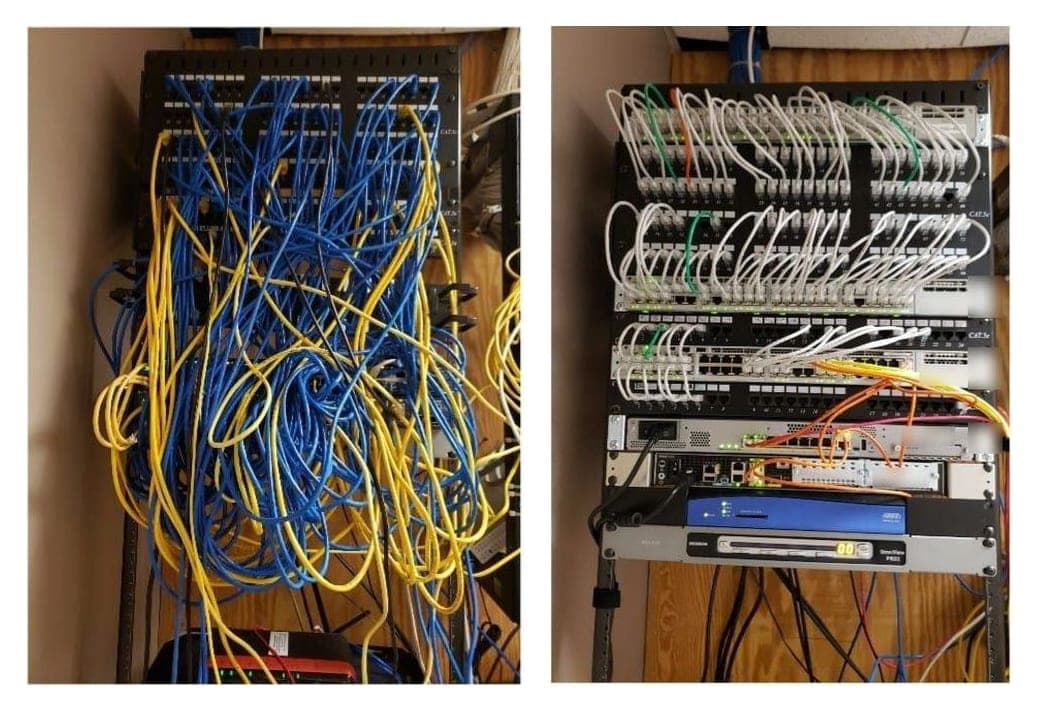
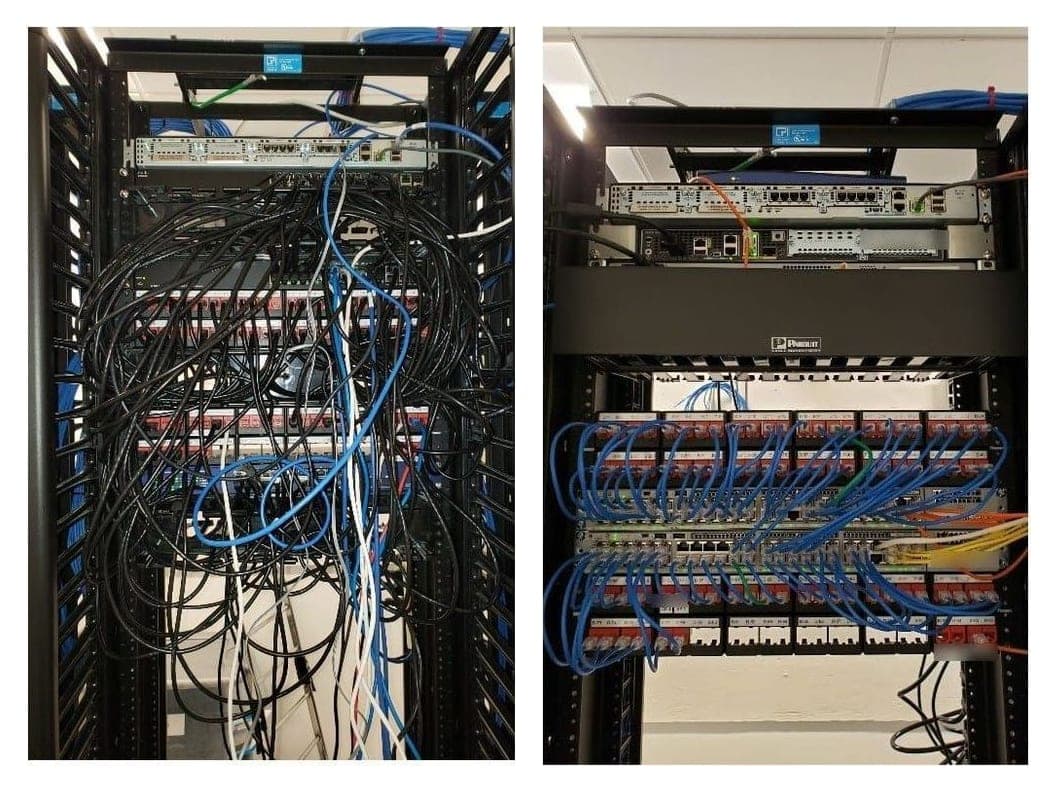
There is a thread through all of this, and it is the honest reason the site covers what it covers. The instinct that builds an AR from a parts list, wires a switch panel into a 4Runner, puts a CB750 back together and assembles two PCs in a weekend is the same instinct I get paid for at a much larger scale. This site is what that looks like pointed at gear.
And the things I actually own
Most of what is on this site is research. I read the manual, compile the published numbers and say plainly that I have not handled the product. But there are a great many places where that is not the whole story, and rather than hedge my way through them I mark them.
Gear I actually own carries an "I run this one" stamp on the product card, with a note saying exactly what I run. There is Vortex and Sightron glass on my rifles, Aero parts in them, Magpul furniture on them, a Staccato I shoot, a Ridge in my pocket and Microtechs in a drawer. On those I write in the first person, because pretending I have only read a spec sheet would be a lie.
What ownership does not buy you is numbers. I have no group sizes, no chronograph figures, no decibel readings and no round counts to publish, because I did not record any, and I am not going to invent them. Owning a thing and testing a thing are different, and this site never blurs the two.
What this site is not
It is not a test lab. Nothing here is a measured result — no group sizes, no chronograph figures, no drop tests, no comparative protocols. Where I own a piece of gear I say so and mark it; where I do not, I say that too, in the same eyeline as the picks. That distinction is the single most important thing to understand about the site, and the methodology page sets out exactly how it works.
It is not a storefront. Steve's Outpost does not sell anything, hold stock, or ship orders. Every buy link goes to Amazon. If you have a problem with an order, Amazon is who you need — I have no visibility into it at all.
It is not a firearms retailer. The shooting-gear section covers accessories only: optics, mounts, cases, cleaning kits, slings, hearing protection, rests, range bags and competition gear. There are no firearms, receivers, barrels, triggers, magazines or regulated parts linked or priced anywhere on this site and there will not be — including on the pages about my own guns, where the parts tables link the vendor I actually used and earn us nothing.
And it has no customer reviews. This brand is new. There are no testimonials, no star ratings and no "what our readers say" section, because there is nothing honest to put in one yet. If you see a gear site of similar age with a wall of glowing quotes, that tells you something about the site.
How it pays for itself
Affiliate commission from Amazon, and nothing else — no sponsored posts, no paid placement, no free samples accepted in exchange for coverage. The vendor links on my own build pages (Aero, Primary Arms, Ballistic Advantage, Rainier, OpticsPlanet, Wing Tactical, MidwayUSA, Magpul, Greg Cote, Taylor Freelance) are not affiliate links and we earn nothing from them; they are there because "where I actually bought it" is the useful part. The affiliate disclosure has the full terms, and the editorial policy covers independence and corrections.
Who publishes it
Steve's Outpost is published by Type 5 Marketing LLC. Editorial contact: info@stevesoutpost.com, or use the contact form. Corrections are welcome and get a dated note on the page rather than a silent edit.