Blade shape decides this, not steel. A knife that skins beautifully is a poor caping knife, and the wrong shape makes every cut harder than it needs to be.
We earn a commission when you buy through our Amazon links, at no extra cost to you. It never changes the order of the picks, and we say so when the cheaper thing is the better buy. How this works.
A hunting knife has three jobs and they want three different shapes. Opening the hide wants a gut hook or a very controlled point. Skinning wants a deep belly that makes long sweeping cuts. Caping and detail work wants a small, thin, precise blade. No single knife does all three well, which is why field dressing kits exist.
Steel matters less here than in everyday carry, because a hunting knife does its whole year's work in an afternoon. Corrosion resistance and grip when your hands are wet with blood matter far more than edge retention over months.
One structural point runs through the whole list: this is a fixed-blade job. A folding pivot packs with blood, hair and fat in a place you cannot clean in the field, and a folding lock with a slick grip is a genuine safety problem when your hand is inside an animal.
This page ranks knives on steel, grind and handle. What the job actually asks of a knife is a slightly different question, and the answer surprises people — the field dressing kit and sequence makes the case for a replaceable blade and lists the five other things you need alongside it.
A folding knife is the wrong tool for field dressing, and adding a gut hook to one does not fix that — the pivot packs with blood and hair and cannot be cleaned in the field.
#ad · Live prices from the Amazon Creators API, as of October 19, 2026. Where we have no verified live price we show none — a gap beats a number that has rotted.
In detail
The picks, in full
01
Best overall
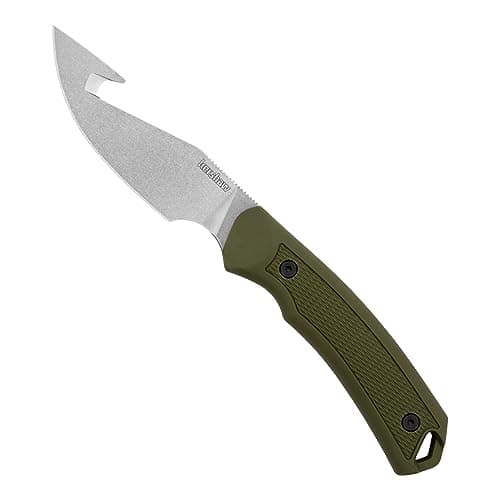
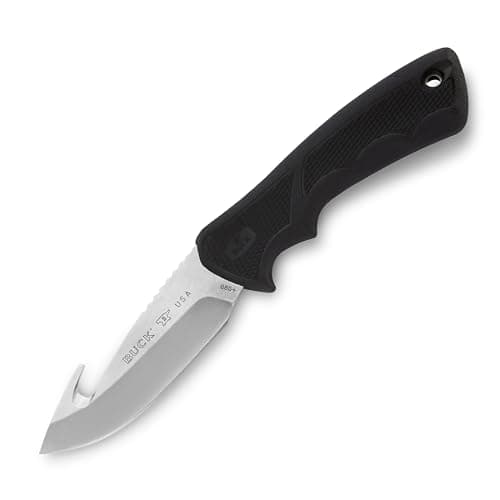
Buck Knives 685 BuckLite Max II
Gut hook4.7 ozFixed bladeBuck Forever Warranty
8.0/10
Four and a half ounces with a gut hook, from the company whose forever warranty is the oldest in the business.
Edge retention
7
Blade shape
9
Grip when wet
9
Sheath
7
Value
8
What's good
+Light enough that it does not get left behind, which is the failure mode for hunting knives
+Gut hook opens hide without puncturing the body cavity
+Buck's lifetime warranty is genuinely honored
+Grippy handle material works with wet hands
What's not
−Gut hooks are difficult to sharpen without a round file or a rod
−Not a general camp knife — the profile is specialized
Skip it if…
…you want one knife for camp and game. A gut hook makes a poor food-prep knife and a worse whittler.
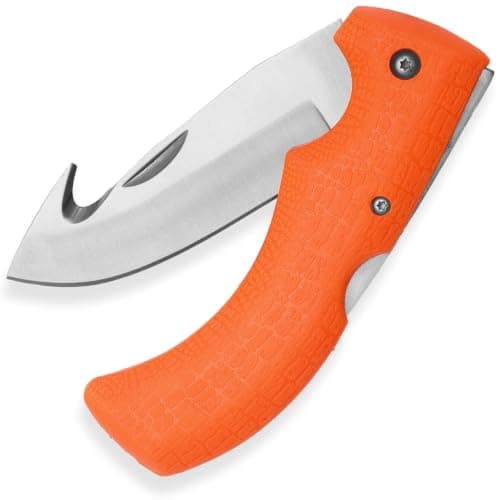
FoldingGut hookUnspecified stainlessSheath included
4.0/10
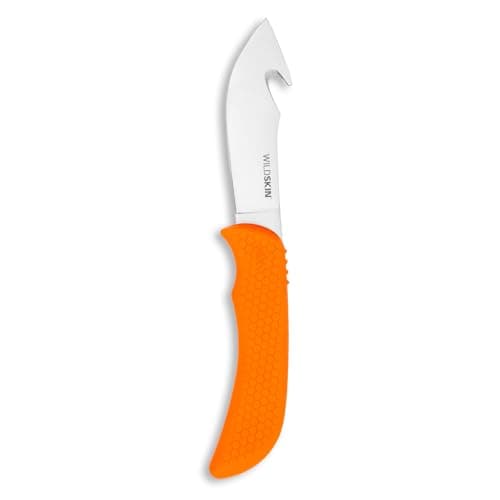
A folding knife is the wrong tool for field dressing, and adding a gut hook to one does not fix that — the pivot packs with blood and hair and cannot be cleaned in the field.
Edge retention
3
Blade shape
5
Grip when wet
4
Sheath
4
Value
4
What's good
+Compact
+Cheap
What's not
−A folding pivot traps blood, hair and fat where you cannot reach it, and it will not come clean without full disassembly
−Lock security while working inside an animal is a genuine safety issue with a wet grip
−No named steel
−Fixed blades at the same price are strictly better for this job
Skip it if…
…you are field dressing anything. The Outdoor Edge WildSkin costs about the same and is a fixed blade, which is what this job wants.
Drop point is the general-purpose choice — a strong tip you can control, enough belly to skin with. Gut hook opens hide without puncturing the body cavity, and is difficult to sharpen. Skinner has a pronounced belly for long sweeping cuts and is poor at anything fine. Caping blades are small and thin for work around the head and hide.
Blade length: three to four inches
Longer is not better here. A four-inch blade is plenty for deer, and a big blade makes it harder to control the tip near the paunch — which is the mistake nobody wants to make.
Grip is the safety feature
Your hands will be wet, cold and slick. Rubberized and textured grips hold; smooth wood and bare metal do not. A finger guard is worth having on a fixed blade for exactly this reason.
Replaceable blades are worth considering
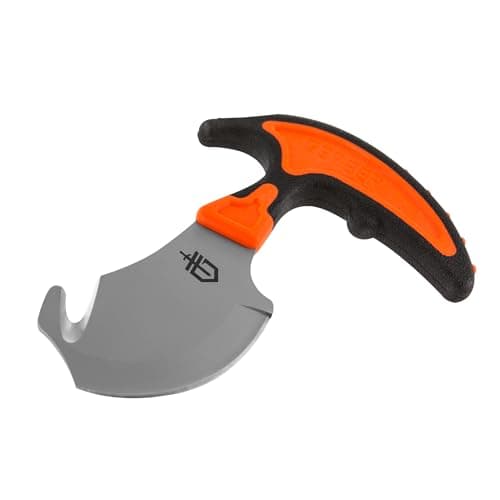
A scalpel-style knife with replaceable blades means you never work with a dull edge and never sharpen in the cold. The trade is that thin blades snap under lateral load — no prying at all — and used blades are a disposal problem in the field.
Sheath retention
Invert the sheathed knife and shake it once. If it moves, you will lose it. Nylon sheaths are the most common and the most likely to let a knife work loose while you walk.
How these were picked
I haven't handled these. Here's what I did instead.
Everyone in this category says they tested twenty of these. I haven't tested any, and I say so. What I do instead: read the manufacturer's manual and published specification, compile the numbers that decide the purchase, do the arithmetic in the open, check the live price, and name one product to skip. The scores above are judgments from that research against a published rubric — they are not measurements I took, because I do not have a lab and I am not going to pretend otherwise.
Questions
Frequently asked
Do I need a gut hook?+
It makes opening the hide faster and reduces the risk of puncturing the paunch, which is worth a lot. It is also awkward to sharpen without a round rod. Many experienced hunters skip it and use a controlled drop point instead — both are defensible.
What size blade for field dressing a deer?+
Three to four inches. It is enough for every cut on a whitetail and short enough to keep the tip under control near the body cavity. Larger blades make the delicate part harder.
Fixed blade or folding for hunting?+
Fixed. A folding pivot traps blood, hair and fat where you cannot clean it in the field, and a lock with a slick wet grip is a safety problem while working inside an animal.
How do I clean a hunting knife properly?+
Warm soapy water, a brush along the edge and into the guard, then dry completely and oil the blade. Blood is mildly corrosive and will pit a carbon or semi-stainless blade left wet overnight. Never put a knife away in a damp leather sheath.
We do not run a testing lab and we do not pretend to. Where a measured number came from a manufacturer's published specification or someone else's lab, we name them and link them. Where we could not verify something, we say so on the page rather than quietly leaving it out. Read the full method.