We earn a commission when you buy through our Amazon links, at no extra cost to you. It never changes the order of the picks, and we say so when the cheaper thing is the better buy. How this works.
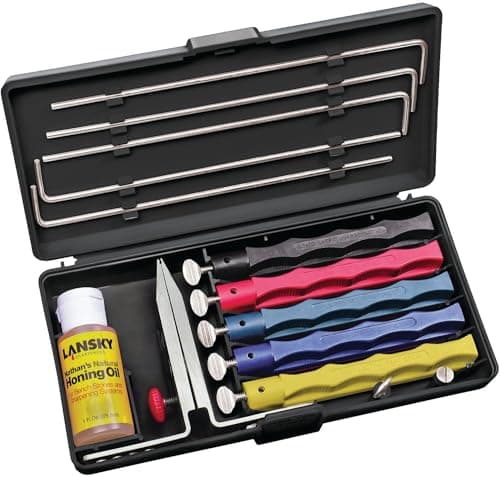
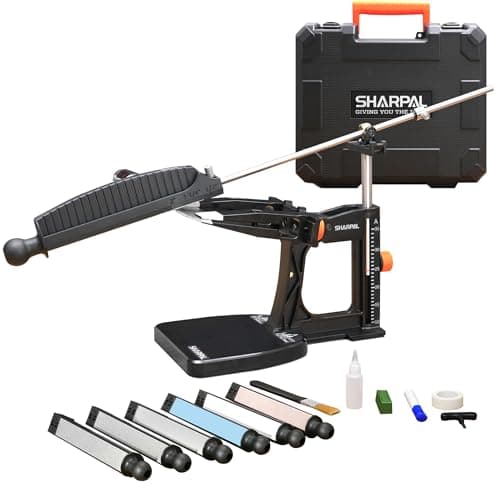
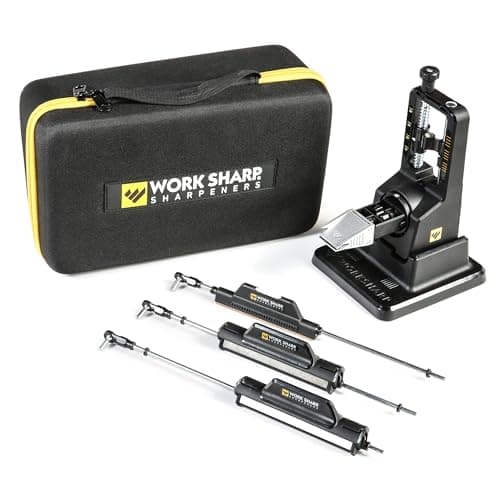
Sharpening is one skill with one hard part: holding a consistent angle for every stroke. Everything else — grit progression, stropping, burr detection — is straightforward once the angle is repeatable. The entire market splits on that single point. Guided systems hold the angle mechanically. Whetstones make you hold it yourself.
Which one you should buy depends on how much you want to learn, not on how much you want to spend. A guided system produces a good edge on your first attempt and a good edge on your hundredth. A whetstone produces a poor edge on your first attempt and, after some practice, a better edge than the guided system — faster, and on any blade shape.
If you own two pocket knives and a kitchen set, buy a guided system. If you enjoy the process, buy stones. If you buy a pull-through carbide sharpener, understand what it does: it scrapes metal away rather than abrading it, leaves a ragged edge, and removes far more steel than any other method. It is a field expedient, not a sharpening plan.
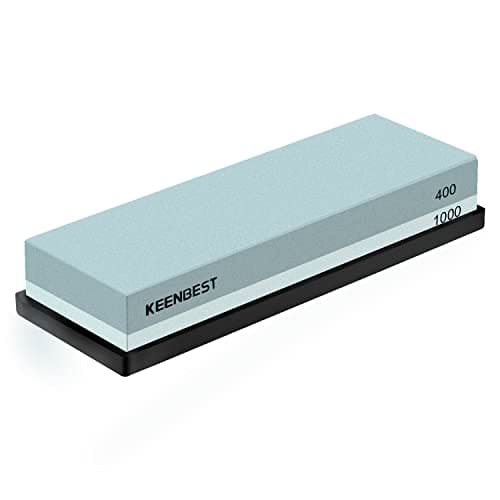
A 400/1000 combination is a repair stone, not a maintenance stone — it will leave every knife you own with a coarse working edge and no way to refine it.
#ad · Live prices from the Amazon Creators API, as of October 19, 2026. Where we have no verified live price we show none — a gap beats a number that has rotted.
A 400/1000 combination is a repair stone, not a maintenance stone — it will leave every knife you own with a coarse working edge and no way to refine it.
Edge consistency
5
Speed
5
Versatility
4
Learning curve
4
Value
5
What's good
+Very cheap
+400 grit does reprofile a badly damaged edge
What's not
−1000 grit is where sharpening starts, not where it finishes — there is no finishing grit here at all
−You will need to buy a 3000 or 6000 stone anyway, at which point the Sharp Pebble was cheaper overall
−Soft binder dishes quickly under use
Skip it if…
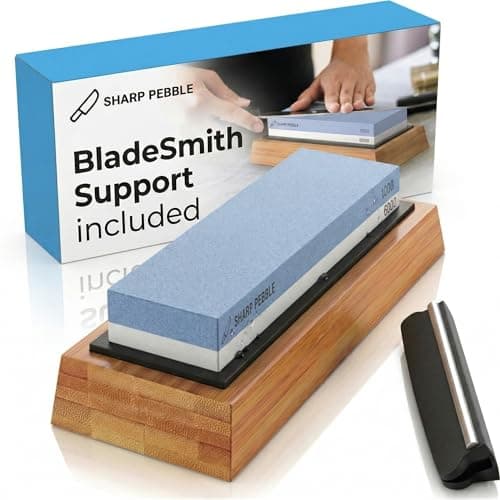
…this is your only sharpening purchase. For a little more the Sharp Pebble 1000/6000 gives you a complete progression instead of half of one.
Coarse grits, roughly 200 to 400, reset a damaged or badly rounded edge and remove a lot of steel. Medium, around 1000, is where sharpening actually happens for a normally dull knife. Fine, 3000 to 6000, refines and polishes. A 1000/6000 combination stone covers everything except genuine damage, which is why it is the standard first purchase.
A 400/1000 set, by contrast, gives you two coarse stages and no finishing stage. It is sold as a beginner set and is the wrong beginner set.
Angle: 20 degrees per side is the safe default
Most Western pocket and kitchen knives are ground somewhere between 17 and 22 degrees per side. Twenty is a safe default that will not require reprofiling. Lower angles slice better and chip more easily; higher angles are more durable and cut less keenly. Match the factory angle unless you have a reason not to, because changing it means grinding away a lot of steel.
Feel for the burr
The burr is the thin wire of steel that folds over to the opposite side of the edge when you have ground far enough. Raising it along the entire length of the blade, then repeating on the other side, then removing it with light alternating strokes, is the whole of sharpening. Everything else is refinement. If you never raise a burr, you are polishing a dull edge.
A strop extends everything
Thirty seconds on a leather strop with compound realigns a rolled edge and will roughly double the interval between real sharpenings. It is the cheapest performance upgrade in this entire category.
How these were picked
I haven't handled these. Here's what I did instead.
Everyone in this category says they tested twenty of these. I haven't tested any, and I say so. What I do instead: read the manufacturer's manual and published specification, compile the numbers that decide the purchase, do the arithmetic in the open, check the live price, and name one product to skip. The scores above are judgments from that research against a published rubric — they are not measurements I took, because I do not have a lab and I am not going to pretend otherwise.
Questions
Frequently asked
What angle should I sharpen a pocket knife to?+
Twenty degrees per side is the safe default for a Western folder and matches most factory grinds. Going lower gives a keener edge that chips more readily in hard use; going higher is more durable and less sharp. Match what the manufacturer ground unless you have a specific reason.
Are pull-through sharpeners bad for knives?+
The carbide ones scrape steel away rather than abrading it, which leaves a coarse, ragged edge and removes a great deal more metal than a stone. They work as a field expedient. Used as a maintenance routine they will noticeably shorten the life of a blade.
Do I need diamond stones for D2 and S30V?+
Strongly recommended. Both steels contain hard carbides that ordinary aluminum oxide stones struggle to cut, so sharpening takes far longer and the result is worse. Diamond or CBN abrasives cut them properly.
How do I know when a knife is sharp?+
It should slice cleanly through a sheet of paper held loosely by one corner, without catching or tearing. That is a repeatable, honest test that costs nothing. Shaving arm hair is a sharper standard and an unnecessary one for a working knife.
We do not run a testing lab and we do not pretend to. Where a measured number came from a manufacturer's published specification or someone else's lab, we name them and link them. Where we could not verify something, we say so on the page rather than quietly leaving it out. Read the full method.