We earn a commission when you buy through our Amazon links, at no extra cost to you. It never changes the order of the picks, and we say so when the cheaper thing is the better buy. How this works.
Three specifications decide a fishing kayak and only one of them is on the front of the listing.
Length determines tracking — how well the boat holds a straight line. Under ten feet, a kayak weathercocks in wind and gets pushed around by current, and you spend the day correcting instead of fishing. Ten to twelve feet is the practical sweet spot for fishing water.
Width determines stability. Thirty inches and up is stable enough that most people can stand and cast; narrower is faster and tippier. For fishing, stability wins, because the boat is a platform first and a vehicle second.
The seat determines whether you are still out there at hour four, and it is the specification that separates a fishing kayak from a recreational kayak with rod holders drilled into it. An elevated frame seat that lifts you above the deck is a genuinely different experience from a molded foam pad.
A fold-away lawn-chair seat, four rod holders and integrated tackle trays — the boat that is actually outfitted rather than merely marketed as an angler model.
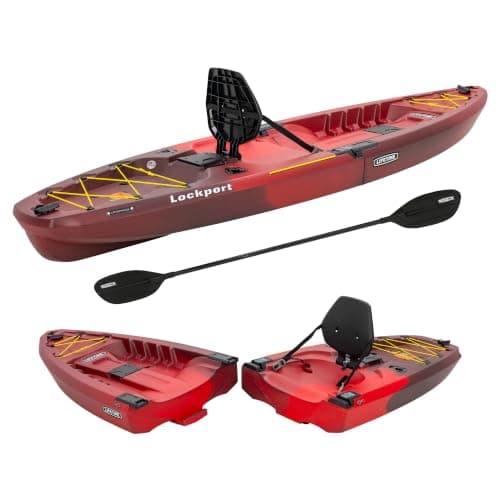
A two-piece hull solves a transport problem by introducing a seam into the one component whose entire job is not letting water in — and at 9 feet 4 inches it also has the tracking problem that short boats have.
#ad · Live prices from the Amazon Creators API, as of October 19, 2026. Where we have no verified live price we show none — a gap beats a number that has rotted.
In detail
The picks, in full
01
Best overall
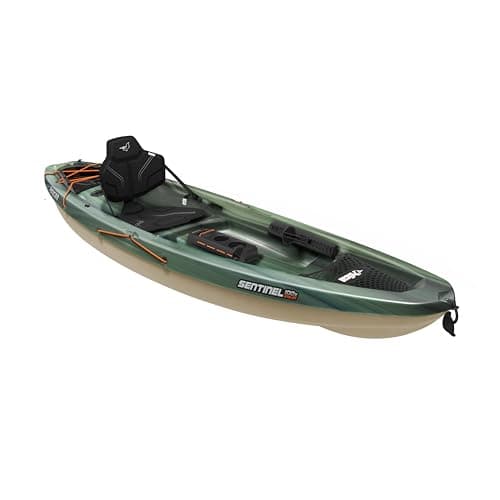
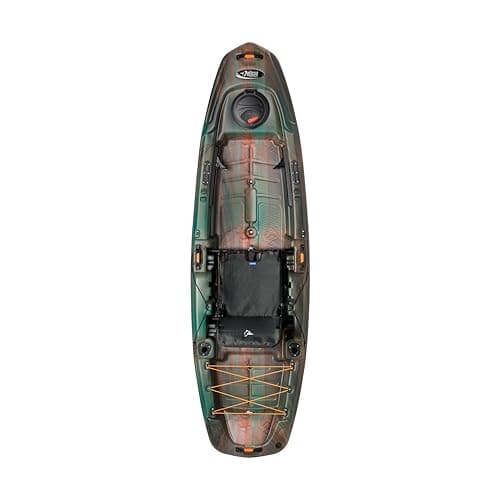
Pelican Catch Classic 100
10 ft lengthSit-on-topErgocast dual-position seatAngler outfitting
8.0/10
Ten feet, a genuinely adjustable seat and a hull shaped for standing — the fishing kayak that gets the fundamentals right.
Stability
9
Tracking
7
Seat comfort
8
Fishing features
8
Value
8
What's good
+Ten feet is the length where tracking becomes tolerable in wind and current
+The dual-position seat genuinely raises you for casting and lowers you for paddling
+Stable enough that standing is realistic for most people
+Pelican's rotomolded hulls are hard to damage
What's not
−Heavy to car-top alone
−Ten feet is still short for open water
−Fewer rod holders than dedicated angler models
Skip it if…
…you fish big open water. Ten feet in a chop is a wet, slow trip regardless of hull design.
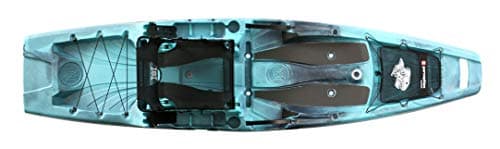
11.5 ftLawn chair seat4 rod holdersIntegrated tackle trays
8.6/10
A fold-away lawn-chair seat, four rod holders and integrated tackle trays — the boat that is actually outfitted rather than merely marketed as an angler model.
Stability
9
Tracking
8
Seat comfort
10
Fishing features
10
Value
6
What's good
+The elevated fold-away seat is the single biggest comfort upgrade available in a kayak
+Genuinely complete angler outfitting rather than two flush mounts
+Perception hulls track and paddle well for the length
What's not
−Most expensive boat here
−Heavy — car-topping alone is a real effort
Skip it if…
…you load and unload alone regularly. Weight is the thing that determines how often a kayak actually gets used.
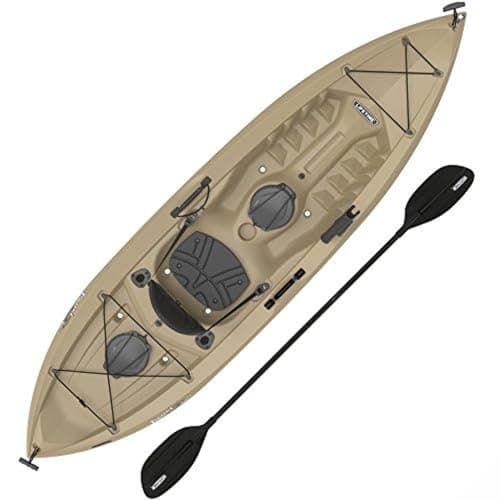
9'4" assembledTwo-piece modularSlideLock systemPaddle included
5.6/10
A two-piece hull solves a transport problem by introducing a seam into the one component whose entire job is not letting water in — and at 9 feet 4 inches it also has the tracking problem that short boats have.
Stability
6
Tracking
4
Seat comfort
6
Fishing features
6
Value
6
What's good
+Genuinely solves the storage and transport problem for apartment dwellers
+Paddle and rod holders included
+Lifetime's hull material is durable
What's not
−A joined hull adds a seam and locking hardware to the part of a kayak that must not leak, and hardware in salt or grit is what eventually fails
−9 feet 4 inches tracks poorly in wind and current, which is where fishing kayaks spend their time
−The joint adds weight without adding capability on the water
−If transport is the constraint, an inflatable solves it more completely
Skip it if…
…you have any way to transport a one-piece hull. Buy the length and the solid hull; the storage problem has cheaper solutions than a seam.
Sit-on-top hulls are self-bailing, easy to re-enter from the water and give you room to move and stand. Sit-inside kayaks are warmer and drier and much harder to get back into if you go over. For fishing, sit-on-top is the answer in nearly every case.
Weight is the specification that decides use
A kayak you cannot load alone is a kayak that gets used when someone else is free. Under 60 pounds is manageable solo for most people; over 80 is a two-person job or a trailer. This matters more than almost any on-water characteristic, because it governs how often the boat gets wet at all.
Check the capacity honestly
Rated capacity includes you, your gear, your cooler and your water. Loading a kayak past about 70 percent of its rating makes it sit low, handle badly and take water over the scuppers. Add up what you actually bring.
Scupper plugs
Sit-on-tops have drain holes through the hull. Plugged, you stay drier in calm water. Unplugged, the boat self-bails in chop. Carry the plugs and decide per trip rather than leaving them in permanently.
Buy safety gear at the same time
A PFD you will actually wear, a whistle, a leash for the paddle and a leash for the rod. Rod leashes in particular are the difference between dropping a rod and losing one, and they cost a few dollars.
How these were picked
I haven't handled these. Here's what I did instead.
Everyone in this category says they tested twenty of these. I haven't tested any, and I say so. What I do instead: read the manufacturer's manual and published specification, compile the numbers that decide the purchase, do the arithmetic in the open, check the live price, and name one product to skip. The scores above are judgments from that research against a published rubric — they are not measurements I took, because I do not have a lab and I am not going to pretend otherwise.
Questions
Frequently asked
How long should a fishing kayak be?+
Ten to twelve feet for most fishing. Under ten feet tracks poorly in wind and current, and you spend the day correcting. Over twelve is faster and harder to turn in tight water and harder to transport.
Can you stand up in a fishing kayak?+
In a hull thirty-two inches wide or more with a flat standing platform, most people can. Narrower recreational hulls are not designed for it. Practice in shallow water before you try it somewhere it matters.
Sit-on-top or sit-inside for fishing?+
Sit-on-top, in nearly every case. It self-bails, it is far easier to re-enter from the water, and it gives you the room to move that fishing requires. Sit-inside is warmer and drier, which matters for cold-water paddling rather than fishing.
How much weight can a fishing kayak hold?+
Typically 300 to 500 pounds including you and everything you bring. Stay under about 70 percent of the rating for good handling — a kayak loaded to its limit sits low, handles badly and takes water over the scuppers.
We do not run a testing lab and we do not pretend to. Where a measured number came from a manufacturer's published specification or someone else's lab, we name them and link them. Where we could not verify something, we say so on the page rather than quietly leaving it out. Read the full method.