We earn a commission when you buy through our Amazon links, at no extra cost to you. It never changes the order of the picks, and we say so when the cheaper thing is the better buy. How this works.
Recovery boards are the highest-value item in vehicle recovery. They need no second vehicle, no anchor point, no winch, no electrical system and no training beyond "do not spin the tires." A hundred dollars of plastic gets more people unstuck than any other piece of gear.
The specification that matters and that budget listings routinely omit is material. Reinforced nylon tolerates the heat a spinning tire generates against the lugs. Cheap polypropylene softens, the lugs deform, and the board either stops working or gets ejected backwards at speed.
Which is the second thing worth knowing: the technique is more important than the board. Clear the sand from ahead of the tire, wedge the board firmly under the tread, and pull away gently in the highest gear that will move the vehicle. Spinning tires melt boards and dig you in deeper. Almost every destroyed board was destroyed by a heavy right foot.
Boards are one item in a recovery kit rather than a kit on their own. Our recovery kit roundup covers the straps, shackles and dampener that go with them, an air compressor is the tool that prevents more recoveries than any board resolves, and the overlanding checklist is the list to build the vehicle against.
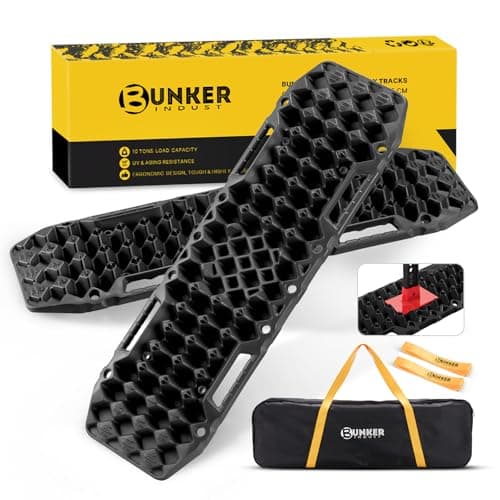
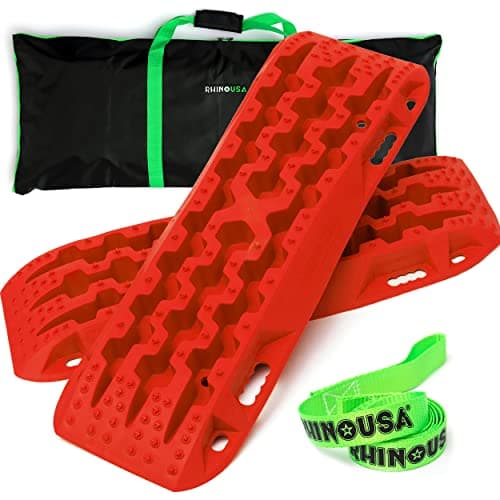
No stated material, no load rating and no manufacturer, on a product whose failure mode is a piece of plastic ejected at speed from under a spinning tire.
#ad · Live prices from the Amazon Creators API, as of October 19, 2026. Where we have no verified live price we show none — a gap beats a number that has rotted.
No stated material, no load rating and no manufacturer, on a product whose failure mode is a piece of plastic ejected at speed from under a spinning tire.
Material strength
4
Grip
6
Durability
4
Mounting options
6
Value
5
What's good
+Cheapest boards here
+Includes a jack base
What's not
−Board material matters enormously — reinforced nylon tolerates the heat from a spinning tire, cheap polypropylene melts and deforms — and this listing does not say which it is
−A board that fails under a loaded, spinning tire becomes a projectile, which is the entire reason to buy a known brand
−No load rating and no manufacturer to hold accountable
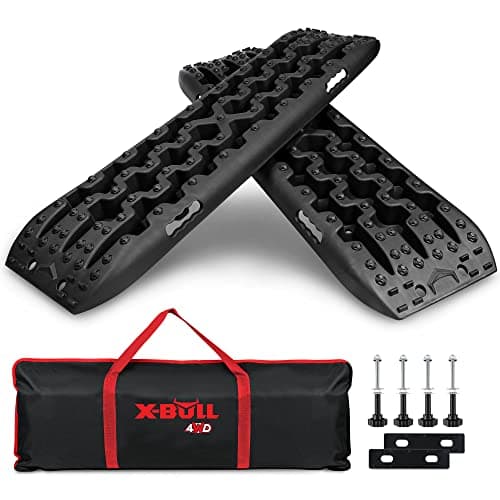
−The X-BULL boards cost twenty dollars more and have a decade of documented use
Skip it if…
…you will use them. This is a safety item and the twenty-dollar saving is not worth the unknown.
Before you reach for a board, drop your tire pressure. Going from 35 PSI to 18 or 20 in sand roughly doubles the contact patch and is frequently enough on its own. Boards are what you use when airing down was not enough — which means you need a compressor to air back up, and the two purchases go together.
Dig, then place
Clear sand or mud from directly in front of the drive tires and taper a ramp toward the board. Wedge the board hard under the tread so it cannot slide away. A board sitting loosely in front of a tire gets fired out backwards the moment the tire touches it.
Gentle throttle, highest gear that moves
Traction, not speed. Spinning the tires generates the heat that melts lugs and digs the vehicle deeper. Drive off the boards steadily and keep going to firm ground — stopping on the boards means starting the process again.
Never stand behind the vehicle
A board that ejects travels fast and low. Everybody stands to the side, well clear, and nobody is behind a wheel that is about to be driven.
Retrieve them
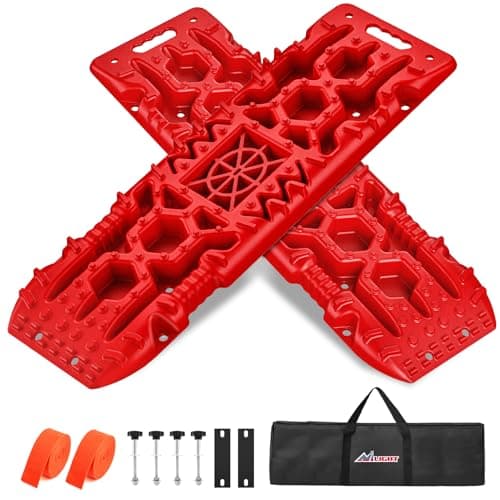
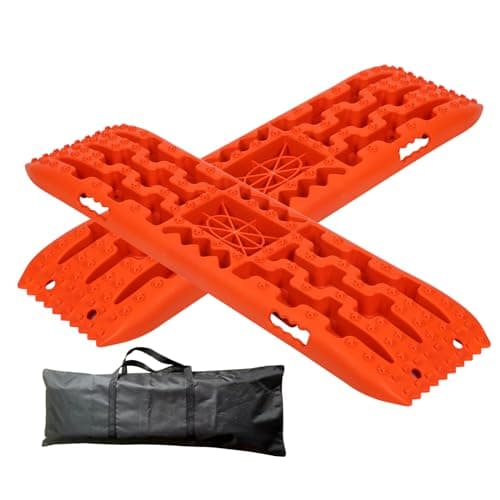
Boards get buried and forgotten constantly. Bright colors help. A leash tied to the board and staked or held by a spotter helps more, and is why most premium boards have leash holes.
How these were picked
I haven't handled these. Here's what I did instead.
Everyone in this category says they tested twenty of these. I haven't tested any, and I say so. What I do instead: read the manufacturer's manual and published specification, compile the numbers that decide the purchase, do the arithmetic in the open, check the live price, and name one product to skip. The scores above are judgments from that research against a published rubric — they are not measurements I took, because I do not have a lab and I am not going to pretend otherwise.
Questions
Frequently asked
Do recovery boards actually work?+
Very well in sand, snow and shallow mud, which is the majority of stuck situations. They are close to useless in deep mud where the vehicle is resting on its frame — that is a winch or a snatch strap problem.
What are recovery boards made of?+
The good ones are reinforced nylon, which tolerates the heat a spinning tire generates. Cheaper boards use polypropylene, which softens and deforms. A listing that does not name the material is telling you which one it is.
How many recovery boards do I need?+
Two is the standard and covers most situations — one under each drive wheel. Four is genuinely better if you travel alone in soft sand, because you can leapfrog them and keep moving without stopping to retrieve.
Why do recovery board lugs break?+
Spinning tires. The lugs are designed to grip a rotating tire, not to survive one spinning at speed against them — that generates enough heat to soften the plastic. Gentle throttle in the highest gear that moves is what preserves them.
We do not run a testing lab and we do not pretend to. Where a measured number came from a manufacturer's published specification or someone else's lab, we name them and link them. Where we could not verify something, we say so on the page rather than quietly leaving it out. Read the full method.