We earn a commission when you buy through our Amazon links, at no extra cost to you. It never changes the order of the picks, and we say so when the cheaper thing is the better buy. How this works.
The traditional bifold is the least examined object most men carry. It goes in a back pocket, it slowly expands with receipts and cards nobody has used since 2019, and it makes sitting mildly uncomfortable in a way people simply stop noticing.
Switching to a slim wallet fixes that, but only if you do the other half of the job. The wallet does not make your cards fewer. You do. A minimalist wallet stuffed to capacity is a worse object than the bifold it replaced — thicker for its footprint, harder to access, and usually with nowhere sensible for cash.
So the buying sequence is: count the cards you have used in the last month, buy for that number plus one, and put the rest in a drawer. Then the material and the mechanism are the only decisions left.
#ad · Live prices from the Amazon Creators API, as of October 19, 2026. Where we have no verified live price we show none — a gap beats a number that has rotted.
In detail
The picks, in full
01
Best overall
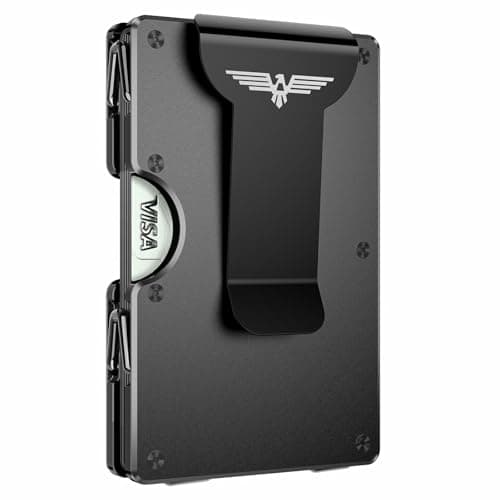
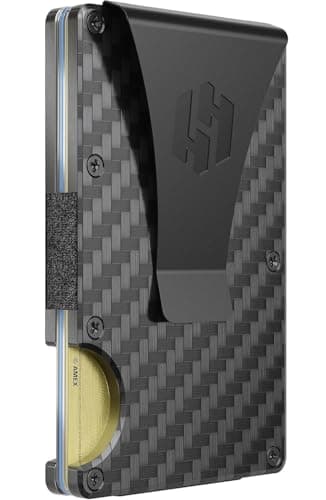
Hayvenhurst Metal Wallet
Metal bodyMoney clipRFID blockingFront pocket size
8.0/10
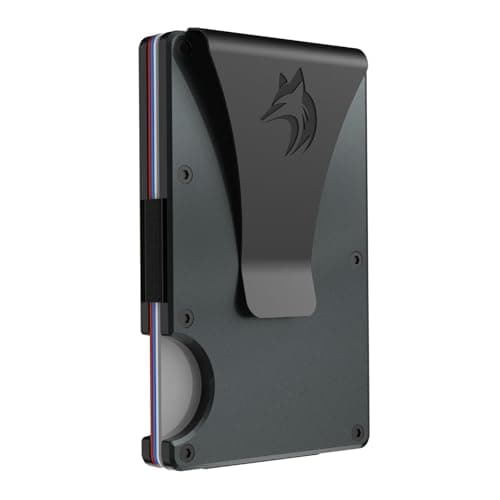
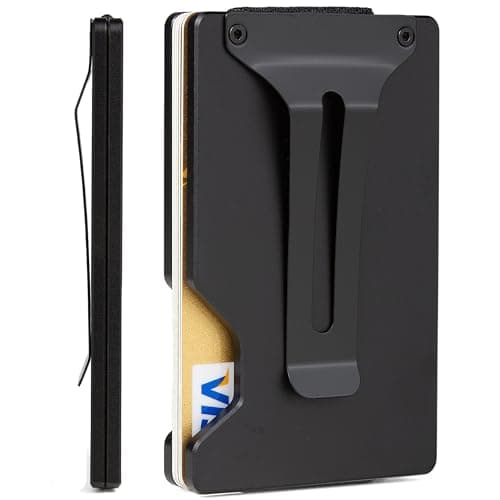
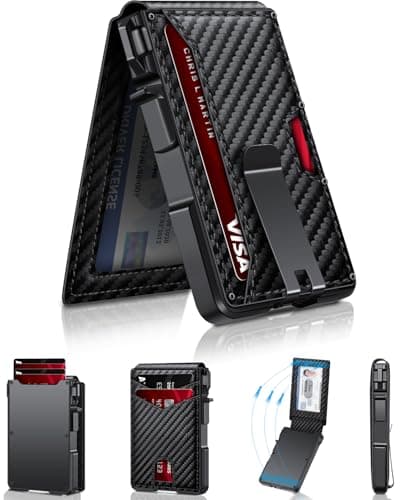
Metal body, integrated money clip and RFID blocking — the combination that covers cards and cash without a fold.
Capacity
6
Build quality
9
Slimness
9
Value
8
What's good
+Metal construction does not stretch out the way leather does over a year
+Money clip means you are not carrying a second thing for cash
+Front-pocket sized, which is better for your back than a rear-pocket brick
What's not
−Metal edges wear on trouser pockets over time
−Card capacity is genuinely limited — this forces a cull
−RFID blocking addresses a fairly rare threat
Skip it if…
…you carry more than about eight cards. It will not close and you will hate it.
Most slim wallets are honest about capacity, and most buyers are not honest about their card count. Six is what a genuinely minimalist wallet holds comfortably. Nine to thirteen is available but the wallet stops being slim at the top of that range. Decide which of those you are before you shop.
Cash: the part people forget
Card-only wallets are the majority of this category, and if you never carry cash they are the right answer. If you do, you need either an integrated money clip or a band, and a band is a worse solution than it sounds — it is one more thing to lose and it wears out. Buy the clip if cash matters at all.
Material: metal versus fabric
Machined aluminum protects cards from bending, does not stretch out over time, and slowly wears the pocket it lives in. Fabric and leather are gentler on trousers and gradually stretch to fit whatever you put in them, which defeats some of the point.
On RFID blocking
RFID-blocking is on nearly every listing here and it addresses a genuinely rare attack. Contactless card skimming requires close proximity and yields limited data, and card networks already limit liability for it. Treat it as a free feature rather than a reason to choose one wallet over another.
How these were picked
I haven't handled these. Here's what I did instead.
Everyone in this category says they tested twenty of these. I haven't tested any, and I say so. What I do instead: read the manufacturer's manual and published specification, compile the numbers that decide the purchase, do the arithmetic in the open, check the live price, and name one product to skip. The scores above are judgments from that research against a published rubric — they are not measurements I took, because I do not have a lab and I am not going to pretend otherwise.
Questions
Frequently asked
How many cards should a slim wallet hold?+
Six is the comfortable number for a genuinely minimalist wallet, and it is roughly what most people actually use in a month. Anything that advertises thirteen is a compact wallet rather than a minimalist one, which is fine if that is what you want.
Is RFID blocking necessary?+
Not really. Contactless skimming needs close proximity, returns limited data, and card networks already cap your liability. It is a fine feature to have and a poor reason to pick one wallet over another.
Do metal wallets damage cards or phones?+
Not cards — aluminum wallets protect cards from bending better than leather. Magnetic closures on some designs can theoretically affect a hotel key card, though modern chip and RFID cards are unaffected.
Front pocket or back pocket?+
Front. A wallet in a back pocket puts an asymmetric wedge under one side of your pelvis every time you sit down, which is the actual reason slim wallets became popular. The slimness matters mostly because it makes front-pocket carry tolerable.
We do not run a testing lab and we do not pretend to. Where a measured number came from a manufacturer's published specification or someone else's lab, we name them and link them. Where we could not verify something, we say so on the page rather than quietly leaving it out. Read the full method.