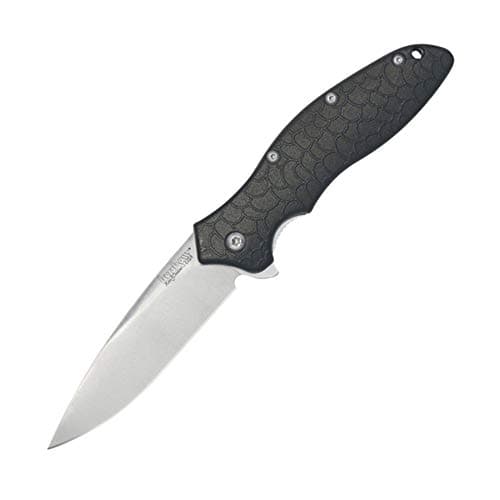
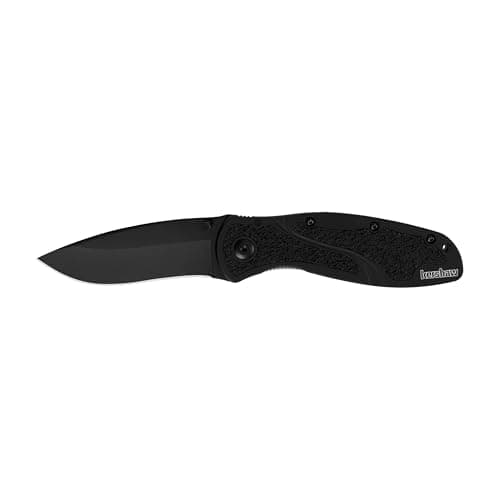
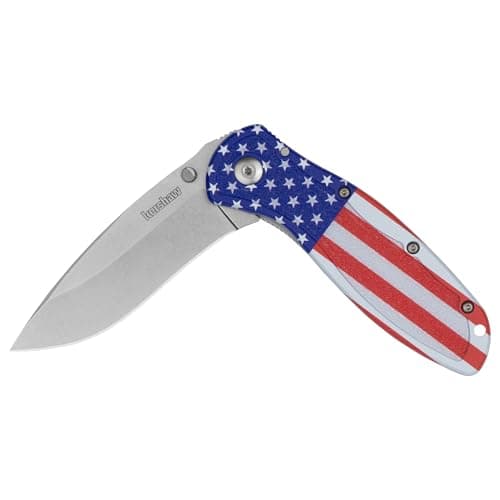
People shop for Microtech alternatives for three quite different reasons, and the right answer depends on which one is yours.
- Price. A Gen III Ultratech is listed by Microtech at $437. Everything on this page is under a hundred dollars.
- Legality. Automatics are prohibited or restricted in Minnesota, Washington D.C. and Washington state, and capped at 1.5" or 2" blades in several others. None of the knives here is an automatic.
- Availability. Amazon does not list Microtech knives at all — see the brand guide for what the search results actually return. Every knife on this page was verified live before it was published.
What actually replaces an OTF
Nothing replicates the mechanism. What you can replicate is the function people buy the mechanism for, and there are two of those:
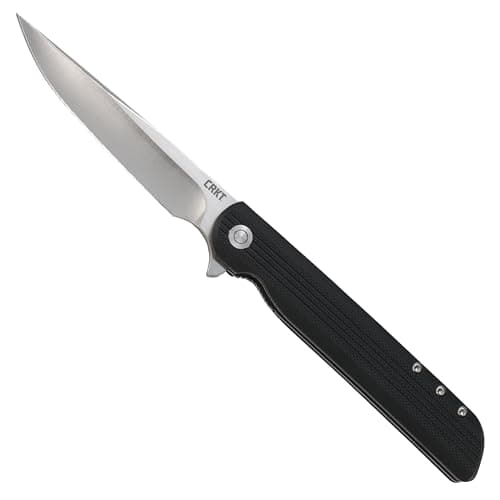
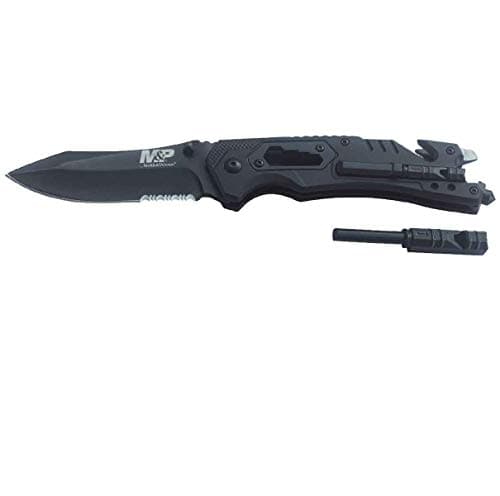
Fast one-handed opening. An assisted opener — Kershaw's SpeedSafe is the best-known — takes over once you have started the blade moving. In practice the blade is out in about the same time as an automatic. The Kershaw Blur, the CRKT LCK+ and the Smith & Wesson M&P here all work this way.
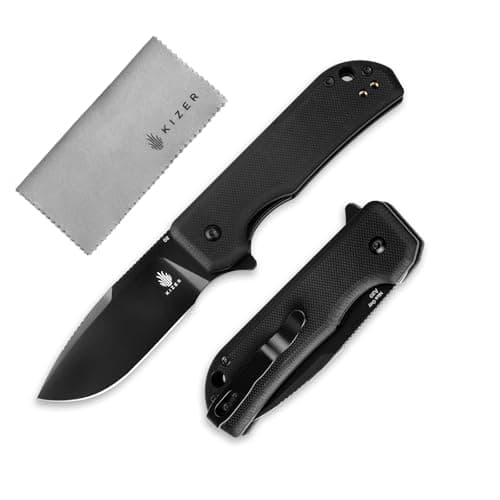
Closing one-handed with no finger in the blade path. This is the part people underrate, and it is a genuine safety argument for an OTF. A button lock does it — thumb on the button, blade drops, finger nowhere near the edge. The Kizer Madrac on this page is the value pick for that, and a Benchmade AXIS lock does the same job from the spine.
A liner lock does neither. It is a perfectly good lock and it is on several knives here, but if the one-handed close was your reason for wanting an OTF, buy the button lock and not the liner lock. That is the single most useful sentence on this page.
How these are ranked
Deployment speed, lock security, carry weight, edge retention and value, scored against the published rubric.
One thing worth saying plainly: I have not carried any of these seven. The knives I own and use are on the Microtech side of this argument, which is exactly why the alternatives page exists. So the rankings here are judgments from manufacturer specifications and listing data rather than from my pocket, and where I say a lock or a steel behaves a certain way, that is published behavior and not something I measured.
Choosing between them
Assisted is not automatic, legally
The federal act explicitly exempts knives with "a spring, detent, or other mechanism designed to create a bias toward closure" that require manual effort to open. That is what an assisted opener is, and it is why they are sold and carried in places automatics are not. State law still governs blade length and concealed carry, so check yours — AKTI is linked below and it is the best free resource there is.
Recurves cut beautifully and sharpen badly
The Kershaw Blur's recurve blade slices rope and cardboard better than a straight edge and is genuinely awkward on a flat bench stone. If you sharpen freehand on a flat stone, buy a straight-edge blade. If you own a rod system, the recurve costs you nothing.
Under three inches opens doors
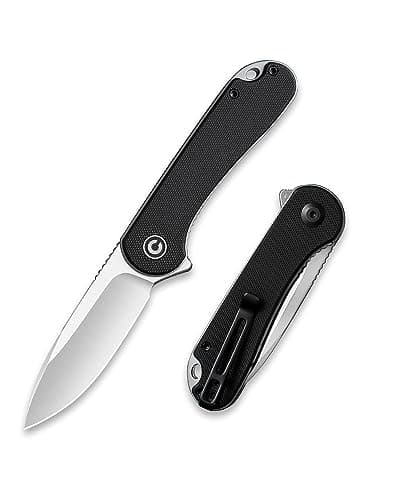
A great many local blade-length rules land between 2.5 and 3.5 inches. The Kizer Nice Guy at 2.84" and the CIVIVI Elementum at 2.96" are deliberately under three, which is why both are on this list. It is not a legal guarantee anywhere — check your own rules — but it is a sensible default.
Serrations are a one-way decision
The Smith & Wesson here is serrated. Serrations tear through rope and webbing long after a plain edge has dulled, and they are miserable to sharpen without a dedicated round hone. On a thirty-dollar knife that is an acceptable trade; on a two-hundred-dollar knife it usually is not.
Check duplicate listings before you buy
The last two picks here are the same Kershaw Blur in different finishes, and at the last price check one was roughly double the other. Amazon pricing on duplicate SKUs from established brands moves constantly and the cheaper one is not always the same listing. Open both before you commit — this takes ten seconds and it is free money.
How these were picked
I haven't handled these. Here's what I did instead.
Everyone in this category says they tested twenty of these. I haven't tested any, and I say so. What I do instead: read the manufacturer's manual and published specification, compile the numbers that decide the purchase, do the arithmetic in the open, check the live price, and name one product to skip. The scores above are judgments from that research against a published rubric — they are not measurements I took, because I do not have a lab and I am not going to pretend otherwise.