Let me get the awkward part out of the way first, because it changes what this page can honestly be.
I ran every Microtech model name through the same Amazon product API that prices every buy button on this site, and not one genuine Microtech knife came back. Not the Ultratech, not the UTX-85, not the Combat Troodon, not the Dirac. What comes back instead is replacement triangle screws, push-button springs, aftermarket Kydex sheaths, and a lot of unrelated no-name folders riding the search term.
That matters for two reasons. The obvious one is that I have nothing to sell you. The less obvious one is the reason you should be careful anywhere else: when a premium brand is absent from a marketplace and the search results are full of adjacent junk, the listings that do appear claiming to be that brand are the ones worth the most suspicion. Verify the seller, verify the price against the manufacturer's own published number, and if a $437 knife is listed at $180, walk away.
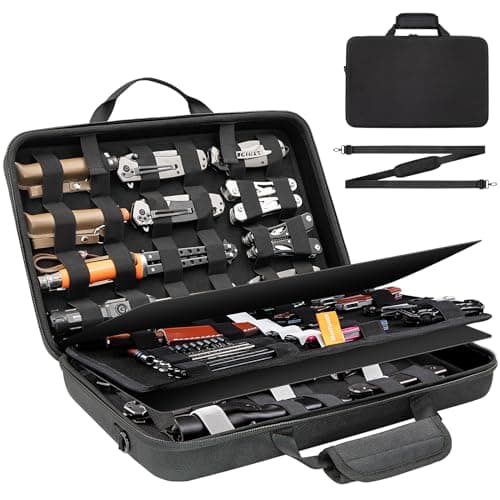
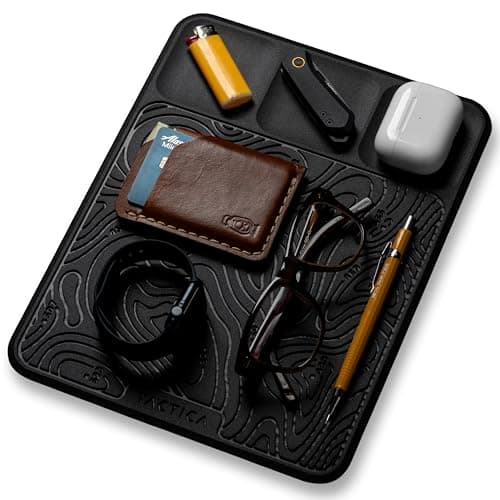
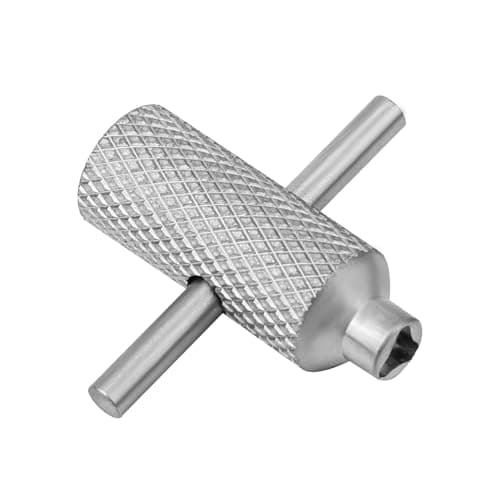
So this page does what it can do honestly: explain the lineup, explain the law, and recommend the gear an OTF owner genuinely buys — which is care, storage and organization, not another knife. I own Microtechs, which is why I know that the triangle driver at the top of the picks is the thing you will actually reach for and the display case is the thing you will eventually need.
What an OTF actually is
An out-the-front automatic drives the blade forward out of the end of the handle and retracts it back in, both on the same slider. That is different from a side-opening automatic, where a button releases a spring-loaded pivot, and different again from an assisted folder, where you start the blade moving and a spring finishes the job.
The double-action OTF — deploy and retract on one control — is what people are buying when they buy a Microtech. It is a genuinely clever mechanism, it is satisfying in a way that is hard to argue with, and it is mechanically the most complex thing in a pocket knife. Complexity is why they cost what they cost and why there is a triangle driver in the picks below.
The lineup, in plain terms
Microtech publishes its current models and prices on its own site. Here is how the OTF range breaks down, with the figures Microtech itself lists:
- Ultratech. The one everybody means. The Gen III versions are listed at $437 to $444 depending on blade grind and finish. Single-edge, double-edge and tanto-style variants across a very large finish catalog.
- UTX-85 and UTX-70. Scaled-down Ultratechs — the 85 is roughly eighty-five percent of the size, the 70 roughly seventy percent. Same action, smaller package, easier to carry and easier to explain.
- Dirac and Dirac Delta. A different handle profile with a more angular look. Microtech lists a Dirac Delta at $391.
- Combat Troodon. The large one. A longer blade and a bigger handle than the Ultratech, for people who found the Ultratech insufficiently committed.
- The rest. Cypher, Exocet, Glykon, Halo, Hera II, Luminary and Scarab all appear in the current OTF catalog.
I am not going to publish blade steels or dimensions here. Microtech runs an enormous number of variants and the specification changes between them; the only reliable source is the individual product page for the exact model number you are looking at, and it is linked in the sources at the bottom.
The legality question, answered properly
This is where most brand pages wave their hands, so here is the actual structure of the law in the United States. I am not a lawyer and this is not legal advice — but the shape of it is public record and worth knowing before you spend four hundred dollars.
Federal law is about commerce, not about you
The Federal Switchblade Act restricts manufacture, importation and introduction into interstate commerce, prohibits mailing automatics, and bans them in federal territories, Indian country and the special maritime jurisdiction. There are exemptions for common carriers in the ordinary course of business, for military procurement and personnel, and — genuinely — for one-armed individuals with blades of three inches or less.
There is no federal restriction on owning or carrying an automatic knife within a state. The federal act reaches items crossing state lines and federal jurisdictions. Your state is what governs you at home.
State law is where it gets specific
Per the American Knife & Tool Institute's state summaries, the great majority of states permit automatic knives. The exceptions and limits are what you need to know:
- Prohibited or effectively prohibited: Minnesota, Washington D.C., and Washington state (where manufacture is allowed but possession is limited to law enforcement and emergency personnel).
- Blade-length limits: California caps automatics at a 2" blade, Connecticut at 1.5", Montana at 1.5", North Dakota at 5". Colorado caps concealed carry at 3.5".
- Carry or possession conditions: Hawaii permits them but not concealed. Maryland is legal only if not concealed. New Mexico does not permit them off your own property. New York's exceptions are for hunting, trapping and fishing. New Jersey permits possession while making commerce and manufacture unlawful.
- Age and licensing: Illinois requires a valid Firearm Owner's Identification card. Kentucky and West Virginia set a minimum age of 21.
Read that list again against a $437 knife with a 3.4" blade and you can see the problem for a Californian. This is the single most important thing to check before you buy an OTF, and it is the thing brand pages consistently skip.
So what should you actually buy?
If you want the knife, buy it from Microtech or from an authorized dealer, where the provenance is not in question and the warranty means something. Nothing on this site earns anything from that and I would still tell you to do it.
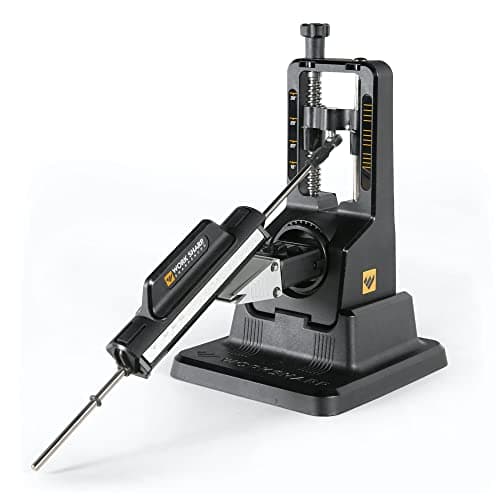
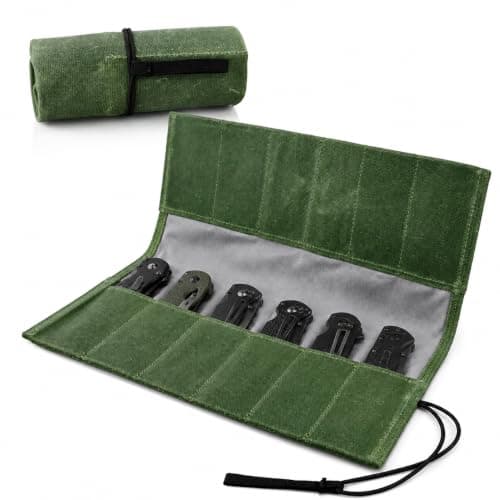
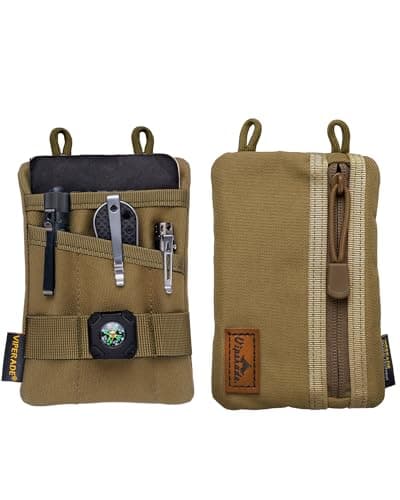
What I can put in front of you is the gear that keeps one running. The picks below are the triangle driver that fits the body screws, a sharpening system worth putting a premium blade into, and the storage and organization that stops a collection living loose in a drawer. If you would rather read about knives you can actually buy today, the alternatives page is the one you want.
Buying an OTF without getting burned
Check the price against the maker's number
Microtech publishes prices on its own product pages. A Gen III Ultratech is listed in the $437 to $444 range. Any marketplace listing significantly below that is either a discontinued variant, a used knife, or not what it says it is — and any listing significantly above it is somebody arbitraging scarcity. Both are worth knowing about before you click.
Buy the size you will actually carry
The full-size Ultratech is a large knife. The UTX-85 and UTX-70 exist because a great many people bought the big one and then carried the small one. If you are unsure, the smaller model is almost always the one that ends up in a pocket.
Understand what maintenance means on an OTF
A double-action OTF has springs, a slider, a track and a lot of small screws holding it together. Pocket lint gets into all of it. The triangle screws are not a standard fastener and a normal bit set will not turn them, which is why a five-dollar driver is the first pick on this page. Cleaning an OTF is a routine job with the right tool and an expensive service ticket without one.
Sharpen it like the expensive knife it is
A guided fixed-angle system gives you a repeatable bevel. Freehanding a four-hundred-dollar blade to learn on is a decision you make once. If you want the longer version of this argument, we have a whole page on sharpening a pocket knife.
Know the local rules before the knife arrives, not after
The state summaries above are a starting point, not the last word — municipalities layer their own rules on top, and a knife that is legal to own may still be a problem to carry into a courthouse, a school or an airport. AKTI's state pages are linked below and are the best free resource on this there is.