We earn a commission when you buy through our Amazon links, at no extra cost to you. It never changes the order of the picks, and we say so when the cheaper thing is the better buy. How this works.
Under a hundred dollars is where the pocket knife market got genuinely good in the last decade, and it happened for a boring reason: D2 tool steel and bearing pivots got cheap to manufacture. Features that were premium-only ten years ago now show up on knives costing thirty dollars, and the honest consequence is that most people never need to spend more.
What you still do not get in this bracket is the warranty. Benchmade will sharpen and service your knife for its lifetime; nobody here will. You also do not get the powder metallurgy steels, and the machining tolerances are looser — blade centering varies between units in a way it does not at three times the price.
What you do get is a knife you will not be upset about losing, which for a tool that lives loose in a pocket is worth more than most people admit.
#ad · Live prices from the Amazon Creators API, as of October 19, 2026. Where we have no verified live price we show none — a gap beats a number that has rotted.
In detail
The picks, in full
01
Best value
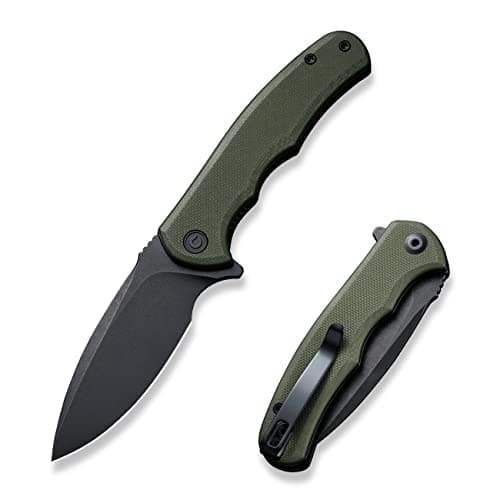
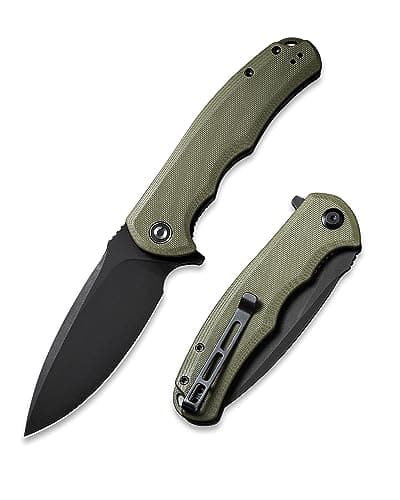
CIVIVI Praxis C803F
3.75 in blade9Cr18MoV steelLiner lockG-10 handle
7.8/10
The pick I would give someone who asked for one good knife and did not want to spend $200 to get it.
Edge retention
6
Lock security
7
Carry weight
7
Sharpening ease
9
Value
10
What's good
+Bearing-mounted pivot flips open more smoothly than knives at four times the price
+9Cr18MoV is easy to sharpen on basic stones and resists rust well
+G-10 scales and a deep-carry clip, both usually reserved for higher tiers
+A genuinely large blade at a price where blades are usually small
What's not
−Edge retention is a clear step below S30V — expect to touch it up more often
−3.75 inches of blade is over the legal carry limit in some cities; check yours
−Liner locks wear over years in a way frame and compression locks do not
Skip it if…
…you sharpen once a year and want it to still be shaving-sharp. Softer steel is the trade you are making for the price.
What changes as you move up through this price band
$15 to $30: named brand, soft steel
At this level you are buying a warranty and a plain edge. The steel will be a budget stainless — 4Cr13, 8Cr13MoV or similar — which sharpens on anything and dulls quickly. That is a perfectly reasonable trade if you sharpen often. What you should not buy here is an unbranded knife with no named steel at all, because there is nothing left to be confident about.
$30 to $50: D2 and bearings
This is the sweet spot and it is not close. D2 tool steel, ball-bearing pivots, G-10 handle scales and deep-carry pocket clips are all standard here now. The knives are genuinely good, and the only thing separating them from the premium tier is corrosion resistance and service.
$50 to $100: better steel, better fit
Above fifty dollars you start seeing 14C28N, VG-10 and the occasional S35VN, plus tighter tolerances and better finishing. The performance gain over a good D2 knife is real but modest. If you are buying a first knife, spend less here and put the difference into a sharpening system — that purchase changes your results far more.
How these were picked
I haven't handled these. Here's what I did instead.
Everyone in this category says they tested twenty of these. I haven't tested any, and I say so. What I do instead: read the manufacturer's manual and published specification, compile the numbers that decide the purchase, do the arithmetic in the open, check the live price, and name one product to skip. The scores above are judgments from that research against a published rubric — they are not measurements I took, because I do not have a lab and I am not going to pretend otherwise.
Questions
Frequently asked
Is a $40 knife really as good as a $200 one?+
For cutting, largely yes. The differences are edge retention over a long period, corrosion resistance, machining tolerances and warranty service. None of those change whether the knife opens a box today. They change how the knife feels in year three.
What steel should I look for under $100?+
D2 if you have diamond stones, 14C28N or 9Cr18MoV if you do not. All three are named, documented steels with known properties. The warning sign is a listing that does not name the steel at all — that almost always means an unspecified low-carbon stainless.
Are Chinese-made knives any good now?+
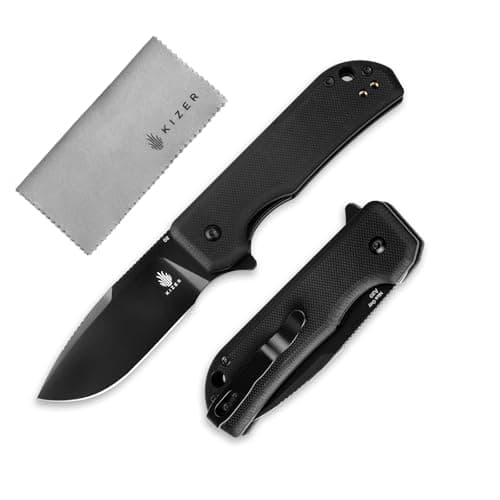
The manufacturing quality question was settled years ago. CIVIVI, Kizer and several others produce knives with tolerances and materials that were premium-tier a decade ago. The remaining differences are warranty support and steel selection, not build quality.
Should I buy one $100 knife or three $30 knives?+
Three, if you are still working out what you like. Blade shape, handle size and lock type are preferences you discover by carrying, and discovering them on a $30 knife is cheaper than discovering them on a $200 one.
We do not run a testing lab and we do not pretend to. Where a measured number came from a manufacturer's published specification or someone else's lab, we name them and link them. Where we could not verify something, we say so on the page rather than quietly leaving it out. Read the full method.