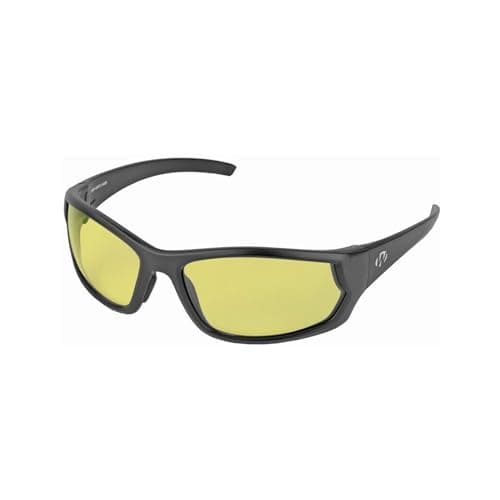
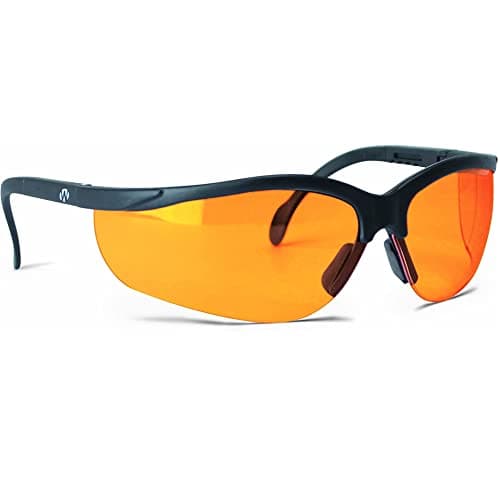
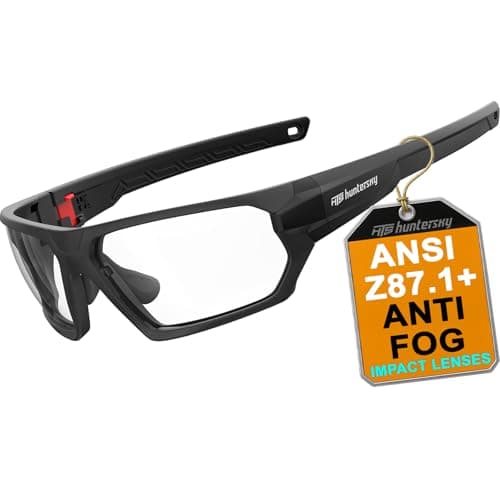
The verdict first: buy the HTS HUNTERSKY Q36 Ballistic. It is for anyone who wants one pair for a public range or a class, and it is here because the listing states ANSI Z87.1+ — the only pair on this page that states any impact standard at all. If fit matters more to you than the stated rating, the Walker's IKON Carbine is a full frame with non-slip temples for slightly less money, and it is the budget pick that is still genuine eye protection. The Walker's Sport half-frame costs a few dollars and is the pair you keep in the bag for a guest who turned up without any — not your primary protection, because its listing states no rating.
Three picks, and that is the honest size of this page. Our registry holds exactly three eye-protection listings that have been resolved against a live product, and this site does not invent products to fill a slot. If that changes, this page grows.
Z87.1 is the whole specification
ANSI Z87.1 is the American standard for occupational eye protection. The basic marking means the lens passed a drop-ball impact test. The plus marking — Z87.1+ — means it passed a high-velocity impact test as well, with a projectile fired at the lens from several angles. That second test is the one that matters on a range, because what comes back at your face is a fragment of jacket or a piece of steel moving fast, not a ball bearing dropped from a height.
Here is the part worth knowing: polycarbonate is inherently impact resistant, so a cheap polycarbonate lens is not nothing. But “impact resistant” on a listing is a word, and Z87.1+ is a test. When a product has been through the test, the seller says so, because it is the most valuable thing they can say. Silence is information.
Fit is the second specification, and it is not optional
Glasses that slide down your nose get pushed up with a dirty hand at the exact moment you should be watching a target. Glasses with thick temple arms break the seal on your ear muff cushions, which quietly throws away the hearing protection rating you paid for. A full frame gives more coverage from the side, which matters when you are standing beside steel; a half frame is cooler and lighter and gives you less.
The practical answer for most people is a full frame with thin temples and a non-slip nose piece. If you wear prescription glasses, over-the-glasses eye pro exists and is the correct answer — shooting without eye protection because your prescription frames are in the way is not a trade, it is a decision you will regret once.
Lens tint, in one paragraph
Clear is the right default, because you shoot in whatever light the day gives you and a dark lens in a covered bay is a handicap. Amber and vermilion lift contrast against brown and green backgrounds and help on overcast days, which is why trap and sporting clays shooters own several. Mirrored and dark gray lenses are for bright open ranges and nothing else. If you only buy one, buy clear, and buy the rating.
Fogging is a fit problem more than a coating problem
Anti-fog coatings help and they wear off, faster if you clean the lens with a shirt tail. A frame that sits slightly off the face vents better and fogs less than a wraparound sealed against your skin, which is the trade-off on sealed goggle-style eye pro. Breathing out through your nose and down rather than up does more than any coating. None of this is a reason to buy a pair with no stated rating.
Buying notes
Buy two pairs, not two lenses
Interchangeable lens sets sound thriftier and in practice the lens you need is in the car. Two complete pairs — one clear, one tinted — live in the range bag and cost about the same.
Check the temple thickness against your muffs
This is the single most overlooked interaction in range gear. Thin, flat temple arms keep the muff cushion sealed; chunky sport arms open a channel straight to your ear. Our hearing protection picks are all cushioned muffs, and every one of them is affected by what you put under the cushion.
Replace them after an impact
A lens that has taken a hit has done its job and is no longer rated. Polycarbonate crazes and micro-cracks in ways you cannot see. A pair of glasses costs less than a copay.
Eye pro is required kit, not optional kit
Every range worth shooting at requires it, and every match does. Eye and ear protection for competition covers the match-day version of this page, where a spare pair in the bag is part of the loadout rather than an afterthought.