Required by the rulebook, and the one category where the highest number on the box is often the wrong purchase. A deep muff that your own stock knocks off the seal protects nothing.
We earn a commission when you buy through our Amazon links, at no extra cost to you. It never changes the order of the picks, and we say so when the cheaper thing is the better buy. How this works.
This is the only gear category on the site that is genuinely mandatory. The USPSA multigun rulebook carries a dedicated section on eye and hearing protection, and no club will let you past the safety briefing without both. It is also the category where the obvious buying logic — get the highest rating you can afford — leads you to the wrong product.
Match-day load-out on the cart. Ear protection travels in a hard case for a reason — muffs live at the bottom of a bag under ammunition cans otherwise, and headbands do not recover from that.
The trade-off nobody explains: cup depth versus NRR
Noise Reduction Rating is the number on the box, and higher is better — right up until you mount a long gun.
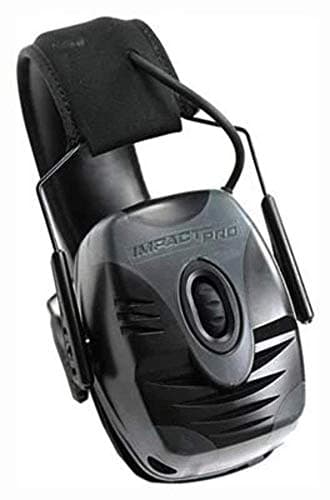
High-NRR electronic muffs get their rating partly from deep cups with a large air volume behind the ear. That depth means the cup sticks further out from your head. When you bring a shotgun or rifle stock up to your cheek, the stock contacts the cup, lifts it, and breaks the seal — at the exact instant the shot goes off. A broken seal gives you almost none of the attenuation you paid for.
This is why you see slim-profile muffs on so many heads at a 3-Gun match while the deep ones dominate at an indoor pistol range. Both are correct for their context. For multigun, where two of three guns are shouldered, profile beats rating, and the honest way to buy a higher effective number is to wear plugs underneath a slim muff.
Why electronic, not passive
Electronic muffs amplify ambient sound and cut the amplification when the noise spikes. That is not a luxury on a competition range, it is a safety and function requirement:
You must hear the Range Officer. "Stop" is a command that gets given when something has gone wrong, and it is the one you cannot miss.
You must hear the start signal. Reacting late to a buzzer you barely heard is time you never get back.
You will otherwise lift a cup to talk. Everyone does it, and it happens right next to a hot bay.
The corollary is batteries. Carry spares in the range bag. An electronic muff with a dead battery is a passive muff you cannot hear anything through, which is worse than either option chosen deliberately.
Eye protection: the specification that actually means something
Almost every pair of shooting glasses claims to be impact resistant. The claim that carries weight is a stated ANSI Z87.1 rating, and specifically the Z87+ marking, which denotes the high-velocity impact test rather than the basic one. It is a published American National Standards Institute standard with an actual test behind it.
A large share of listings in this category do not state Z87.1 at all. That does not mean the lens is unsafe — polycarbonate is inherently impact resistant — but it does mean nobody has published a test result you can rely on. Given that steel targets throw fragments back and the whole point of eye protection is the one-in-a-thousand event, this is not a place to buy on faith.
Tint, honestly
Clear is the correct default. You do not control which bay you shoot at what time, and a shaded bay on an overcast morning with dark lenses is a real handicap.
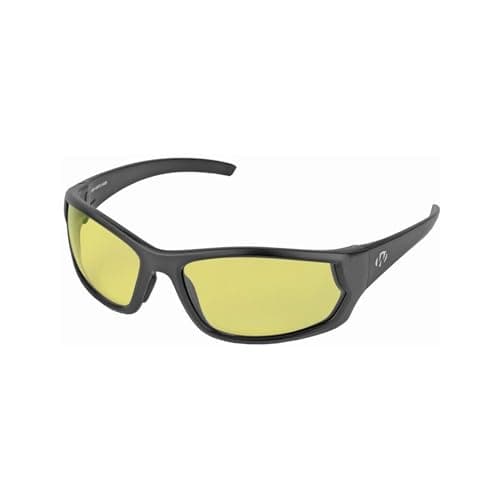
Amber and yellow lift contrast in flat light and against brown steel. Genuinely useful, genuinely wrong in bright direct sun.
Smoke and gray for bright open ranges only.
Buy clear first. Add a second tint later if you find yourself squinting, and carry both — they are small and cheap relative to everything else on the cart.
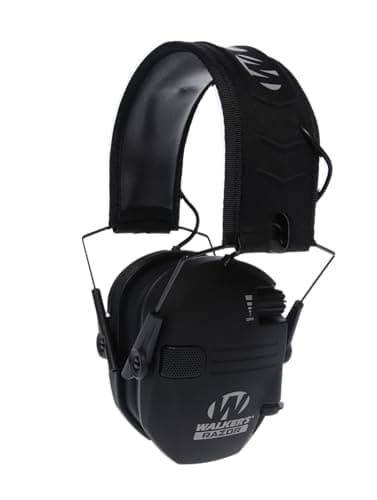
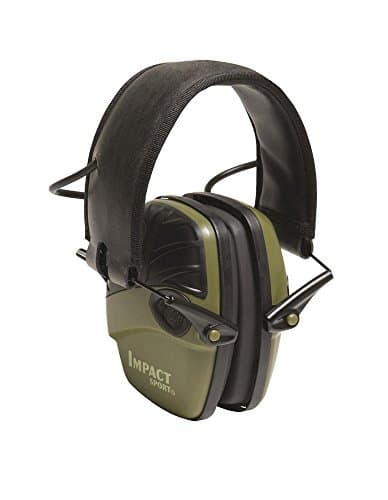
The muff you will see on more heads at a club match than anything else, and the low-profile cup is why — it clears a shotgun stock without lifting off your ear.
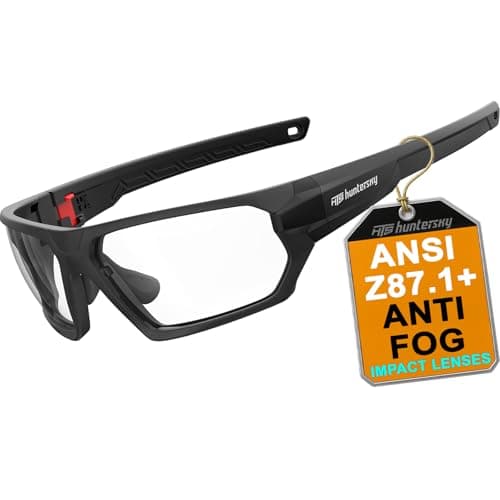
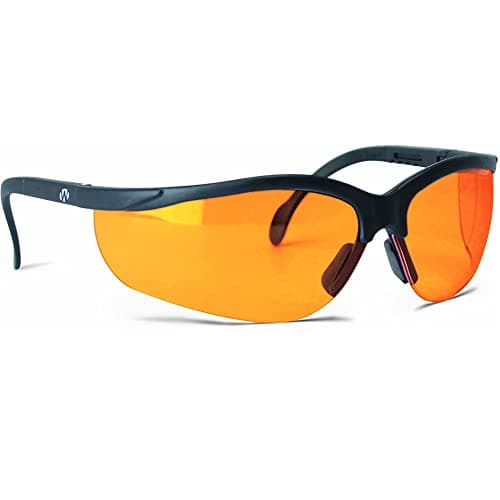
It states ANSI Z87.1+ on the listing, which is the one specification that separates eye protection from sunglasses — and most shooting glasses do not state it at all.
#ad · Live prices from the Amazon Creators API, as of October 19, 2026. Where we have no verified live price we show none — a gap beats a number that has rotted.
The muff you will see on more heads at a club match than anything else, and the low-profile cup is why — it clears a shotgun stock without lifting off your ear.
Attenuation
6
Stock clearance
9
Amplification
8
Comfort
8
Value
9
What's good
+Slim cups genuinely clear a long-gun stock, which is the whole problem in 3-gun
+Amplification lets you hear the RO's commands and the beep without lifting a cup
+So common at matches that spare batteries and pads are always available
What's not
−NRR 22 is modest — adequate outdoors, marginal beside a braked rifle
−Battery door is the known weak point
Skip it if…
…you shoot indoors or next to muzzle brakes regularly. Double up with plugs or buy higher attenuation.
It states ANSI Z87.1+ on the listing, which is the one specification that separates eye protection from sunglasses — and most shooting glasses do not state it at all.
Impact protection
9
Coverage
8
Fit security
7
Optical clarity
8
Value
8
What's good
+A stated Z87.1+ rating means a documented high-velocity impact test rather than a marketing word
+Clear lens is the correct default — you shoot at whatever light the squad reaches
+Anti-fog coating matters when you are breathing hard behind a barricade
What's not
−Frame styling is bulkier than the sport-cut options
−Anti-fog coatings wear with cleaning
Skip it if…
…you want a light sport frame. This trades style for a stated rating, which is the correct trade and still a trade.
Slim electronic muffs. Test the profile against your own stock before match day: mount the gun at home wearing them and see whether the cup lifts.
Foam plugs to wear underneath when you are next to muzzle brakes or on a covered bay. This is how you get high effective attenuation without a deep cup.
Clear glasses with a stated Z87.1+ rating. The rating is the whole purchase.
A spare of each in the bag. Somebody on your squad will need them, and that somebody will occasionally be you.
Fit checks that take thirty seconds
Mount your gun wearing the muffs. If the stock touches the cup, the rating on the box is fiction for you.
Check the glasses under the muffs. Thick temple arms break the muff seal where they pass through it. Thin arms exist for this reason.
Shake your head hard with the glasses on. Anything that moves now will move on a stage, and pushing your glasses up your nose costs you time.
Longer-term
Hearing damage is cumulative and permanent, and OSHA's occupational noise material is worth reading once if you have never thought about exposure seriously. If you shoot often enough that this is a real consideration, custom-molded plugs under slim muffs are the best combination available. Our general hearing protection roundup covers the non-competition options in more depth, including higher-attenuation muffs that make sense when nothing is being shouldered.
How these were picked
I haven't handled these. Here's what I did instead.
Everyone in this category says they tested twenty of these. I haven't tested any, and I say so. What I do instead: read the manufacturer's manual and published specification, compile the numbers that decide the purchase, do the arithmetic in the open, check the live price, and name one product to skip. The scores above are judgments from that research against a published rubric — they are not measurements I took, because I do not have a lab and I am not going to pretend otherwise.
Questions
Frequently asked
Is NRR 22 really enough?+
Outdoors, on an open bay, with plugs available for the loud stages — yes, and it is what a large share of the sport actually wears. The muff that seals reliably at NRR 22 beats the muff rated 30 that your stock lifts off your ear. If you want more, add plugs underneath rather than buying a deeper cup.
Do I need electronic muffs or will passive do?+
Passive muffs are legal and will protect your hearing. They also mean you cannot hear range commands or the start beep clearly, so you will lift a cup to talk and be unprotected when you do. Electronic is a genuine functional upgrade here, not a luxury.
What does the plus sign in Z87+ mean?+
It denotes the high-velocity impact rating rather than the basic impact rating within the same ANSI Z87.1 standard. For anything involving steel targets, that is the marking worth looking for — and a listing that states neither has published no test result at all.
Can I wear my prescription glasses?+
Not as your eye protection unless they carry a Z87.1 marking themselves, which most prescription lenses do not. Wear rated shooting glasses over them, or get prescription safety glasses. This is the one place on the range where improvising is a genuinely bad idea.
We do not run a testing lab and we do not pretend to. Where a measured number came from a manufacturer's published specification or someone else's lab, we name them and link them. Where we could not verify something, we say so on the page rather than quietly leaving it out. Read the full method.