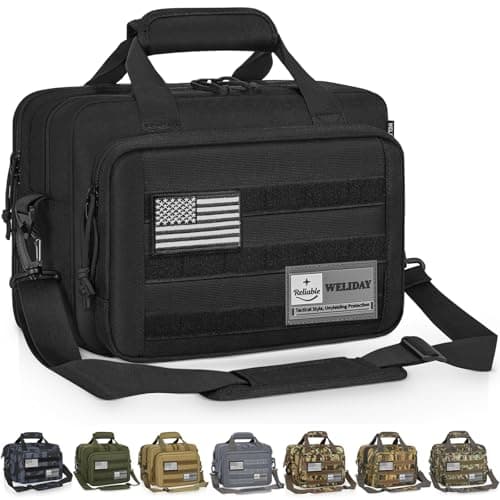
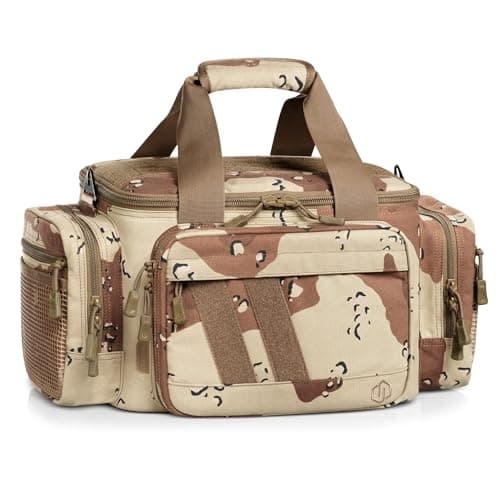
The verdict first: if you are building a range bag from nothing, buy electronic ear protection and eye protection with a stated impact rating before you buy the bag — they are the two things you cannot shoot without. Then buy the bag with a rigid frame, because a bag that collapses onto its own contents turns organization into archaeology. Everything after that is refinement.
This page is about CONTENTS. If you are shopping for the bag itself, our range bag roundup ranks the category properly and is the page you want. If you are packing for a match rather than a practice session, the list is different and longer — match day has its own checklist.
Tier 1: you cannot shoot without these
Eye protection with a rating on the listing
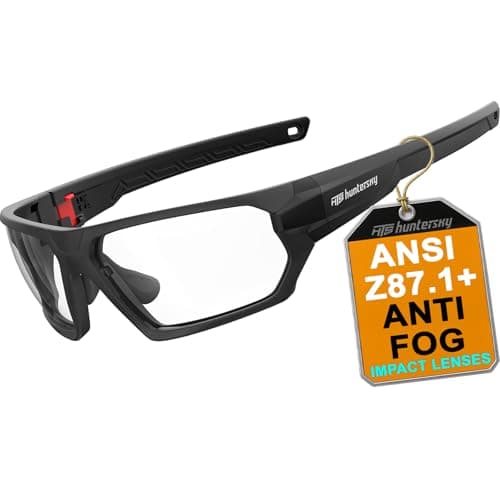
The number to look for is ANSI Z87.1, and the designation you want is the plus suffix, which is the high-impact level. The HTS Q36 above states Z87.1+ on its listing rather than implying it, which is the whole reason it is here. Keep a clear pair in the bag permanently regardless of what tinted pair you prefer to wear, because the light at a 7am winter range session is not the light you bought amber lenses for.
Hearing protection, and plugs as well
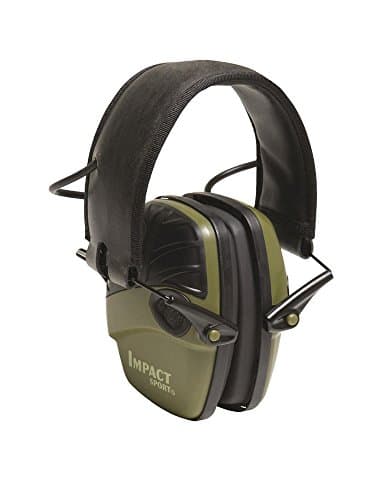
Electronic muffs let you hear range commands and conversation while suppressing the shot, which is why they are worth the money over passive muffs. The Impact Sport is NRR 22 dB with a folding frame — the folding part matters more than it sounds, because it is why the muffs live in the bag instead of on a shelf at home. Add cheap foam plugs too: indoors, or next to a muzzle brake, doubling up is the correct answer and plugs cost almost nothing. Our hearing protection page goes through the NRR numbers properly.
Tier 2: the bag, and how it should be organized
Buy a bag with a rigid or semi-rigid frame and dividable compartments. The Savior Specialist Triple is the example here: the frame means the bag holds its shape, and the padded dividers mean an optic on one pistol is not resting against the slide of another. A soft bag with one big compartment is cheaper and it is also why people arrive at the range and cannot find anything.
If a pistol in your bag wears a red dot, that pistol wants its own sleeve sized to clear the optic — the Savior Double Scoped case is thirteen by nine inches and cut for exactly that. Most generic pistol sleeves are not, and an optic taking knocks in transit is a zero you will lose without knowing when.
Three organizing rules that are worth more than any product:
- Heavy things low and centered. Ammunition is the heaviest thing you carry and it should sit at the bottom of the bag, not in a side pocket that makes the bag lean.
- One pocket is the "never remove" pocket. Eyes, ears, plugs, a pen and a multi-tool live there permanently and never get borrowed for anything else.
- Everything else gets unpacked after the session. Ammunition, targets and anything wet comes out. A bag you never empty is a bag you cannot inventory.
Tier 3: what belongs in the car, not the bag
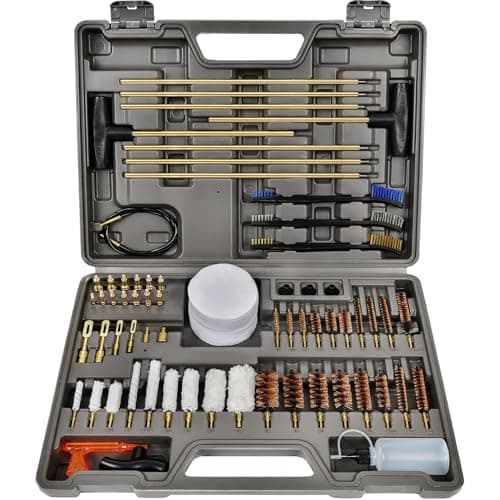
This is the part most packing lists get wrong. A full cleaning kit — rods, jags, solvent, patches — should live in the vehicle, not in the range bag. The kit we would own comes in a hard case for exactly that reason. Carrying it in the bag costs you weight and space on every trip for something you use at a bench at home, and solvent in a bag with eye protection is a bad combination.
The same logic applies to a staple gun and spare targets, a folding stool, and a tool roll. All useful; none of it belongs in the bag you carry to the line. Keep a plastic field box in the trunk and put them in it.
The exception is a small field-repair kit: a multi-tool, the one hex key your optic mount uses, and a few zip ties. That is pocket-sized and it stays with you.
Tier 4: the cheapest thing that improves your shooting
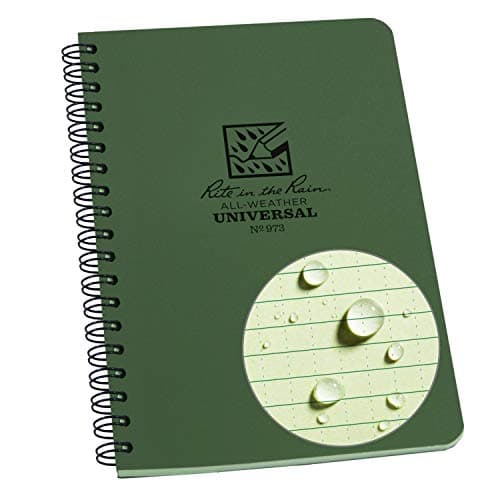
A weatherproof notebook. Write down the distance, the load, the optic, what you adjusted and what happened. Zero records live in a notebook or they do not live anywhere, and a range session you cannot reconstruct next month was mostly entertainment. It costs less than a box of ammunition and it is the only item on this page with no substitute. If you shoot at distance, this is the first step toward a real dope card.
One thing not to buy, and why
Bags sold on having a lockable zipper. The one at the bottom of our picks is there as an example rather than a recommendation: a padlock through a zipper on fabric is a deterrent against a casual hand and nothing more, because the fabric itself can simply be cut. Where a locked container is legally required for transport, a soft bag with a zipper lock does not satisfy that in most jurisdictions, and buying one because it advertises a lock is how people end up relying on something that is not security. If you need a locked container, buy a hard case — our case page covers that properly, and air travel has stricter requirements again. Check your own state and local law; this is a gear page and not legal advice.
Buying notes
Buy the safety gear first, always
Eyes and ears are the only non-optional items here and they are the cheapest tier. Buying the bag before the protection is the most common ordering mistake.
Weigh the bag loaded before you commit to it
A big rigid bag full of ammunition is genuinely heavy, and bags are quoted empty. If you walk any distance from the parking area, a smaller bag you carry easily beats a larger one you resent.
Spare batteries for everything electronic
Electronic muffs, a red dot and a shot timer all run on cells. Keep spares in the never-remove pocket and change them on a date rather than when something dies — the same argument our red dot page makes about optics.
A locked zipper is not a locked container
Worth repeating because it is the one item on this list where a product's marketing invites you to rely on it. Hard case for security; range bag for organization.