Section 07 · The Garage
The '78 CJ5 That Started It
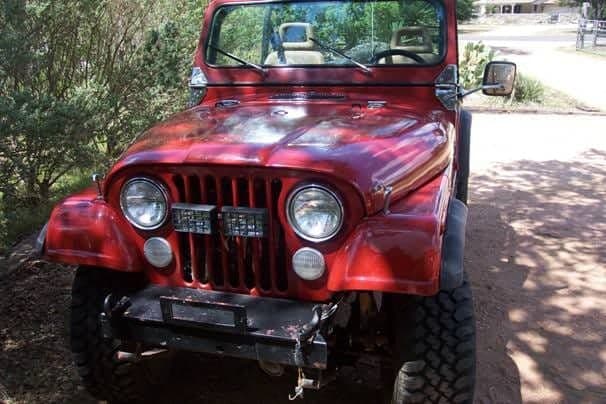
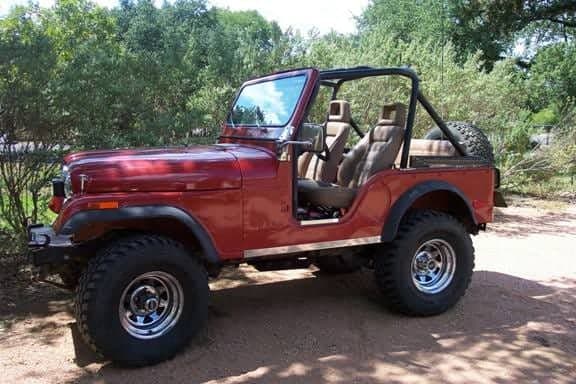
Red, open, an AMC 304 in the front of it and a crawl ratio four times lower than it left the factory with. Every rig since has been a variation on this one.
We earn a commission when you buy through our Amazon links, at no extra cost to you. It never changes the order of the picks, and we say so when the cheaper thing is the better buy. How this works.
Everybody has a first one. Mine was a 1978 Jeep CJ5, and it is the reason there have been two more since.
It was red, it was open, and it had an AMC 304 V8 in the front of it — which in a vehicle that small and that light is a genuinely silly combination and exactly the right one.
The one modification worth talking about
The thing that made it what it was: a four-to-one low range conversion. That takes the crawl ratio — the overall gearing multiplication in low range, first gear — and makes it four times lower than it was.
If you have not driven a properly geared vehicle off-road, that number is hard to convey. A very low crawl ratio means the vehicle moves at walking pace, or slower, with the engine barely above idle and without you touching the brakes. It turns rock crawling from a throttle-and-momentum problem into a placement problem. You put a wheel where you want it, and the gearing does the rest.
That is the single change that separates a Jeep that goes off-road from a Jeep that works off-road, and in a short-wheelbase CJ with a 304 in it, it was the right one.
Why it went
I sold it to fund the 1996 Grand Cherokee, which is the honest and unglamorous reason most first rigs go. A CJ5 is a wonderful thing and it is not a vehicle you drive every day in comfort, and at that point I wanted something that could do both.
The ZJ got a lift, steel wheels, 31s, bed-lined cladding, a new headliner and a set of lights behind the grille. Then that got sold too, and there is a 4Runner in the driveway now with drawers in the back and a winch on the front.
Three rigs, one instinct. Buy the honest one, then start changing things.
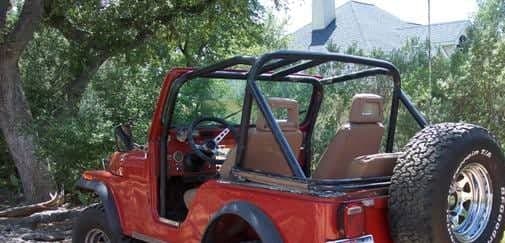
This page is short on purpose. The CJ5 was gone before I was documenting anything properly, so what you get is what I can state for certain — the year, the engine, the gearing and why it left — plus the photographs I still have. There is no parts list, no cost and no timeline, because I do not have them and I am not going to invent them.
Questions
Frequently asked
What engine was in it?
What does a 4-to-1 low range actually do?
Why did you sell it?
Keep reading
Related
Receipts
Sources
We do not run a testing lab and we do not pretend to. Where a measured number came from a manufacturer's published specification or someone else's lab, we name them and link them. Where we could not verify something, we say so on the page rather than quietly leaving it out. Read the full method.