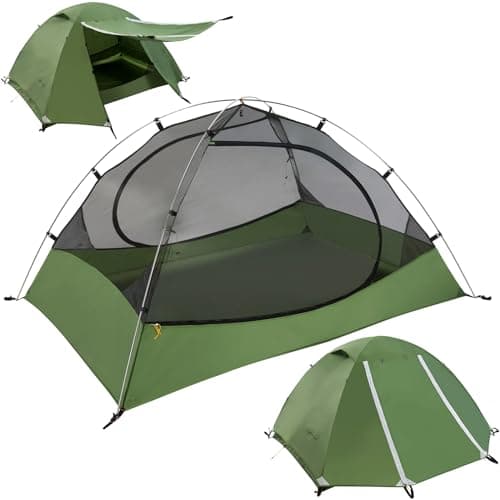
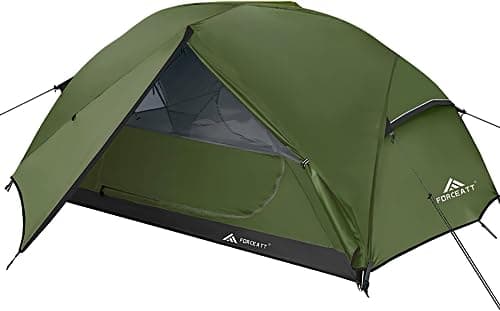
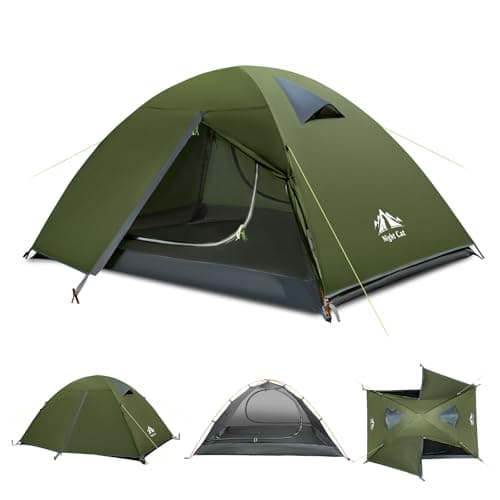
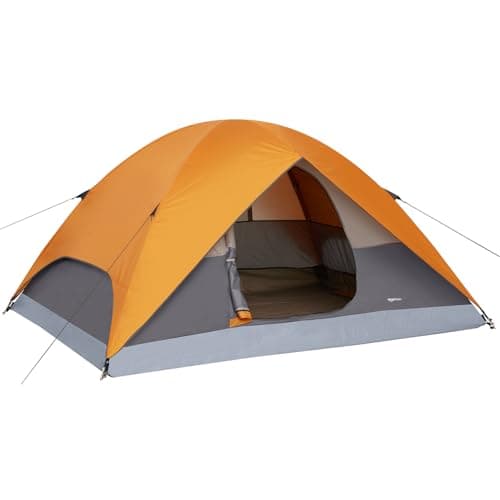
Three specifications decide a tent and none of them is the season rating: pole material, how much of the tent the fly covers, and whether it is double-walled.
We earn a commission when you buy through our Amazon links, at no extra cost to you. It never changes the order of the picks, and we say so when the cheaper thing is the better buy. How this works.
Tent listings are dominated by two numbers that tell you almost nothing. Capacity is measured by laying that many adults shoulder to shoulder with no gear, so a two-person tent is a comfortable one-person tent. Season rating is not a standard anybody administers — a "4-season" tent from a marketplace brand and one from a mountaineering company are not the same object.
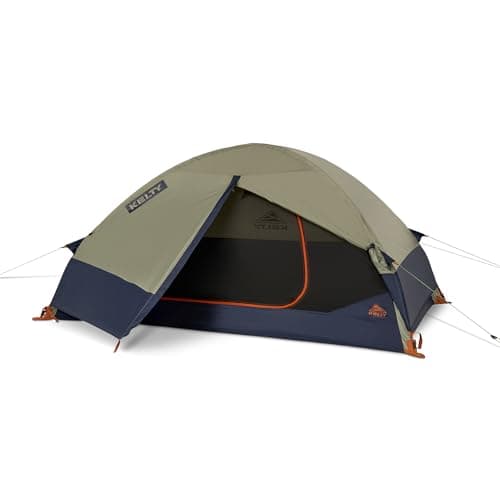
The specifications that do decide it: pole material, because aluminum bends and fiberglass shatters. Rainfly coverage, because a partial fly leaves your doors exposed and the doors are where water gets in. Wall construction, because a single-wall tent condenses your own breath onto the inside surface and drips it back on you.
Two people exhale roughly a pint of water overnight. In a double-wall tent that moisture passes through the mesh inner and condenses on the outer fly, where it runs down and away. In a single-wall tent it condenses on the only surface there is, which is directly above your face.
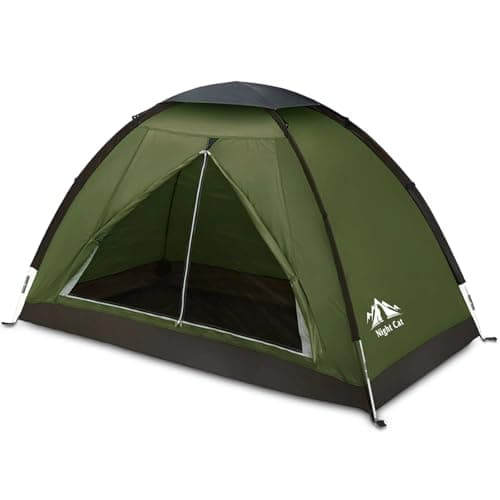
Single-layer construction is the problem. Your breath condenses on the inside of the fly and rains back on you, and no amount of waterproofing fixes it because the water is already inside.
#ad · Live prices from the Amazon Creators API, as of October 19, 2026. Where we have no verified live price we show none — a gap beats a number that has rotted.
Single-layer construction is the problem. Your breath condenses on the inside of the fly and rains back on you, and no amount of waterproofing fixes it because the water is already inside.
Weather protection
3
Packed weight
9
Setup speed
8
Durability
4
Value
5
What's good
+Extremely light and cheap
+Packs very small
What's not
−Single-wall tents condense heavily — two people exhale roughly a pint of water overnight and it has nowhere to go but the inside surface
−A double-wall tent moves that condensation onto the outer fly where it drips away from you
−No inner mesh body means insects and condensation both reach you
−The extra $15 for the double-wall Night Cat solves this completely
Skip it if…
…you will sleep in it in cool weather. Spend fifteen dollars more on the double-wall version from the same company.
Poles: aluminum over fiberglass, always if you can
Aluminum poles flex under load and take a set rather than failing. Fiberglass poles hold shape until they splinter, and then the tent is done — usually at 2am in the wind that broke it. The upgrade typically costs twenty to forty dollars and is the best money in the category.
Rainfly: full coverage or nothing
A full-coverage fly reaches close to the ground on all sides and covers the doors. A partial fly is a cap over the roof, which handles dew and fails in wind-driven rain. Look at the photographs rather than the description.
Hydrostatic head, where it is published
Measured in millimeters: 1,500mm is the usual minimum for a rainfly, 3,000mm is good, and the floor should be higher than the fly because you kneel on it. Many budget tents do not publish it, which is itself informative.
Rate capacity at minus one, or minus two
Two people plus gear want a three-person tent. Four people plus gear want a six. This is not manufacturers being dishonest so much as measuring a different thing than you are — they are measuring floor area, you are measuring comfort.
Seam sealing and a footprint
Factory-taped seams are standard on better tents and absent on cheap ones; a tube of seam sealer costs almost nothing and fixes it in an evening. A footprint protects the floor from abrasion and is genuinely worth having — a groundsheet cut slightly smaller than the tent floor works just as well as the branded one.
How these were picked
I haven't handled these. Here's what I did instead.
Everyone in this category says they tested twenty of these. I haven't tested any, and I say so. What I do instead: read the manufacturer's manual and published specification, compile the numbers that decide the purchase, do the arithmetic in the open, check the live price, and name one product to skip. The scores above are judgments from that research against a published rubric — they are not measurements I took, because I do not have a lab and I am not going to pretend otherwise.
Questions
Frequently asked
How many people does a 2-person tent actually fit?+
One person plus gear, comfortably. Two people shoulder to shoulder with gear outside or in the vestibule. Capacity ratings measure floor area with bodies laid side by side, which is not how anybody camps.
Are fiberglass tent poles bad?+
They work until they do not. Fiberglass holds shape and then splinters suddenly, usually under the wind load that caused it, whereas aluminum bends and can often be splinted. For a tent you use a few nights a year in a campground, fiberglass is acceptable.
What causes condensation inside a tent?+
You do. Two people exhale roughly a pint of water overnight, and it condenses on the coldest surface available. A double-wall tent puts that surface on the outer fly where it drips away; a single-wall tent puts it directly above you. Ventilation helps in both.
Do I need a footprint?+
It protects the floor from abrasion and punctures and extends tent life meaningfully. A piece of groundsheet cut slightly smaller than the floor works as well as the branded one — larger and it channels rain under the tent.
We do not run a testing lab and we do not pretend to. Where a measured number came from a manufacturer's published specification or someone else's lab, we name them and link them. Where we could not verify something, we say so on the page rather than quietly leaving it out. Read the full method.