We earn a commission when you buy through our Amazon links, at no extra cost to you. It never changes the order of the picks, and we say so when the cheaper thing is the better buy. How this works.
A family tent is judged on a different night than a backpacking tent. It is judged on the night you arrive later than planned, in the rain, with tired children in the car. That is when setup speed stops being a convenience feature and becomes the whole product.
The second judgment comes at 3am when the rain arrives properly. This is where partial rainflies fail: a cap over the roof is fine for dew and useless when wind drives rain against a door. On a two-person tent that is uncomfortable. On a six-person tent with a family inside it is the end of the trip.
Everything else — cabin walls versus dome, room dividers, electrical port flaps — is preference. Setup speed and fly coverage are not.
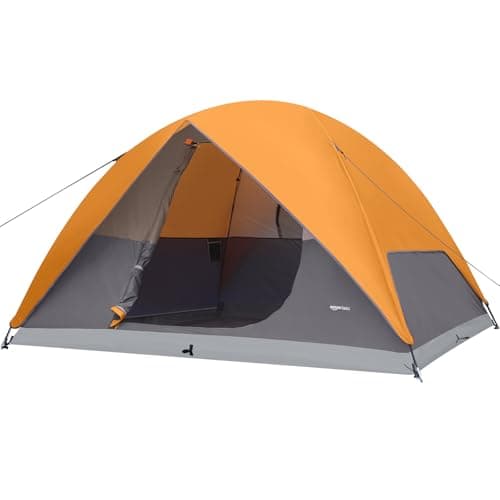
The listing says water resistant, not waterproof, and it pairs a partial rainfly with a six-person footprint. That combination is a wet family, and a family tent has one job on the night it rains.
#ad · Live prices from the Amazon Creators API, as of October 19, 2026. Where we have no verified live price we show none — a gap beats a number that has rotted.
In detail
The picks, in full
01
Best overall
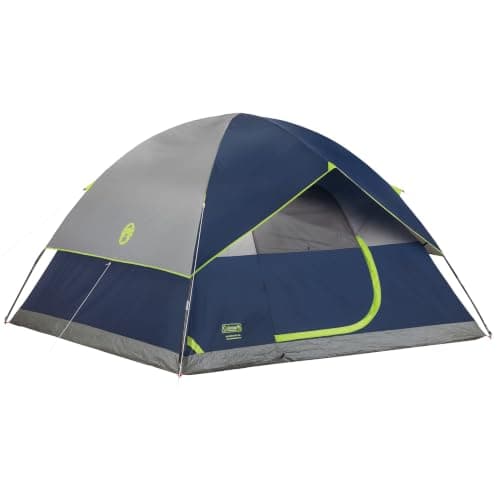
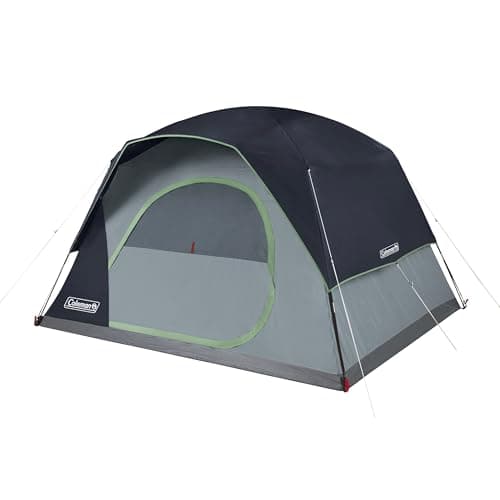
Coleman Skydome 6-Person
6-person5-minute setupWeatherTec systemPre-attached poles
8.4/10
Five-minute setup, more headroom than a classic dome, and Coleman's WeatherTec floor — the sensible default family tent.
Weather protection
8
Livable space
9
Setup speed
9
Durability
8
Value
8
What's good
+Pre-attached poles mean genuinely fast setup, which matters arriving at dusk with children
+Skydome geometry gives noticeably more usable headroom than a traditional dome
+Welded floor seams and inverted wall seams actually work
+Coleman parts and poles are available years later
What's not
−Six-person rating assumes six people and no gear
−Heavier and bulkier packed than a simple dome
Skip it if…
…you need to fit six people plus their bags. Rate any family tent at two fewer than the label if you want room for gear.
6-personPartial rainflyWater resistantFiberglass poles
5.6/10
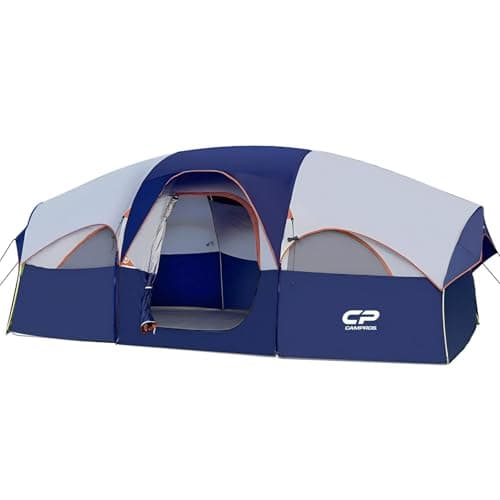
The listing says water resistant, not waterproof, and it pairs a partial rainfly with a six-person footprint. That combination is a wet family, and a family tent has one job on the night it rains.
Weather protection
4
Livable space
7
Setup speed
7
Durability
4
Value
6
What's good
+Cheapest six-person tent here
+Simple setup
+Easy returns
What's not
−"Water resistant" is a meaningfully weaker claim than waterproof, and the listing is careful about which word it uses
−A partial rainfly leaves the doors and a large area of the canopy exposed
−Fiberglass poles on a large canopy is the combination most likely to fail in wind
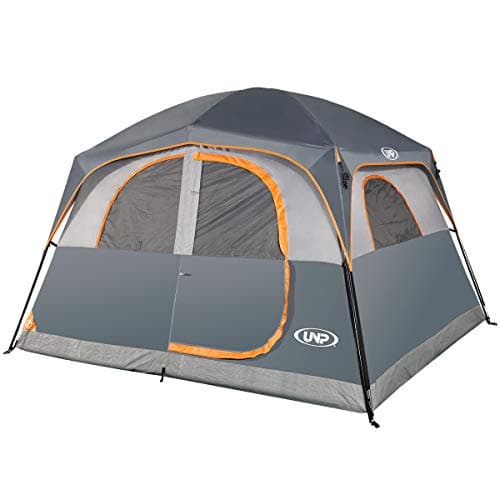
−The UNP costs about $40 more and includes a full-coverage fly
Skip it if…
…there is any chance of rain, which over a camping season there is. Spend the extra on a full rainfly.
A six-person tent sleeps four people plus their gear comfortably. An eight sleeps five or six. The rating measures floor area with adults laid shoulder to shoulder, and nobody actually camps that way — least of all a family with duffel bags.
Cabin walls versus dome
Cabin tents have near-vertical walls and much more usable interior volume — you can stand up, which changes how the tent feels far more than square footage. They also catch wind badly. Dome tents shed wind well and waste the space near the walls. For a sheltered campground, cabin. For anywhere exposed, dome.
Setup: instant, quick or classic
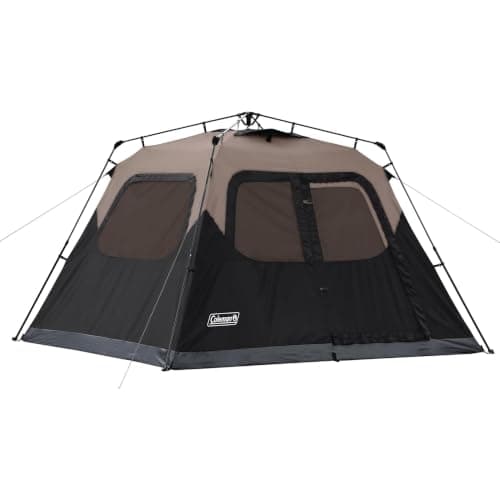
Instant tents have pre-attached telescoping poles and genuinely go up in about a minute, at the cost of significant weight and pack size. Quick-setup tents like the Skydome pre-attach some poles for a five-minute pitch. Classic dome tents are ten to fifteen minutes and pack smallest. Buy for the arrival you actually have.
Check the footprint against the pad
Eight-person tents are large objects and plenty of campground pads will not take one. Measure the tent's footprint and check the site dimensions before you commit — arriving with a tent that does not fit is a specific and avoidable misery.
Two doors are worth more than they sound
A single-door tent means somebody climbs over sleeping people every time anyone gets up in the night. With children that is several times a night.
How these were picked
I haven't handled these. Here's what I did instead.
Everyone in this category says they tested twenty of these. I haven't tested any, and I say so. What I do instead: read the manufacturer's manual and published specification, compile the numbers that decide the purchase, do the arithmetic in the open, check the live price, and name one product to skip. The scores above are judgments from that research against a published rubric — they are not measurements I took, because I do not have a lab and I am not going to pretend otherwise.
Questions
Frequently asked
What size tent for a family of four?+
A six-person tent. Four people plus duffel bags, boots and a dog does not fit in a four-person tent, because the rating measures bodies laid side by side with nothing else in the tent.
Are instant tents worth it?+
If you arrive after dark with children, yes — the setup claim is broadly accurate and it genuinely changes the arrival. The cost is significant weight and pack size, because the frame never comes off.
Cabin tent or dome tent?+
Cabin for usable space and standing headroom in a sheltered campground. Dome for wind and weather. Vertical walls and wind are a poor pairing and no amount of guying fully fixes it.
Does a family tent need a full rainfly?+
Yes. A partial fly handles dew and fails in wind-driven rain, and on a large tent with a family inside that failure is the whole trip. Look at the product photographs rather than the description — if you can see mesh below the fly line, it is partial.
We do not run a testing lab and we do not pretend to. Where a measured number came from a manufacturer's published specification or someone else's lab, we name them and link them. Where we could not verify something, we say so on the page rather than quietly leaving it out. Read the full method.