We earn a commission when you buy through our Amazon links, at no extra cost to you. It never changes the order of the picks, and we say so when the cheaper thing is the better buy. How this works.
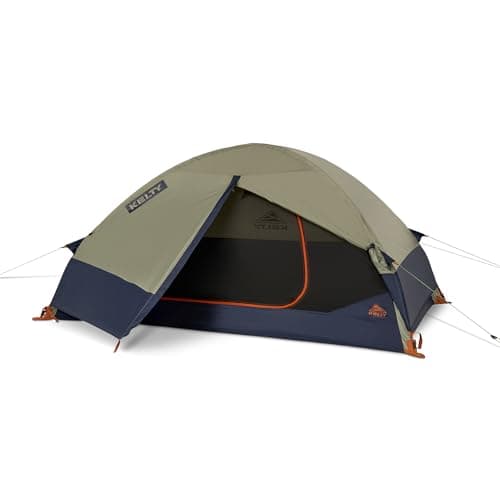
The verdict first: buy a rooftop tent if you move camp most days, if you camp on ground that is frequently wet, rocky or sloped, and if your vehicle's dynamic roof load rating genuinely supports one. Buy a ground tent for everything else — including most family camping, most weekend trips, and any situation where you set up and stay.
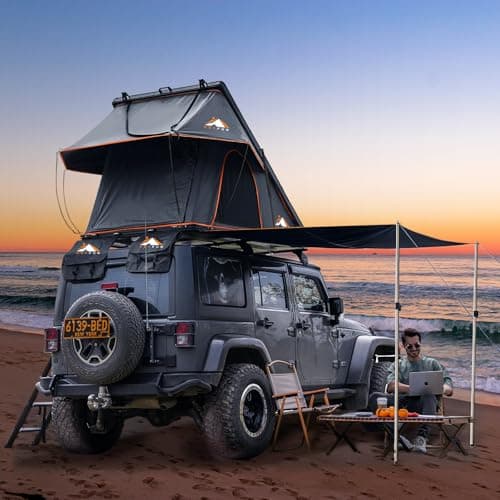
The case for a rooftop tent is real and it is narrow: setup in under a minute, a flat dry platform anywhere you can park, and separation from ground that may be soaked, uneven or full of things you would rather not sleep among.
The case against is mostly arithmetic. Roughly $1,100 versus $130. Two to four miles per gallon, all year, whether or not you are camping. A 120-pound object to store, and a vehicle you can no longer take through a parking garage.
#ad · Live prices from the Amazon Creators API, as of October 19, 2026. Where we have no verified live price we show none — a gap beats a number that has rotted.
In detail
The picks, in full
01
Best overall
Adventurer Pro Hard Shell
Hard shell2-3 personAluminum constructionGas strut opening
7.6/10
Aluminum hardshell, opens in under a minute, and light enough that the roof-load arithmetic actually works on a mid-size SUV.
Setup speed
10
Weather protection
8
Weight
7
Interior space
6
Value
7
What's good
+Hardshell opens and closes far faster than a fold-out, which matters when you move camp daily
+Aluminum shell survives highway speeds and weather better than fabric covers
+Closed profile is lower and quieter on the highway than a softshell
What's not
−Smaller floor area than a fold-out of the same weight
−No annex or awning space underneath
−Still a substantial roof load — check your vehicle's dynamic rating first
Skip it if…
…your vehicle's dynamic roof load rating is under about 165 pounds. Subtract your rack weight from that figure before you shop, not after.
The point people underestimate: your vehicle is now the tent
Once the rooftop tent is deployed, the vehicle cannot move without packing it away. That is fine on a route where you drive, stop, sleep and drive on. It is genuinely inconvenient at a basecamp where you want to drive to a trailhead, into town for ice, or to a viewpoint.
The common solution is a ground tent as well, at which point you own both.
Where rooftop tents genuinely win
Wet or rocky ground. No pitch to find, no puddle to wake up in.
Overland routes. Move every day, sleep anywhere you can park.
Somewhere with things you would rather not sleep among. Snakes, scorpions, wild pigs. Being off the ground is a real answer.
Speed. Arriving after dark and being in bed in ninety seconds is worth something after a long day.
Where ground tents genuinely win
Cost. A $130 tent and a $60 pad beat a $1,100 tent at ninety percent of what camping is.
Groups and families. Rooftop tents sleep two or three at considerable cost per person.
Any vehicle. No roof rating, no rack, no fitment question.
Basecamp trips. You keep the vehicle.
Backpacking. Obviously, but worth stating: a rooftop tent is a vehicle-only solution.
The honest middle option
A good ground tent, a genuinely comfortable sleeping pad with a real R-value, and a vehicle awning costs a fraction of a rooftop tent and solves most of the same problems — quick shelter, a comfortable sleep, protection from weather. If you have not yet spent money on a four-inch pad, do that before you spend it on a roof.
How these were picked
I haven't handled these. Here's what I did instead.
Everyone in this category says they tested twenty of these. I haven't tested any, and I say so. What I do instead: read the manufacturer's manual and published specification, compile the numbers that decide the purchase, do the arithmetic in the open, check the live price, and name one product to skip. The scores above are judgments from that research against a published rubric — they are not measurements I took, because I do not have a lab and I am not going to pretend otherwise.
Questions
Frequently asked
Are rooftop tents worth the money?+
If you move camp most days and camp on difficult ground, yes. For weekend camping in campgrounds, a ground tent and a good sleeping pad give you most of the comfort for a tenth of the cost and no fuel penalty.
How much fuel economy does a rooftop tent cost?+
Typically 2 to 4 miles per gallon, and you pay it all year rather than only when camping. Hardshells generally cost less than folded softshells because their profile is lower.
Can you leave a rooftop tent on year-round?+
Physically yes, and most people do because taking one off requires two people or a hoist. The costs are the constant fuel penalty, the added height for garages, and the UV exposure slowly aging the cover.
Do rooftop tents keep you safe from animals?+
They separate you from ground-level animals — snakes, scorpions, rodents, wild pigs — which in some regions is a genuine reason to buy one. They offer no meaningful protection from a determined bear, and food storage rules apply exactly the same.
We do not run a testing lab and we do not pretend to. Where a measured number came from a manufacturer's published specification or someone else's lab, we name them and link them. Where we could not verify something, we say so on the page rather than quietly leaving it out. Read the full method.