The pad, not the bag, is why people get cold at night. R-value is measured under a real ASTM standard, which makes this the most comparable spec in camping.
We earn a commission when you buy through our Amazon links, at no extra cost to you. It never changes the order of the picks, and we say so when the cheaper thing is the better buy. How this works.
Most people who wake up cold blame the sleeping bag. It is almost always the pad. Your body weight compresses the insulation underneath you flat, so the bag's fill does close to nothing between you and the ground — and the ground conducts heat out of you all night at a rate that dwarfs what the air is doing.
What stops that is the pad's R-value, and here is the genuinely good news: R-value is measured under ASTM F3340, a real standardized test. That makes it one of the very few numbers in outdoor gear that is directly comparable between brands. When a maker states an R-value tested to that standard, you can trust it against another manufacturer's figure.
R-values also add. A cheap closed-cell foam pad underneath an inflatable adds its rating to the total, which buys you a whole season of capability for about twenty dollars — and gives you a backup if the air pad punctures.
Two neighboring decisions worth reading before a first trip. Camp chairs are the piece of comfort gear people regret skipping more than any other, and car camping against backpacking gear is the question underneath every weight-versus-comfort trade on this page.
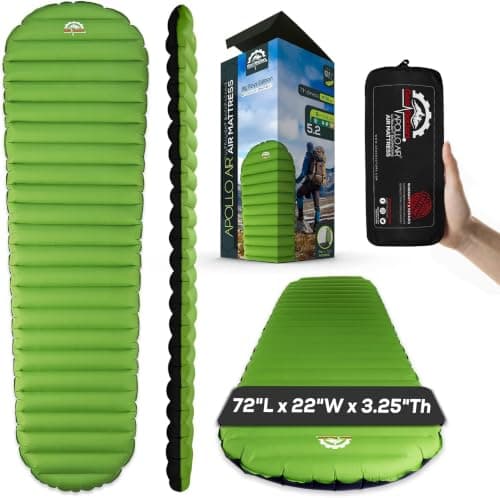
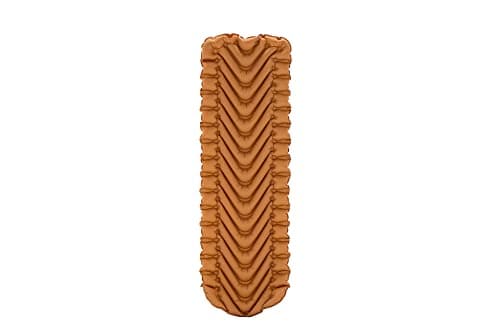
A 4.6 R-value pad that ships with an inflation bag, which keeps your moist breath out of the pad — the detail that decides whether insulation survives a season.
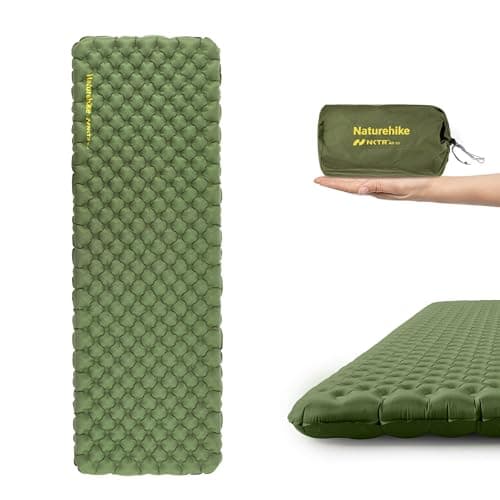
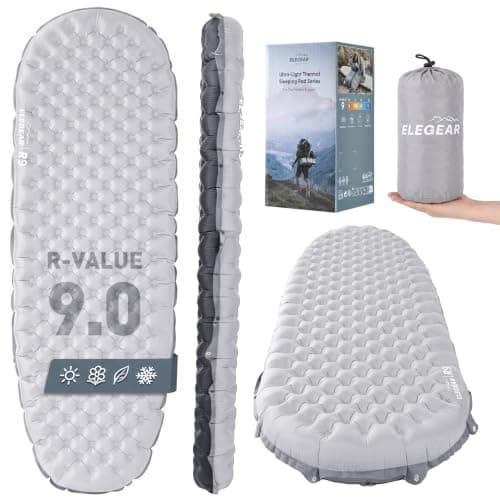
A stated R-value of 9 would put this above nearly every winter expedition pad made, at a fraction of the price. R-value has a real ASTM test behind it, and a number that far outside the field needs to name the test — this listing does not.
#ad · Live prices from the Amazon Creators API, as of October 19, 2026. Where we have no verified live price we show none — a gap beats a number that has rotted.
A 4.6 R-value pad that ships with an inflation bag, which keeps your moist breath out of the pad — the detail that decides whether insulation survives a season.
Insulation (R)
8
Comfort
8
Packed size
7
Durability
7
Value
8
What's good
+The included pump bag is not a gimmick — breath moisture inside a pad grows mold and degrades insulation
+4.6 R-value covers genuine three-season use
+Established value brand with consistent quality
What's not
−27 ounces is heavier than the lightest options
−Pump bag is another item to carry and lose
Skip it if…
…every ounce counts. The pump bag and slightly heavier fabric buy longevity rather than performance.
A stated R-value of 9 would put this above nearly every winter expedition pad made, at a fraction of the price. R-value has a real ASTM test behind it, and a number that far outside the field needs to name the test — this listing does not.
Insulation (R)
5
Comfort
8
Packed size
5
Durability
5
Value
6
What's good
+Genuinely thick
+Inexpensive for the stated specification
What's not
−ASTM F3340 is the standard that makes R-values comparable between brands, and an unusually high figure with no stated test method cannot be compared to anything
−For reference, dedicated four-season pads from established brands typically sit between 5 and 7
−If the number is right it is remarkable; if it is not, you are cold on frozen ground
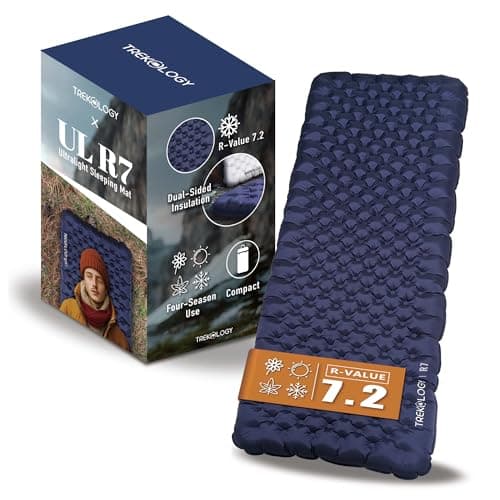
−The TREKOLOGY at a similar price states 7.2, which is already more than most people need
Skip it if…
…you are buying on the R-value. Buy a pad whose maker names the test, and treat unverified figures as marketing.
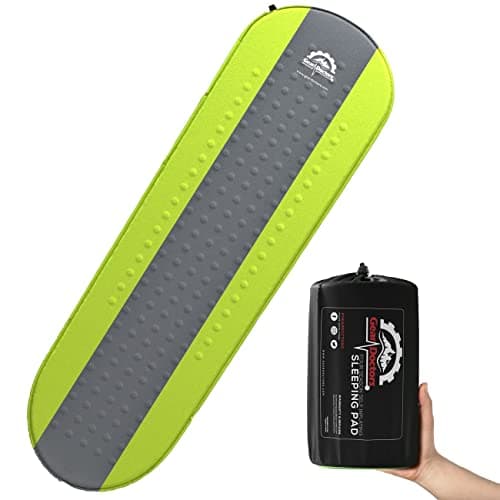
Air pads are the most comfortable and packable and can puncture. Self-inflating pads have an open-cell foam core that pulls in its own air — heavier and bulkier, but a slow puncture leaves you on foam rather than on rock. Closed-cell foam cannot puncture at all, weighs little, packs terribly, and is the most reliable thing you can own.
Thickness is comfort, not warmth
Warmth comes from R-value; comfort comes from thickness. Side sleepers need about three inches to stop the hip bottoming out; back sleepers are fine with two. These are separate specifications and a thick pad is not automatically a warm one.
Inflate with a pump bag, not your lungs
Your breath is warm and moist, and blowing it into a pad puts that moisture inside the insulation where it stays. Over a season it grows mold and degrades the fill. A pump sack weighs almost nothing and is worth using every time.
Carry the patch kit, and know where it is
An air pad puncture at 1am with the kit at the bottom of a pack is a bad night. Keep the patches with the pad itself.
How these were picked
I haven't handled these. Here's what I did instead.
Everyone in this category says they tested twenty of these. I haven't tested any, and I say so. What I do instead: read the manufacturer's manual and published specification, compile the numbers that decide the purchase, do the arithmetic in the open, check the live price, and name one product to skip. The scores above are judgments from that research against a published rubric — they are not measurements I took, because I do not have a lab and I am not going to pretend otherwise.
Questions
Frequently asked
What R-value do I need for camping?+
Two to four covers three-season camping for most people. Four to five and a half for cold shoulder seasons or if you sleep cold. Above five and a half for winter and frozen ground. Under two is summer only.
Can you stack sleeping pads to add R-value?+
Yes, and it is the cheapest way to extend a pad's season. R-values add, so a $20 closed-cell foam pad under a 3.0 R inflatable gives you roughly 5.0 — plus a backup if the air pad punctures.
Is R-value a standardized measurement?+
Yes, under ASTM F3340, which is why R-values from different manufacturers are genuinely comparable — a rare thing in outdoor gear. Where a maker does not state the test, treat the number with more caution.
Why should I not blow up a sleeping pad by mouth?+
Your breath carries moisture into the pad, where it stays. Over time that grows mold inside the insulation and degrades it. A pump sack weighs almost nothing and prevents it entirely.
We do not run a testing lab and we do not pretend to. Where a measured number came from a manufacturer's published specification or someone else's lab, we name them and link them. Where we could not verify something, we say so on the page rather than quietly leaving it out. Read the full method.