The rule: car camping optimizes for comfort and cost, backpacking optimizes for weight and packed size, and they are genuinely different products sold in the same aisle with the same words on the box.
A nine-pound tent is a bargain at the truck and a punishment three miles in. A 900-gram shelter is an expensive way to be cramped in a state park. Neither is a bad product; both are bad purchases for the other trip.
The expensive version of this mistake is buying backpacking gear for car camping, because you pay a large premium for weight savings that buy you nothing and accept comfort penalties you did not need to take.
The short answer
Quick picks
#ad · Live prices from the Amazon Creators API, as of Sep 4, 2026. Where we have no verified live price we show none — a gap beats a number that has rotted.
In detail
The picks, in full
Best overall
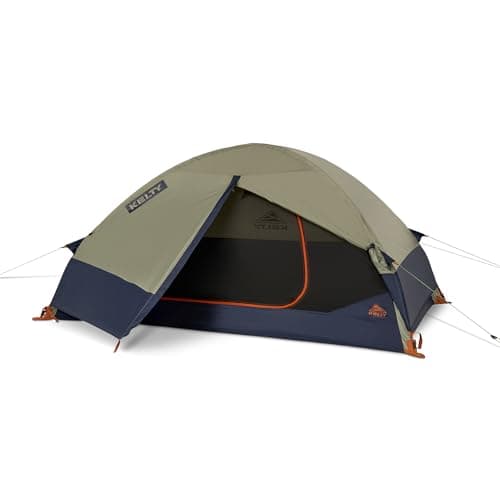
Kelty Late Start 2P
2-personAluminum polesFull-coverage rainflyQuick-corner setup
Aluminum poles, a full waterproof fly and a company that will still be here to warranty it — the two-person tent to buy if you buy one.
- Weather protection
- 9
- Packed weight
- 6
- Setup speed
- 8
- Durability
- 9
- Value
- 7
What's good
- +Aluminum poles bend rather than shatter, unlike the fiberglass in cheaper tents
- +Full-coverage fly rather than a partial cap, which is what keeps rain off the doors
- +Quick-corner pole attachment genuinely speeds up a setup in the dark
- +Kelty warranty and parts support are real
What's not
- −Roughly twice the price of the budget options
- −Heavier than a dedicated ultralight shelter
- −Two people and gear is tight, as it is in every 2P tent
Skip it if…
…you are counting grams for a thru-hike. This is a durable three-season tent, not an ultralight one.
Best overall
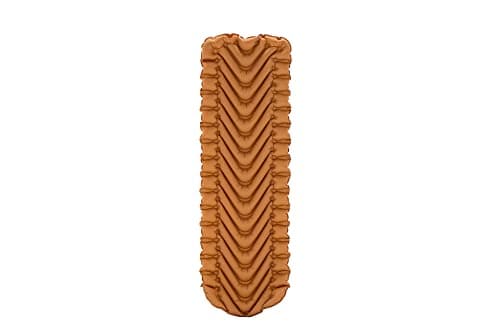
Klymit Insulated Static V Lite
InsulatedV-chamber designInflatableStuff sack included
The V-chamber design stops you rolling off, the insulation is real, and Klymit publishes its numbers.
- Insulation (R)
- 8
- Comfort
- 8
- Packed size
- 8
- Durability
- 6
- Value
- 8
What's good
- +Body-mapping V chambers limit air movement, which is what actually keeps you warm on an air pad
- +Side rails genuinely stop you sliding off in the night
- +Established brand with published specifications and a warranty
What's not
- −Air pads are puncture-vulnerable — carry the patch kit
- −Noisier than foam when you move
- −Takes 15 to 20 breaths to inflate
Skip it if…
…you camp on sharp ground regularly. A closed-cell foam pad cannot be punctured, which is sometimes worth more than comfort.
Best overall value
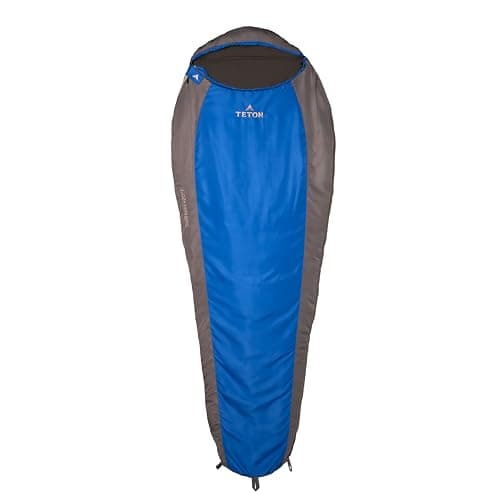
TETON Trailhead 20°F Mummy
20°F ratingMummy cutSynthetic fillCompression sack included
A 20°F mummy bag under seventy dollars from a company that has been making them for twenty years — the sensible default.
- Warmth for weight
- 7
- Packed size
- 6
- Wet performance
- 8
- Comfort
- 7
- Value
- 10
What's good
- +Mummy cut with a hood is dramatically warmer than a rectangular bag at the same fill
- +Synthetic fill keeps working when damp, unlike down
- +Compression sack included rather than sold separately
What's not
- −Manufacturer temperature ratings are not always ISO-tested — treat 20°F as a limit rather than a comfort figure
- −Synthetic fill packs larger than down
- −Mummy cut is restrictive if you move in your sleep
Skip it if…
…you sleep cold and expect comfort at 20°F. Buy a bag rated 10 to 15 degrees below the temperature you actually expect.
Best single burner and backup
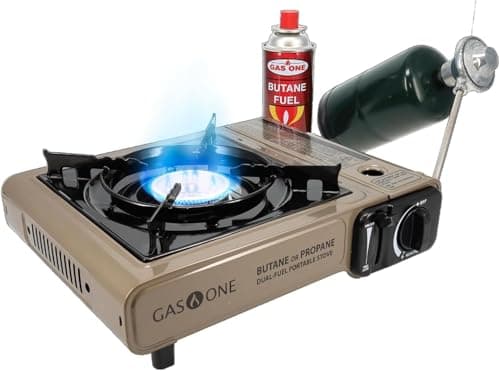
Gas One GS-3400P Dual Fuel
Dual fuel butane/propaneSingle burnerCarry casePortable
Runs on butane canisters or propane, packs in a hard case, and costs thirty dollars — the stove that lives in the truck permanently.
- Real output
- 6
- Wind resistance
- 5
- Cooking area
- 4
- Portability
- 10
- Value
- 10
What's good
- +Dual fuel means you can use whatever the store has
- +Butane canisters are compact and clean-burning
- +Cheap enough to keep one in an emergency kit and forget about it
What's not
- −One burner
- −Butane performs poorly below freezing — propane adapter is essential in cold
- −Small pan support
Skip it if…
…you cook multi-pan meals. This is a boil-water-and-fry-eggs stove and it is honest about it.
What changes, item by item
| Item | Car camping | Backpacking |
|---|
| Tent | 6–10 lb, cabin or dome, stand-up height | 2–4 lb, low profile, aluminum poles |
| Sleeping bag | Rectangular synthetic, comfort over weight | Mummy, down if conditions allow |
| Pad | 3–4 in thick, comfort first | Under 1.5 lb, R-value per ounce |
| Stove | Two-burner propane, real pans | Canister stove, boil water only |
| Cooler / food | Hard cooler, fresh food | No cooler, dehydrated food |
| Chair | Quad chair, comfortable | Ultralight seat, or a log |
| Light | Lantern plus headlamp | Headlamp only |
| Water | Carried in containers | Filter or purification |
The pieces worth buying once
A few items genuinely cross over, and these are where it makes sense to buy the better version:
- A good headlamp. Identical requirements on both trips.
- A quality sleeping bag, if you buy a mummy. It works at the truck too; a rectangular bag does not go backpacking.
- A knife. The same folder does both jobs.
- Rain gear. Weight matters more backpacking, but a good shell works everywhere.
Where crossover fails
Tents, pads, stoves and chairs do not cross over well, and trying to buy one of each that does both usually produces something mediocre at both. A three-pound backpacking tent in a campground is cramped for no reason; a nine-pound cabin tent on a trail is not going.
If you are starting from nothing
Buy car-camping gear first. It is cheaper, more forgiving of mistakes, and lets you find out whether you actually enjoy sleeping outside before you spend $600 on a shelter that weighs two pounds. Backpacking gear is the specialist purchase you make second, once you know you need it.
How these were picked
I haven't handled these. Here's what I did instead.
Everyone in this category says they tested twenty of these. I haven't tested any, and I say so. What I do instead: read the manufacturer's manual and published specification, compile the numbers that decide the purchase, do the arithmetic in the open, check the live price, and name one product to skip. The scores above are judgments from that research against a published rubric — they are not measurements I took, because I do not have a lab and I am not going to pretend otherwise.
Questions
Frequently asked
Can I use backpacking gear for car camping?+
You can, and you will be less comfortable and poorer for it. Backpacking gear costs a large premium for weight savings that buy you nothing at a campsite, and it trades away the comfort you could have had.
What is a reasonable backpacking base weight?+
Base weight — everything except food, water and fuel — under 20 pounds is comfortable for most people. Under 15 is lightweight. Under 10 is ultralight and involves real trade-offs in comfort and margin.
What should I buy first if I am new to camping?+
Car-camping gear, in this order: a tent with a full rainfly, a sleeping pad with a real R-value, and a bag rated below what you expect. Everything else can be borrowed or improvised for the first few trips.
Is a two-burner stove overkill for two people?+
No — the second burner is what lets you make coffee while something else cooks, which is most of the practical value. It is overkill for backpacking, where the whole cooking operation is boiling water.
Receipts
Sources
We do not run a testing lab and we do not pretend to. Where a measured number came from a manufacturer's published specification or someone else's lab, we name them and link them. Where we could not verify something, we say so on the page rather than quietly leaving it out. Read the full method.