Skip to content
Steve's Outpost

Section 02 · Hunting

How to Pack a Hunting Pack

Where the weight sits changes how heavy the pack feels more than how much it weighs. Heavy items high and against your spine, always.

By Stephen V.Updated How we pick
#ad

We earn a commission when you buy through our Amazon links, at no extra cost to you. It never changes the order of the picks, and we say so when the cheaper thing is the better buy. How this works.

The one rule: heavy items go high and as close to your spine as possible. That places the load's center of mass over your hips rather than behind them, so the pack pulls you down instead of backwards. Get this wrong and you spend the day leaning forward to compensate, which is where sore lower backs come from.

Everything else is refinement. But the refinement matters, because the difference between a well-packed 35-pound pack and a badly packed one is roughly the difference between 35 and 45 pounds in how it feels at hour four.

The short answer

Quick picks

#ProductBest forScorePrice
01
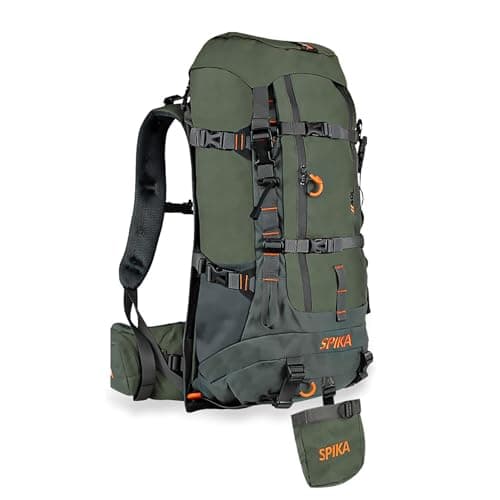
SPIKA SPIKA 40L+ Internal Frame Pack
SPIKA 40L+ Internal Frame Pack

Forty expandable liters with a rifle carry and a rain cover — the day-hunt pack that can handle an overnight if it has to.

Best internal frame
7.2
$269.99Amazon (affiliate link)
02
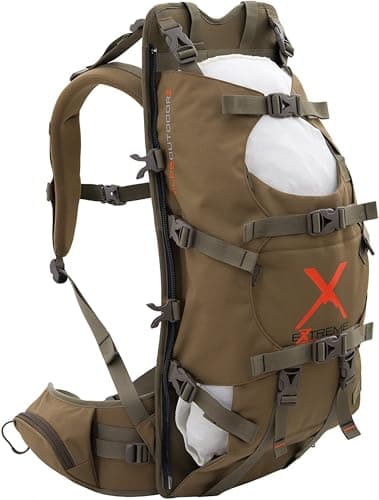
ALPS OutdoorZ ALPS OutdoorZ Extreme Commander X
ALPS OutdoorZ Extreme Commander X

A freighter frame with a detachable bag — the configuration that actually works for packing an animal out, from a company that has been making them for years.

Best overall
8.2
$229.99Amazon (affiliate link)
03
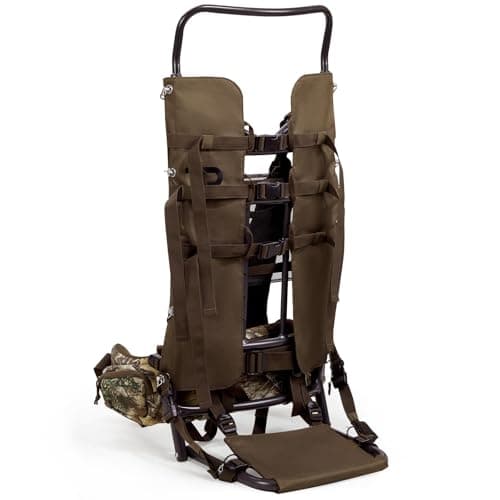
TIMBER RIDGE TIMBER RIDGE Aluminum External Frame
TIMBER RIDGE Aluminum External Frame

Under a hundred dollars for an adjustable aluminum external frame, which is the cheapest honest entry into frame packs.

Best budget frame
6.6
$94.99Amazon (affiliate link)

#ad · Live prices from the Amazon Creators API, as of Sep 4, 2026. Where we have no verified live price we show none — a gap beats a number that has rotted.

In detail

The picks, in full

01
SPIKA SPIKA 40L+ Internal Frame Pack

Best internal frame

SPIKA 40L+ Internal Frame Pack

40L expandableInternal frameRifle carryRain cover
7.2/10

Forty expandable liters with a rifle carry and a rain cover — the day-hunt pack that can handle an overnight if it has to.

Load carriage
7
Capacity
7
Comfort loaded
8
Durability
7
Value
7

What's good

  • Internal frame sits close to the body and does not snag in timber
  • Rifle carry system frees both hands on a climb
  • 40 liters expandable is the most useful single capacity for day hunting

What's not

  • Internal frames carry heavy loads less comfortably than a freighter
  • Expanded capacity comes at the cost of load stability

Skip it if…

there is any chance you will pack an elk quarter. Internal frames are not designed for that load and it will be a miserable trip.

$269.99See it on Amazon (affiliate link)

Price as of Sep 4, 2026. Prices move — Amazon's is the one that counts.

#ad · we may earn a commission from this link to SPIKA 40L+ Internal Frame Pack

02
ALPS OutdoorZ ALPS OutdoorZ Extreme Commander X

Best overall

ALPS OutdoorZ Extreme Commander X

External frameDetachable pack bagMeat shelfCoyote brown
8.2/10

A freighter frame with a detachable bag — the configuration that actually works for packing an animal out, from a company that has been making them for years.

Load carriage
9
Capacity
9
Comfort loaded
8
Durability
8
Value
7

What's good

  • The bag comes off so the frame carries meat directly against the load shelf
  • Freighter frames transfer weight to the hips far better than an internal frame under heavy load
  • Established brand with parts and warranty support

What's not

  • External frames snag in thick timber
  • Heavier empty than an internal-frame pack
  • Overkill for a day hunt where you carry nothing out

Skip it if…

you hunt whitetail from a stand you drive to. This is a pack-out frame and you would carry the weight of a feature you never use.

$229.99See it on Amazon (affiliate link)

Price as of Sep 4, 2026. Prices move — Amazon's is the one that counts.

#ad · we may earn a commission from this link to ALPS OutdoorZ Extreme Commander X

03
TIMBER RIDGE TIMBER RIDGE Aluminum External Frame

Best budget frame

TIMBER RIDGE Aluminum External Frame

Aluminum external frameAdjustable heightFoldableLightweight
6.6/10

Under a hundred dollars for an adjustable aluminum external frame, which is the cheapest honest entry into frame packs.

Load carriage
6
Capacity
7
Comfort loaded
5
Durability
6
Value
9

What's good

  • Adjustable torso height, which is normally a premium feature
  • Aluminum frame is light and repairable
  • Folds down for storage

What's not

  • Marketed for hiking rather than hunting, so no meat shelf as such
  • No published load rating, which is the specification that matters most
  • Suspension is basic compared with purpose-built hunting frames

Skip it if…

you plan to carry heavy loads regularly. Without a published load rating you are guessing about the one number that decides whether the frame is adequate.

$94.99See it on Amazon (affiliate link)

Price as of Sep 4, 2026. Prices move — Amazon's is the one that counts.

#ad · we may earn a commission from this link to TIMBER RIDGE Aluminum External Frame

The three-zone method

Bottom zone: light and bulky

Sleeping bag, spare insulation layer, anything soft that you will not need until you stop. Bulk down here is fine because it is not adding leverage against your back, and it forms a base that keeps the heavy items up where they belong.

Middle zone, against your spine: heavy and dense

Water, food, ammunition, optics, stove and fuel. This is the critical placement. Against your spine and roughly between your shoulder blades is where dense weight belongs, and pushing it outward toward the back panel of the pack is the most common packing error.

Top and outer: light and frequently needed

Rain shell, gloves, hat, headlamp, snacks. Everything you might want without taking the pack off goes here or in the lid pocket. A pack you have to unpack to reach your rain jacket is a pack whose rain jacket stays inside while you get wet.

The day-hunt kit

Deliberately short. Every item here is one you will either use or genuinely need if something goes wrong.

  • Water — two liters minimum, plus a filter if there is water on your ground.
  • Food — more than you think, because a cold hunter who has not eaten quits early.
  • Insulation layer — a puffy that lives in the pack permanently. Sitting still is a different thermal problem from walking in.
  • Rain shell — permanent resident, packed accessibly.
  • Headlamp plus spare cells — you go in and out in the dark. Twice.
  • Kill kit — knife, game bags, gloves, a short length of cord, all together in one pouch so nothing is missing.
  • Fire source — lighter and a ferro rod. Redundant on purpose.
  • First aid — including a tourniquet if you carry a knife and hunt alone.
  • Navigation — phone with offline maps plus a battery bank, and a compass you know how to use.
  • Optics — binoculars, and a rangefinder if you bowhunt.
  • Tags, license, pen. The item most often left in the truck.

What to leave behind

Spare clothing beyond one insulation layer, a full cook kit on a day hunt, a hatchet, and the second knife. Each of those is a pound or more of weight you carry every step for a scenario that will not happen on a day hunt.

Adjusting the pack itself

  1. Loosen everything, then load the pack.
  2. Put it on and fasten the hip belt so it sits on your iliac crest, not below it.
  3. Tighten the shoulder straps until they contact your shoulders — they are not carrying the weight, the hips are.
  4. Pull the load lifters to roughly 45 degrees to bring the top of the pack in toward you.
  5. Fasten the sternum strap loosely — it stops the straps sliding outward, nothing more.

Around 80 percent of the weight should be on your hips. If your shoulders ache after an hour, the hip belt is too loose or sitting too low.

How these were picked

I haven't handled these. Here's what I did instead.

Everyone in this category says they tested twenty of these. I haven't tested any, and I say so. What I do instead: read the manufacturer's manual and published specification, compile the numbers that decide the purchase, do the arithmetic in the open, check the live price, and name one product to skip. The scores above are judgments from that research against a published rubric — they are not measurements I took, because I do not have a lab and I am not going to pretend otherwise.
Questions

Frequently asked

How much weight should be on my hips?
Roughly 80 percent. The shoulder straps stabilize the load; the hip belt carries it. If your shoulders are aching an hour in, the belt is either too loose or riding below your iliac crest.
Where should heavy items go in a pack?
High and against your spine, roughly between the shoulder blades. That keeps the center of mass over your hips. Heavy items low or far from your back pull you backwards and you compensate by leaning forward all day.
What should be in a hunting kill kit?
Knife, game bags, nitrile gloves, a short length of paracord, and your tags. Keep it in one pouch that lives in the pack permanently — assembling it at the animal is how things get forgotten.
How heavy should a day pack be?
Fifteen to twenty-five pounds covers a full day-hunt kit with water. Beyond thirty pounds for a day hunt, something in the list above is a want rather than a need.

Keep reading

Receipts

Sources

We do not run a testing lab and we do not pretend to. Where a measured number came from a manufacturer's published specification or someone else's lab, we name them and link them. Where we could not verify something, we say so on the page rather than quietly leaving it out. Read the full method.