Skip to content
Steve's Outpost

Section 03 · Camping

YETI vs RTIC Coolers

Both use thick injected foam and a freezer gasket. The price gap is real and the ice-retention gap is much smaller than it — here is where the money actually goes.

By Stephen V.Updated How we pick
#ad

We earn a commission when you buy through our Amazon links, at no extra cost to you. It never changes the order of the picks, and we say so when the cheaper thing is the better buy. How this works.

The verdict first: buy the RTIC if you want a rotomolded cooler that keeps ice, which is most people. Buy the YETI if the cooler will live in a truck bed and take real abuse, if you want the strongest warranty and hardware, or if resale value matters to you — YETI holds its value better than any other cooler on the market.

What you should not do is buy the YETI expecting a proportional ice-retention advantage. Both are rotomolded with two to three inches of pressure-injected polyurethane and a freezer-grade gasket. Those are the two things that determine ice life, and neither is proprietary to either company.

Almost every real-world difference in ice retention between these two coolers is attributable to how they were packed and where they sat.

The short answer

Quick picks

#ProductBest forScorePrice
01
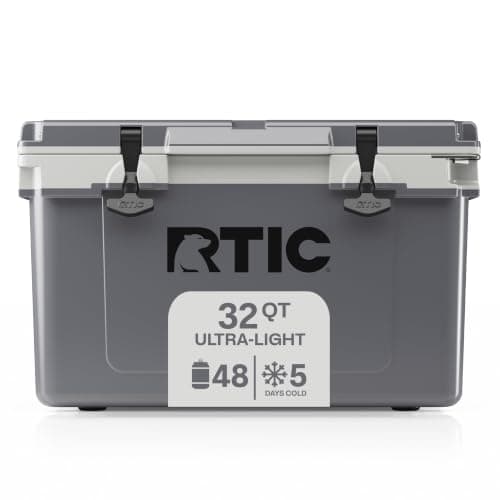
RTIC RTIC 32 QT Ultra-Light
RTIC 32 QT Ultra-Light

Rotomolded ice retention at roughly half the premium price, and thirty percent lighter than the tough version — the cooler most people should buy.

Best overall value
8.2
$143.10Amazon (affiliate link)
02
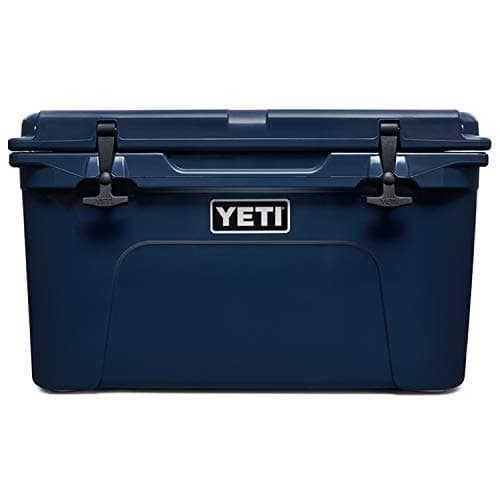
YETI YETI Tundra 45
YETI Tundra 45

The build quality is genuinely excellent and the price premium over RTIC is not matched by a proportional ice-retention gain. Buy it for the durability and the resale value, not for the ice.

Best premium
7.2
$325.00Amazon (affiliate link)

#ad · Live prices from the Amazon Creators API, as of Sep 4, 2026. Where we have no verified live price we show none — a gap beats a number that has rotted.

In detail

The picks, in full

01
RTIC RTIC 32 QT Ultra-Light

Best overall value

RTIC 32 QT Ultra-Light

32 qtRotomoldedUltra-light constructionFreezer gasket
8.2/10

Rotomolded ice retention at roughly half the premium price, and thirty percent lighter than the tough version — the cooler most people should buy.

Ice retention
8
Build quality
8
Weight
8
Capacity/size
7
Value
10

What's good

  • Same pressure-injected polyurethane insulation principle as the premium brands, at half the money
  • Ultra-light construction saves real weight over the standard rotomolded body
  • Freezer-grade gasket, which is where cheap coolers lose their ice

What's not

  • Lighter build is less impact resistant than the Ultra-Tough line
  • Latches are the most common wear point
  • 32 quarts is a weekend-for-two size

Skip it if…

the cooler lives in a truck bed and gets thrown around. Buy the Ultra-Tough version for that.

$143.10See it on Amazon (affiliate link)

$159.0010% off

Price as of Sep 4, 2026. Prices move — Amazon's is the one that counts.

#ad · we may earn a commission from this link to RTIC 32 QT Ultra-Light

02
YETI YETI Tundra 45

Best premium

YETI Tundra 45

45 qtRotomoldedPermaFrost insulationT-Rex latches
7.2/10

The build quality is genuinely excellent and the price premium over RTIC is not matched by a proportional ice-retention gain. Buy it for the durability and the resale value, not for the ice.

Ice retention
9
Build quality
10
Weight
4
Capacity/size
8
Value
5

What's good

  • Build quality and hardware are a visible step above everything cheaper
  • Certified bear resistant with the right lock configuration
  • Holds resale value better than any other cooler
  • Five-year warranty

What's not

  • Roughly double the price of an equivalent RTIC
  • Very heavy empty
  • Ice retention advantage over good mid-tier coolers is smaller than the price gap suggests

Skip it if…

ice retention is your only criterion. That is the one place where the premium is hardest to justify.

$325.00See it on Amazon (affiliate link)

Price as of Sep 4, 2026. Prices move — Amazon's is the one that counts.

#ad · we may earn a commission from this link to YETI Tundra 45

Where the money actually goes

Hardware and latches

This is the most visible difference. YETI's T-Rex rubber latches and hinges are noticeably more robust than RTIC's, and latches are the most common failure point on any cooler. Over five years of hard use this is a genuine durability difference.

Warranty

YETI carries a five-year warranty on hard coolers. RTIC's is shorter. Read the current terms on each manufacturer's site rather than relying on forum accounts, because both have changed over time.

Resale value

Genuinely a factor and rarely mentioned. A used YETI holds a substantial fraction of its price years later; a used RTIC does not, in absolute terms. If you are the sort of person who sells gear on, the effective cost gap narrows considerably.

Bear resistance certification

YETI's Tundra line is certified bear resistant with the correct lock configuration, which matters in the specific places where a certified container is required by regulation. Check current certification and the required locking method before relying on it.

Weight and capacity efficiency

RTIC's Ultra-Light line trades some impact resistance for meaningfully lower empty weight, which is a real advantage when a loaded cooler already needs two people. YETI has no direct equivalent in the Tundra range.

What is genuinely equivalent

  • Rotomolded single-piece construction
  • Pressure-injected polyurethane insulation, two to three inches
  • Freezer-grade gasket
  • Non-slip feet, tie-down slots, drain plug
  • Ice retention, to within a margin smaller than how you pack it

The honest recommendation

For most people, most of the time: buy the RTIC and spend the difference on a second cooler or on block ice for the next five years. Buy the YETI when abuse resistance, warranty or resale is the deciding factor — those are the three places the premium is genuinely earned.

How these were picked

I haven't handled these. Here's what I did instead.

Everyone in this category says they tested twenty of these. I haven't tested any, and I say so. What I do instead: read the manufacturer's manual and published specification, compile the numbers that decide the purchase, do the arithmetic in the open, check the live price, and name one product to skip. The scores above are judgments from that research against a published rubric — they are not measurements I took, because I do not have a lab and I am not going to pretend otherwise.
Questions

Frequently asked

Do YETI coolers really hold ice longer than RTIC?
Marginally at best, and the difference is smaller than the variation caused by pre-chilling, ice type, fill level and shade. Both use the same insulation approach. Buy the YETI for hardware and warranty, not for ice.
Is RTIC made by former YETI employees?
RTIC is an independent company that competes directly with YETI, and the two have been through litigation over design similarities. Treat the origin stories on either side with caution and judge the products on their published specifications.
Which cooler is better for hunting?
Either, sized to the animal. For a boned-out deer, 65 to 75 quarts. For an elk, two or three coolers rather than one huge one — a loaded 150-quart cooler cannot be lifted into a truck by two people.
Are cheaper rotomolded coolers just as good?
The insulation principle is the same, so ice retention is broadly comparable. Where budget rotomolded coolers differ is gasket quality, latch durability and hinge design — all of which show up in year three rather than on day one.

Keep reading

Receipts

Sources

We do not run a testing lab and we do not pretend to. Where a measured number came from a manufacturer's published specification or someone else's lab, we name them and link them. Where we could not verify something, we say so on the page rather than quietly leaving it out. Read the full method.