Ice retention comes from two to three inches of injected foam and a gasket that seals. Everything above that is brand, and the price gap is much wider than the performance gap.
We earn a commission when you buy through our Amazon links, at no extra cost to you. It never changes the order of the picks, and we say so when the cheaper thing is the better buy. How this works.
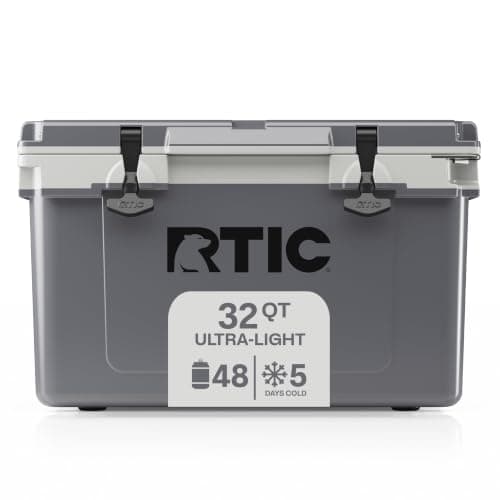
A rotomolded cooler holds ice longer than a cheap thermoplastic one for exactly two reasons: two to three inches of pressure-injected polyurethane foam in the walls and lid, and a freezer-grade gasket that actually seals. Neither is proprietary technology, which is why the price spread between premium and mid-tier coolers is far wider than the performance spread.
There is also a physical relationship that cooler marketing never mentions: ice retention scales with volume relative to surface area. A large cooler has less wall per quart than a small one, so it holds ice longer. That is why a "5-day" claim on a 16-quart cooler should be read with real suspicion — the geometry is working against it.
The other thing worth saying plainly: how you use it beats which one you buy. Pre-chilling, block ice, keeping it full and keeping it shaded move ice retention more than stepping up two price tiers.
Two things that live next to a cooler in every camp box and have their own pages here: a camping stove, because cold food is the other half of the problem a cooler creates, and a headlamp, because the thing you are rummaging for in the cooler is almost always in the dark.
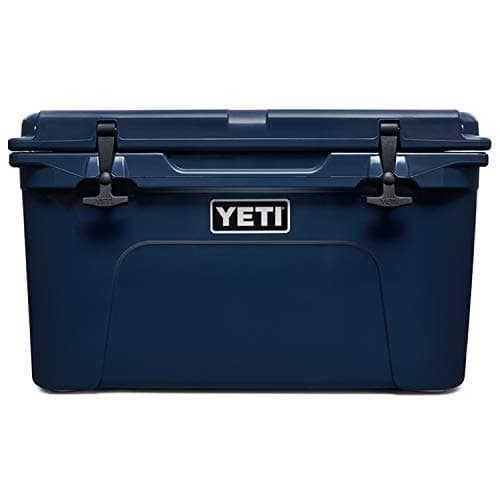
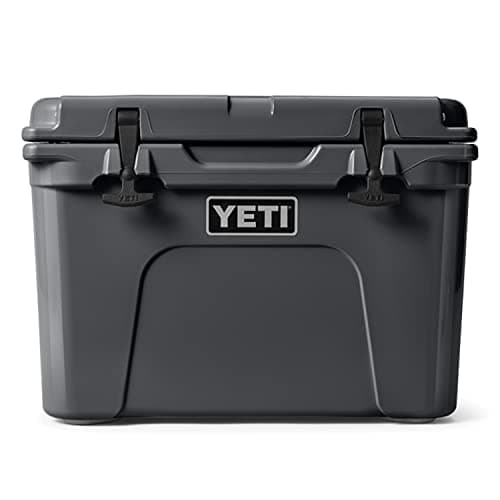
The build quality is genuinely excellent and the price premium over RTIC is not matched by a proportional ice-retention gain. Buy it for the durability and the resale value, not for the ice.
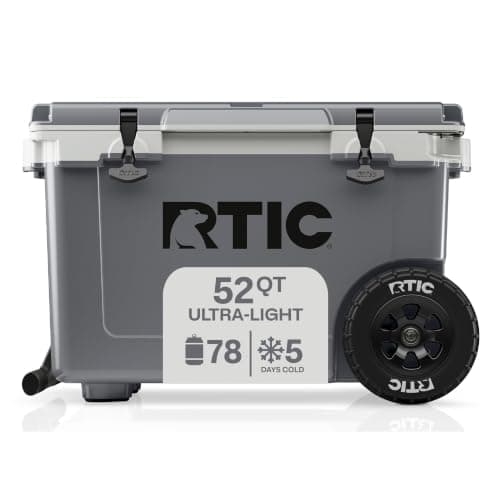
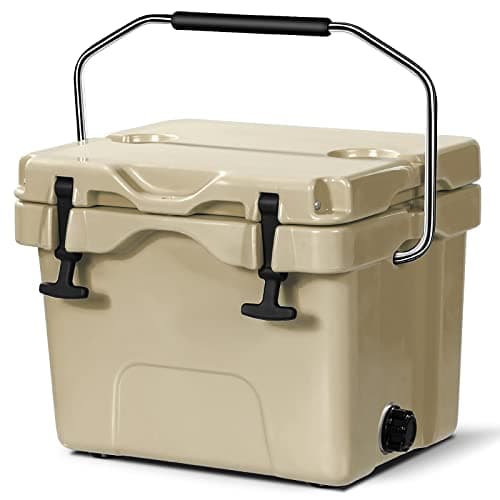
A 3-to-5-day ice retention claim on a 16-quart cooler does not survive contact with physics. Small coolers have a poor surface-area-to-volume ratio, which is precisely why they lose ice fastest.
#ad · Live prices from the Amazon Creators API, as of October 19, 2026. Where we have no verified live price we show none — a gap beats a number that has rotted.
The build quality is genuinely excellent and the price premium over RTIC is not matched by a proportional ice-retention gain. Buy it for the durability and the resale value, not for the ice.
Ice retention
9
Build quality
10
Weight
4
Capacity/size
8
Value
5
What's good
+Build quality and hardware are a visible step above everything cheaper
+Certified bear resistant with the right lock configuration
+Holds resale value better than any other cooler
+Five-year warranty
What's not
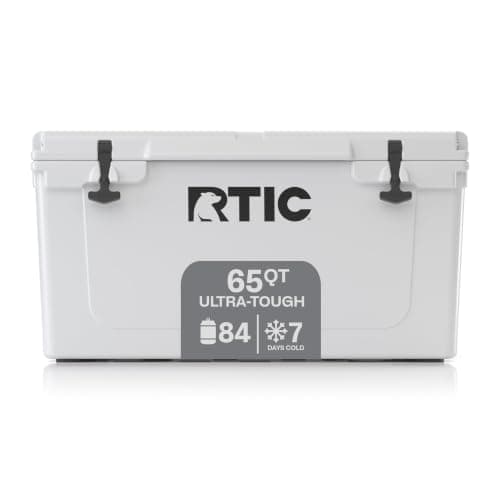
−Roughly double the price of an equivalent RTIC
−Very heavy empty
−Ice retention advantage over good mid-tier coolers is smaller than the price gap suggests
Skip it if…
…ice retention is your only criterion. That is the one place where the premium is hardest to justify.
A 3-to-5-day ice retention claim on a 16-quart cooler does not survive contact with physics. Small coolers have a poor surface-area-to-volume ratio, which is precisely why they lose ice fastest.
Ice retention
5
Build quality
6
Weight
8
Capacity/size
4
Value
4
What's good
+Small and portable
+Cheap
What's not
−Ice retention scales with volume relative to surface area — a 16-quart box has far more wall per quart than a 65-quart one, so it loses ice faster, not slower
−3-to-5-day claims on premium coolers refer to much larger sizes packed full with block ice
−At 16 quarts you are paying rotomolded-adjacent money for a lunch cooler
−Real-world retention depends more on how full it is and where you keep it than on the brand
Skip it if…
…the retention claim is why you are buying. A soft cooler costs a third as much for the same practical result at this size.
A cooler stored in a warm garage spends its first several hours cooling its own walls instead of your food. A sacrificial bag of ice overnight, dumped in the morning, is the single highest-return habit in this category and it is free.
Block ice on the bottom, cubes in the gaps
Block ice has far less surface area per volume and melts much more slowly. Cubes chill faster and fill voids. Using both is better than either. Frozen water bottles work as block ice and give you drinking water as they melt.
Keep it full
Air is the enemy — every time you open a half-empty cooler, the cold air falls out and warm air replaces it. Fill dead space with more ice, or with towels.
Do not drain the water too early
Ice water is colder than air and keeps contents chilled. Drain when you need to protect food from sitting in liquid, and use the drain plug rather than opening the lid.
Size to the trip, not the aspiration
A 65-quart cooler on a weekend for two is a heavy box of warm air, and it will lose ice faster than a full 32. Buy for the trip you take most often, and rent or borrow for the one weekend a year that is different.
How these were picked
I haven't handled these. Here's what I did instead.
Everyone in this category says they tested twenty of these. I haven't tested any, and I say so. What I do instead: read the manufacturer's manual and published specification, compile the numbers that decide the purchase, do the arithmetic in the open, check the live price, and name one product to skip. The scores above are judgments from that research against a published rubric — they are not measurements I took, because I do not have a lab and I am not going to pretend otherwise.
Questions
Frequently asked
Is a YETI worth the money over an RTIC?+
For build quality, hardware and resale value, arguably yes. For ice retention specifically, the gap is much smaller than the price gap — both use thick injected foam and a proper gasket. Buy the YETI for durability, not for ice.
How long will a rotomolded cooler really hold ice?+
It depends far more on your handling than on the brand: pre-chilled, packed full with block ice, kept in shade and rarely opened, several days is realistic. Half-empty, in the sun, opened constantly, that drops to about a day whatever the box cost.
What size cooler do I need?+
Roughly 20 to 25 quarts per person for a weekend, allowing for ice. A 45 to 65-quart cooler covers most family camping. For game meat, size to the boned-out weight plus an equal volume of ice.
Do smaller coolers really lose ice faster?+
Yes, all else equal. Ice loss is driven by heat entering through the surface, and a small cooler has far more wall area per quart of contents than a large one. It is a geometry problem, not a build-quality one.
We do not run a testing lab and we do not pretend to. Where a measured number came from a manufacturer's published specification or someone else's lab, we name them and link them. Where we could not verify something, we say so on the page rather than quietly leaving it out. Read the full method.