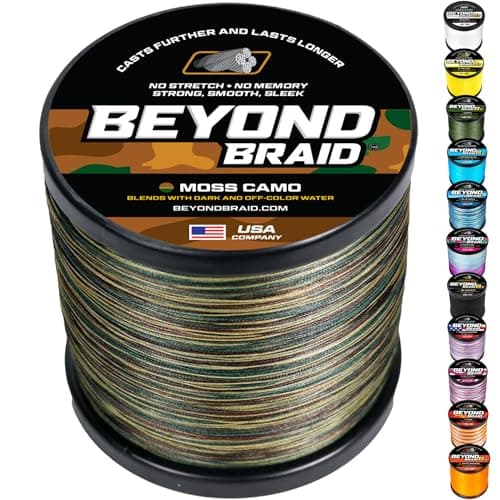
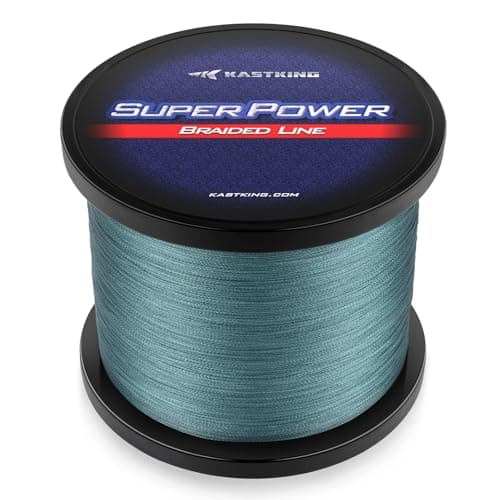
Every line type is a set of trade-offs and there is no best one. What there is, is a setup that solves most of them at once: braid main line with a fluorocarbon leader. You get braid's sensitivity, thin diameter and casting distance, plus fluorocarbon's near-invisibility and abrasion resistance where it counts. It costs one knot and about two minutes.
The three types, plainly:
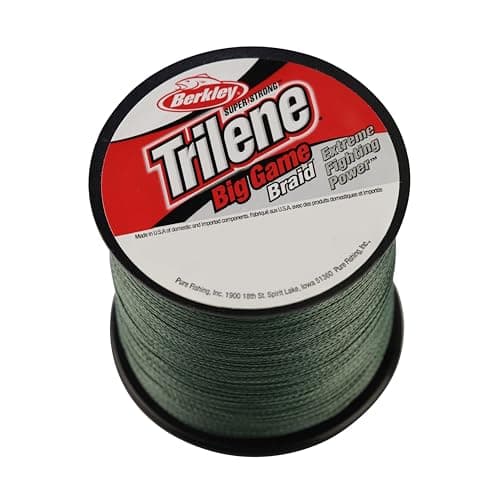
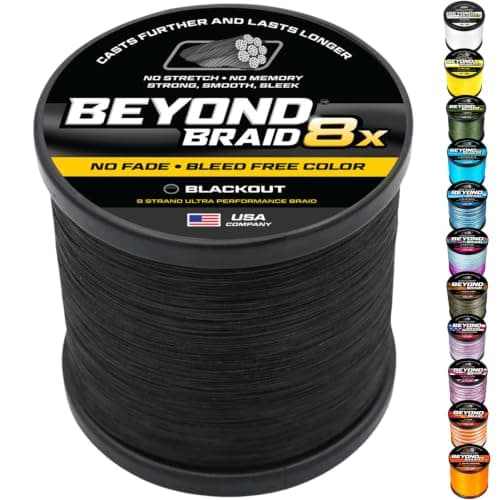
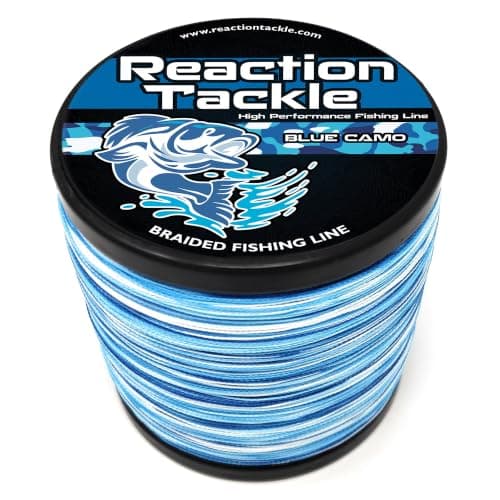
- Braid — effectively zero stretch, thinnest diameter for its strength, floats, highly visible, no memory. Best feel and worst choice tied straight to a crankbait.
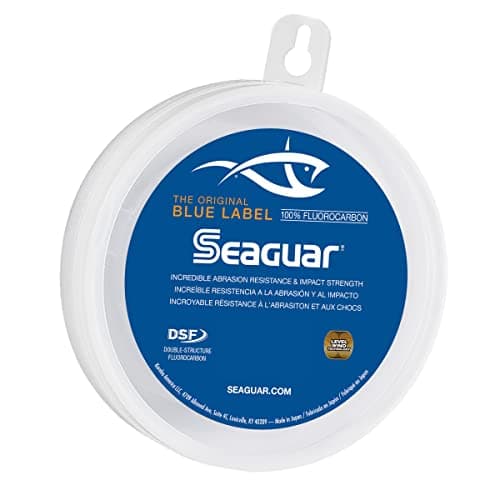
- Fluorocarbon — sinks, near-invisible underwater, moderate stretch, best abrasion resistance. Stiff and expensive.
- Monofilament — most stretch, floats, cheapest, most visible. The stretch is genuinely useful with treble hooks and is why mono is still the right answer for topwater.
Building the leader system
Why it works
Fluorocarbon is hard for fish to see because its refractive index is close to water's — light passes through it with less bending, so it disappears. That is a physical property of the material, which is why no amount of dye makes braid do the same thing: braid is opaque, and a fish looking up sees a solid line against a bright surface regardless of its color.
So you spool cheap braid, tie a two- to four-foot fluorocarbon leader on the end, and get both properties. The braid gives you distance and feel; the leader is what the fish sees.
The knot
An FG knot is the strongest and thinnest braid-to-fluoro connection and takes practice. A double uni is easier, slightly bulkier, and entirely adequate. Wet any knot before you seat it — friction heat is what weakens a knot, and saliva prevents it.
Choosing test
Braid's thin diameter means you can go heavier than you would with mono for the same spool capacity. A common bass setup is 20 to 30lb braid with a 12 to 15lb fluorocarbon leader — the leader is the intentional weak point, so a snag breaks the leader rather than losing you a hundred yards of braid.
When to use straight mono
Topwater and crankbaits. Mono floats, which keeps a walking bait on the surface, and its stretch is what stops treble hooks tearing free on a head shake. This is one of the few places where the cheapest line is genuinely the correct one.
Respool more often than you do
Line failure is almost always old line. UV, heat and abrasion degrade all three types. Braid lasts longest and can often be reversed on the spool to put the fresh end out; mono and fluoro should be replaced at least annually.
How these were picked
I haven't handled these. Here's what I did instead.
Everyone in this category says they tested twenty of these. I haven't tested any, and I say so. What I do instead: read the manufacturer's manual and published specification, compile the numbers that decide the purchase, do the arithmetic in the open, check the live price, and name one product to skip. The scores above are judgments from that research against a published rubric — they are not measurements I took, because I do not have a lab and I am not going to pretend otherwise.