We earn a commission when you buy through our Amazon links, at no extra cost to you. It never changes the order of the picks, and we say so when the cheaper thing is the better buy. How this works.
The verdict first: braid main line with a fluorocarbon leader solves most fishing problems at once and is what most experienced anglers run. Straight monofilament remains genuinely correct for topwater and treble-hook baits, and that is not nostalgia — it is the stretch doing a job.
Three properties do all the work here:
Stretch. Mono stretches most (roughly 15 to 25 percent), fluorocarbon less, braid effectively none. Stretch costs you sensitivity and hookset power, and buys you shock absorption that keeps treble hooks from tearing out.
Visibility. Fluorocarbon's refractive index is close to water's so light passes through it with little bending and it becomes hard to see. Mono is somewhat visible. Braid is opaque and highly visible at any color.
Density. Fluorocarbon sinks, mono is roughly neutral to floating, braid floats. This decides whether your line drags a topwater bait under or lets a jig fall naturally.
#ad · Live prices from the Amazon Creators API, as of October 19, 2026. Where we have no verified live price we show none — a gap beats a number that has rotted.
In detail
The picks, in full
01
Best value braid
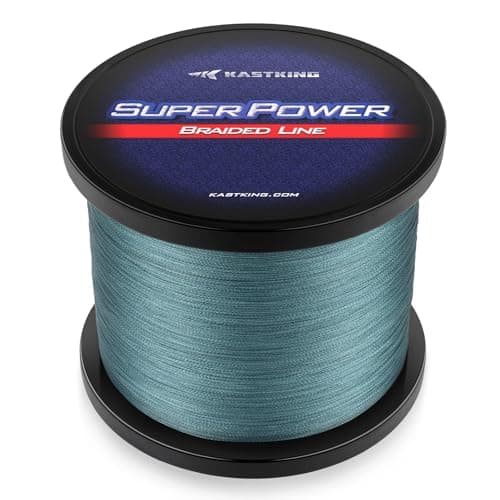
KastKing SuperPower Braid 20lb
20 lb test547 yardsLow-vis gray4-strand (X4)
7.8/10
547 yards of low-vis gray braid for around twenty-five dollars, which is why most people's spools have this on them.
Strength/diameter
8
Casting
7
Abrasion resistance
7
Knot strength
7
Value
10
What's good
+Effectively no stretch, so you feel everything and set hooks at distance
+Thin diameter for its strength means more line on the spool and longer casts
+Enough line on one spool to fill two reels, or to respool the same one twice
What's not
−Four-strand braid is rougher and noisier through guides than eight-strand
−Zero stretch is a liability with treble hooks
−Highly visible in clear water without a leader
Skip it if…
…you fish crankbaits and jerkbaits. No stretch plus treble hooks means fish tear free on the head shake.
Spool braid, tie two to four feet of fluorocarbon on the end. An FG knot is thinnest and strongest and takes practice; a double uni is easier and entirely adequate. Wet the knot before seating it — friction heat is what weakens knots.
Run the leader lighter than the braid on purpose. A snag then breaks the leader and costs you two feet of fluorocarbon rather than a hundred yards of braid.
Where each one fails
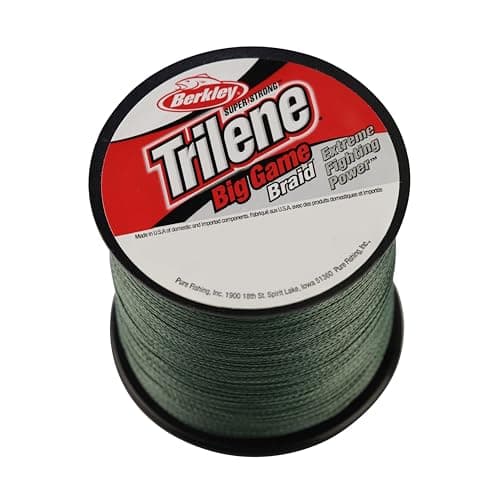
Braid cuts into itself on the spool under load, is highly visible in clear water, and its zero stretch tears treble hooks free. It also digs into the spool if wound on loosely.
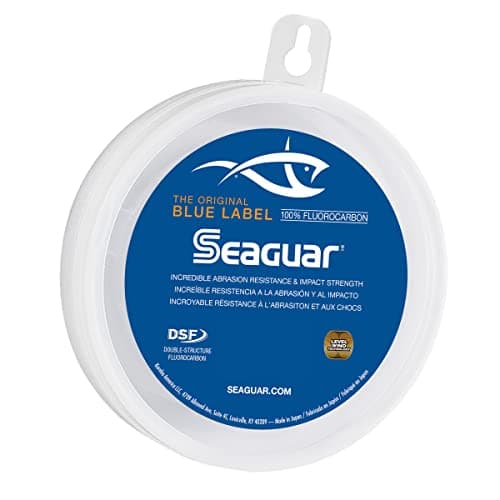
Fluorocarbon is stiff, has significant memory, is expensive as a main line, and its knots need care — it is the most knot-sensitive of the three.
Mono degrades in UV, has the most memory after sitting on a spool, and its stretch costs you hooksets at distance.
The cost picture
Braid costs most per spool and lasts several seasons, which makes it the cheapest per year. Mono is cheapest per spool and should be replaced annually. Fluorocarbon as a main line is the most expensive way to fish; as a leader it is one of the cheapest upgrades available, because a 25-yard spool lasts most people a full season.
How these were picked
I haven't handled these. Here's what I did instead.
Everyone in this category says they tested twenty of these. I haven't tested any, and I say so. What I do instead: read the manufacturer's manual and published specification, compile the numbers that decide the purchase, do the arithmetic in the open, check the live price, and name one product to skip. The scores above are judgments from that research against a published rubric — they are not measurements I took, because I do not have a lab and I am not going to pretend otherwise.
Questions
Frequently asked
Is braid better than mono?+
For sensitivity, casting distance and strength per diameter, yes. For treble-hook baits and topwater, no — mono's stretch is doing real work there, and braid tears hooks free on a head shake.
Can fish see braided line?+
Yes. Braid is opaque at any color, so a fish looking up sees a solid line against a bright surface. That is why the leader exists: fluorocarbon's refractive index is close to water's, which no dye can replicate in braid.
How long should a fluorocarbon leader be?+
Two to four feet for most freshwater applications. Longer in very clear water or for spooky fish; shorter when you need the knot outside the rod guides on a cast, because a knot running through the guides costs distance and eventually fails.
What knot connects braid to fluorocarbon?+
An FG knot is the thinnest and strongest and takes practice to tie. A double uni is much easier, slightly bulkier and perfectly adequate for most fishing. Wet either knot before seating it.
Should I use fluorocarbon as a main line?+
You can, and many bass anglers do for jigs and Texas rigs — it sinks and is sensitive. It is expensive, has significant memory on a spinning reel, and is more knot-sensitive than the alternatives.
We do not run a testing lab and we do not pretend to. Where a measured number came from a manufacturer's published specification or someone else's lab, we name them and link them. Where we could not verify something, we say so on the page rather than quietly leaving it out. Read the full method.