We earn a commission when you buy through our Amazon links, at no extra cost to you. It never changes the order of the picks, and we say so when the cheaper thing is the better buy. How this works.
Two words on a rod blank decide whether it will work for you, and almost nobody explains them. Power is how much force it takes to bend the rod — ultralight through heavy. Action is where along the blank that bend happens — fast rods flex near the tip, moderate rods bend through the middle.
Power should match your lure weight and line rating, both of which are printed on the blank right beside the power. Action should match your hookset: fast for single hooks like jigs and worms, where you want an immediate direct hookset; moderate for treble hooks on crankbaits, where a softer bend keeps hooks from tearing out when a fish thrashes.
If you are buying one rod, buy a seven-foot medium-power, fast-action spinning rod. That combination handles the widest range of freshwater techniques of any single setup, and every specialist rod you buy later will be a deliberate departure from it.
A rod is one third of a decision. The reel it carries is the second — baitcasting reels if you are throwing heavier lures with control, spinning reels if you want the easier cast — and the line is the third, where the cheapest change makes the biggest difference: braid versus mono versus fluoro. If you fish from a boat or a kayak, a fish finder changes where you put all three.
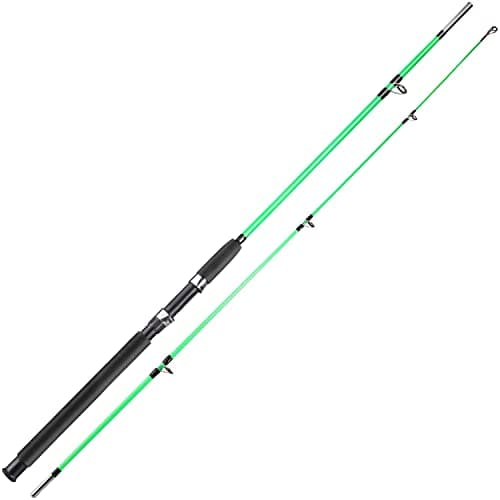
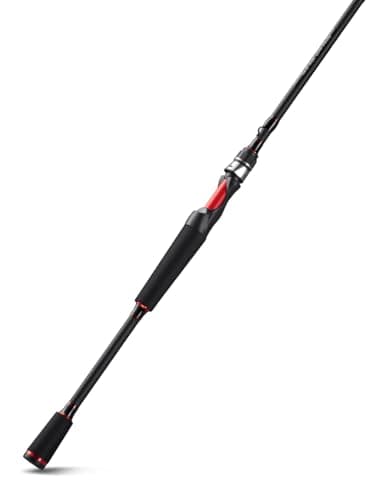
A rod marketed simultaneously for catfish, salmon, surf and trolling, in a graphite-and-glass composite with no stated power or action. A rod that claims to do everything has not been designed for anything.
#ad · Live prices from the Amazon Creators API, as of October 19, 2026. Where we have no verified live price we show none — a gap beats a number that has rotted.
2-piece compositeNo stated power/actionMarketed for multiple species
4.6/10
A rod marketed simultaneously for catfish, salmon, surf and trolling, in a graphite-and-glass composite with no stated power or action. A rod that claims to do everything has not been designed for anything.
Sensitivity
4
Backbone
5
Build quality
4
Versatility
5
Value
5
What's good
+Very cheap
+Two-piece for transport
What's not
−Power and action are the two specifications that determine whether a rod works for a technique, and this listing states neither
−Composite graphite-and-glass blanks trade sensitivity for cost, which defeats the purpose of a graphite rod
−Species claims spanning surf, trolling and freshwater indicate marketing rather than design
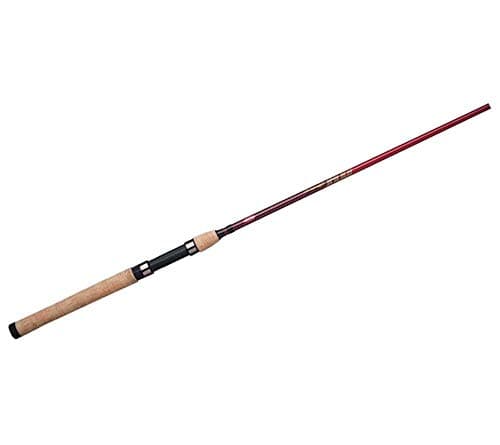
−The Berkley Cherrywood costs a few dollars more and states its line and lure ratings on the blank
Skip it if…
…you want to know what you are buying. Buy a rod whose power, action and lure rating are printed on it.
Extra fast: bends in the top 20 percent, maximum sensitivity and hookset speed, unforgiving on trebles. Fast: top third, the general-purpose choice. Moderate: bends through the middle, loads slowly, ideal for crankbaits. Slow: bends nearly to the handle, for very light line and small hooks.
Length changes casting distance and control
Longer rods cast further and give more leverage on a hookset; shorter rods are more accurate and easier under overhanging cover. Six-and-a-half to seven feet suits most freshwater fishing. Under six feet is for kayaks and tight creeks; over seven and a half is for surf and long casts.
Graphite, fiberglass or composite
Graphite is stiffer, lighter and far more sensitive — you feel the bottom. Fiberglass is heavier, more forgiving and nearly unbreakable, which is why it dominates crankbait rods and rental fleets. Composites split the difference and are usually chosen for cost rather than performance.
One-piece or two-piece
One-piece is marginally more sensitive because there is no ferrule to interrupt the blank. Two-piece fits in a car. For most people the transport advantage outweighs a sensitivity difference you will struggle to detect.
How these were picked
I haven't handled these. Here's what I did instead.
Everyone in this category says they tested twenty of these. I haven't tested any, and I say so. What I do instead: read the manufacturer's manual and published specification, compile the numbers that decide the purchase, do the arithmetic in the open, check the live price, and name one product to skip. The scores above are judgments from that research against a published rubric — they are not measurements I took, because I do not have a lab and I am not going to pretend otherwise.
Questions
Frequently asked
What is the best all-around fishing rod?+
A seven-foot medium-power, fast-action spinning rod. It handles the widest range of freshwater lures and techniques of any single setup, and it is the rod every specialist rod is a deliberate departure from.
What is the difference between power and action?+
Power is how much force it takes to bend the rod; action is where along the blank it bends. Power should match your lure weight and line; action should match your hooks — fast for single hooks, moderate for trebles.
Do I need a graphite rod?+
For bottom-contact techniques like jigs and worms, the extra sensitivity genuinely matters. For crankbaits and moving baits, fiberglass or composite is arguably better — the softer blank keeps treble hooks pinned.
How long should a fishing rod be?+
Six and a half to seven feet for most freshwater fishing. Shorter for kayaks and tight creeks where accuracy matters more than distance; longer for surf and where you need to cast a long way.
We do not run a testing lab and we do not pretend to. Where a measured number came from a manufacturer's published specification or someone else's lab, we name them and link them. Where we could not verify something, we say so on the page rather than quietly leaving it out. Read the full method.