We earn a commission when you buy through our Amazon links, at no extra cost to you. It never changes the order of the picks, and we say so when the cheaper thing is the better buy. How this works.
Spinning reel listings compete on bearing count, and it is almost meaningless. Ten cheap bearings are worse than four good ones, and manufacturers who count the roller bearing in the line roller are counting differently than manufacturers who do not.
What matters is drag smoothness. Maximum drag — the pressure at which the spool locks — is quoted everywhere and used almost never. What breaks line is start-up inertia: the drag sticks, a fish surges, and the line takes the shock all at once. A reel with 12 pounds of smooth drag will land fish that a reel with 30 pounds of jerky drag loses.
After that, corrosion resistance if you fish salt, and size matched to your line. A 4000-size reel spooled with 6lb line is as wrong as a 1000 spooled with 30.
A reel is half a system. The rod is the other half — our rod roundup ranks it, and spinning against baitcasting is the decision that comes before either. What you spool it with matters as much as both: the line page covers braid, mono and fluoro.
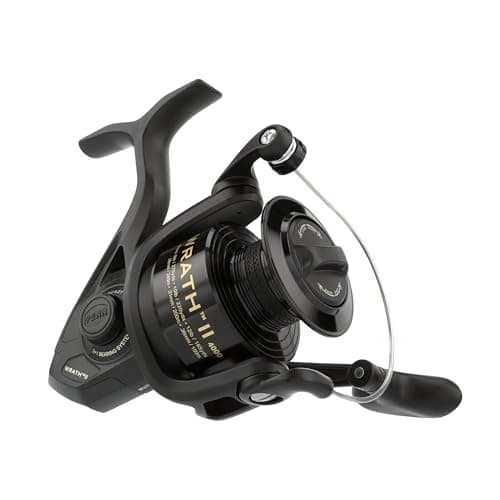
Thirty-three pounds of drag on an eighteen-dollar reel is the tell. That figure would exceed most premium reels twice the size — and a drag number without a smoothness spec is meaningless anyway.
#ad · Live prices from the Amazon Creators API, as of October 19, 2026. Where we have no verified live price we show none — a gap beats a number that has rotted.
33 lb max drag claimed5.2:1 ratio9+1 bearingsNo named maker
3.6/10
Thirty-three pounds of drag on an eighteen-dollar reel is the tell. That figure would exceed most premium reels twice the size — and a drag number without a smoothness spec is meaningless anyway.
Smoothness
3
Drag
4
Corrosion resistance
3
Build quality
3
Value
5
What's good
+Extremely cheap
+Includes a stated gear ratio
What's not
−Maximum drag is the pressure at which the spool locks, not usable fishing drag — a reel whose maximum is high but whose start-up is jerky breaks line, and the smoothness is what matters
−33lb maximum drag on a reel this size and price is far outside the field
−No named manufacturer means no warranty, no parts and no accountability
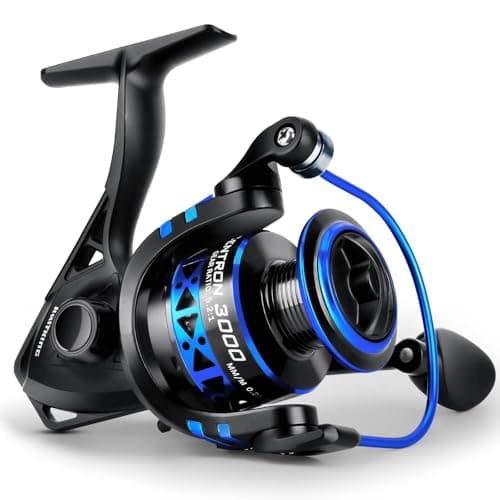
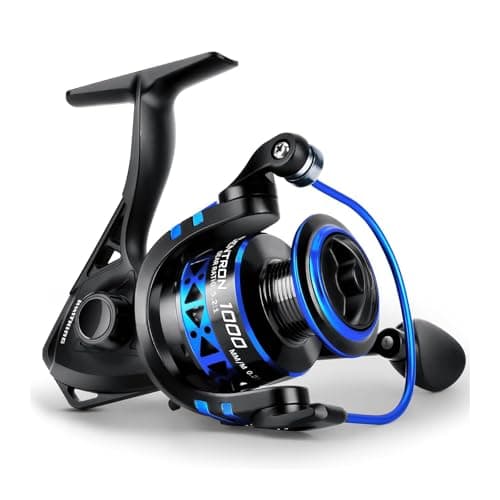
−The KastKing Centron costs a few dollars more and is a real product from a real company
Skip it if…
…you are choosing on the drag number. Buy a reel from a company that publishes a smooth start-up drag rating.
Gear ratio tells you spool rotations per handle turn; inches per turn accounts for spool diameter and is the number that actually describes retrieve speed. Two reels with the same ratio can differ meaningfully, and the larger spool wins. Around 5:1 is slow and torquey, 6:1 is general purpose, 7:1 and up is fast.
Body material
Aluminum bodies are stiffer and do not flex under drag pressure, which keeps the gears aligned and the reel smooth. Graphite is lighter and cheaper and flexes. For anything above light freshwater use, aluminum is the upgrade that matters.
Sealing, if you fish salt
Salt is the reason saltwater reels cost more. A sealed body keeps salt out of the bearings and gears; an unsealed one lets it in and it corrodes from the inside. Rinse any reel with fresh water after every salt trip regardless — no reel is immune, only slower to fail.
Line roller and spool lip
The line roller is where most line damage happens on a spinning reel. A bearing-supported roller spins freely and abrades line far less than a bushing. Check for it; it is rarely advertised.
How these were picked
I haven't handled these. Here's what I did instead.
Everyone in this category says they tested twenty of these. I haven't tested any, and I say so. What I do instead: read the manufacturer's manual and published specification, compile the numbers that decide the purchase, do the arithmetic in the open, check the live price, and name one product to skip. The scores above are judgments from that research against a published rubric — they are not measurements I took, because I do not have a lab and I am not going to pretend otherwise.
Questions
Frequently asked
What size spinning reel do I need?+
2500 or 3000 for general freshwater bass and walleye. 1000 for trout and panfish. 4000 for inshore saltwater and pike. Match the size to your line weight rather than to your rod length.
Do more bearings mean a better reel?+
No. Bearing quality and placement matter enormously more than count, and manufacturers count them inconsistently. Four good bearings in the right places outperform ten cheap ones every time.
What is a good max drag for a spinning reel?+
Match it roughly to your line — 10 to 15lb of drag suits 10 to 15lb line. Far more important is that the drag starts smoothly. Start-up inertia is what breaks line, not insufficient maximum pressure.
How do I stop line twist on a spinning reel?+
Fill the spool to within an eighth of an inch of the lip and no further, close the bail by hand rather than by cranking, and use a swivel with any lure that spins. Overfilled spools cause most of the tangles people blame on the reel.
We do not run a testing lab and we do not pretend to. Where a measured number came from a manufacturer's published specification or someone else's lab, we name them and link them. Where we could not verify something, we say so on the page rather than quietly leaving it out. Read the full method.