We earn a commission when you buy through our Amazon links, at no extra cost to you. It never changes the order of the picks, and we say so when the cheaper thing is the better buy. How this works.
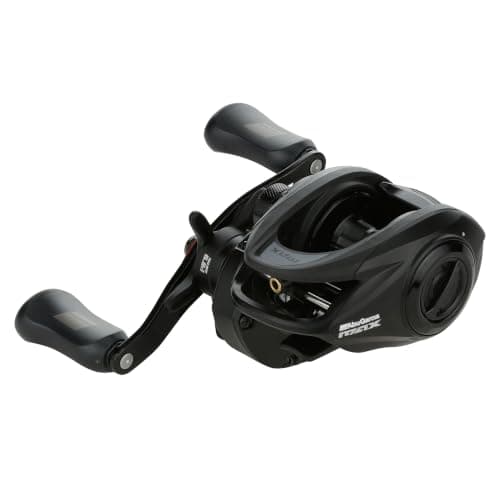
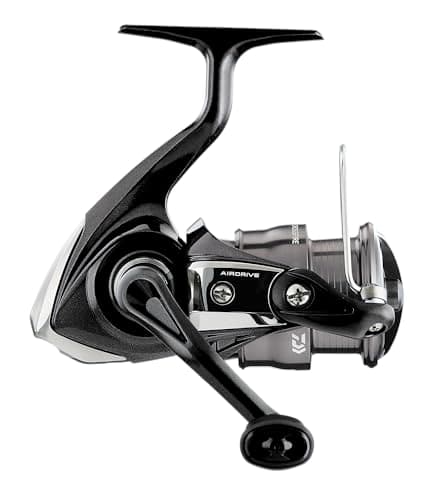
The verdict first: buy a spinning reel first, always. It handles light lures a baitcaster physically cannot throw, it has no learning curve worth mentioning, and it covers the widest range of fishing. Buy a baitcaster second, once you know you throw heavier lures and want more accuracy and cranking power.
The thing that actually settles the argument is lure weight, and it is mechanical rather than a matter of skill. A baitcaster's spool has to be driven by the weight of the lure. Below about three-eighths of an ounce there is not enough mass to turn the spool properly, so you get a short cast and a backlash. A spinning reel's spool does not rotate at all — the line peels off a fixed spool — so lure weight is irrelevant to it.
That single difference is why finesse fishing is still done on spinning gear at every level of the sport, and why nobody throws a half-ounce jig into heavy cover on a spinning rod if they own a baitcaster.
#ad · Live prices from the Amazon Creators API, as of October 19, 2026. Where we have no verified live price we show none — a gap beats a number that has rotted.
Throws lures from a sixteenth of an ounce upward, which a baitcaster cannot
Effectively no learning curve — open the bail, cast, close the bail
Better for skipping under docks with light baits
Easier to use in wind, because a wind knot is easier to fix than a backlash
Cheaper at every price point for equivalent quality
Baitcasting: heavy lures, accuracy, power
More casting accuracy once you can use it — you can stop the lure precisely with your thumb
More cranking power, because the handle drives the spool directly
Handles heavy line and heavy cover far better
Better for repeated pitching and flipping to targets
Lets you adjust the cast mid-flight, which spinning does not
The lure-weight table
Lure weight
Use
Under 1/8 oz
Spinning only
1/8 – 3/8 oz
Spinning strongly preferred
3/8 – 3/4 oz
Either works
3/4 oz and up
Baitcasting preferred
The learning curve, honestly
A baitcaster takes most people a few sessions to cast without regular overruns and a season to cast well. That curve is far shorter than its reputation if you do three things: set the spool tension for every lure, start with the brakes at 70 to 80 percent, and refuse to practice with light lures. Most people who give up were trying to learn with a quarter-ounce bait in a headwind.
Owning both
This is where most experienced anglers land, and the split is by technique rather than by preference. Spinning gear handles finesse — drop shot, wacky rig, small swimbaits, light jigs. Baitcasting handles power — jigs, Texas rigs, frogs, big crankbaits, anything in heavy cover. Neither replaces the other.
If you are buying your first setup, buy spinning. If you already own spinning gear and find yourself wishing for more accuracy with heavier baits, that is the moment the baitcaster starts to make sense.
How these were picked
I haven't handled these. Here's what I did instead.
Everyone in this category says they tested twenty of these. I haven't tested any, and I say so. What I do instead: read the manufacturer's manual and published specification, compile the numbers that decide the purchase, do the arithmetic in the open, check the live price, and name one product to skip. The scores above are judgments from that research against a published rubric — they are not measurements I took, because I do not have a lab and I am not going to pretend otherwise.
Questions
Frequently asked
Should a beginner start with spinning or baitcasting?+
Spinning, without qualification. It throws a far wider range of lure weights, has essentially no learning curve, and costs less. Learn to fish first; add the baitcaster when a specific technique calls for it.
Is a baitcaster more accurate?+
Once you can use one, yes — thumb control lets you stop the lure precisely where you want it, and you can adjust mid-cast. Before that it is dramatically less accurate, because you are fighting overruns.
Why does my baitcaster keep backlashing?+
Usually spool tension set for a different lure weight. Retie, hold the rod at ten o'clock, and adjust the tension knob until the lure falls slowly and the spool stops dead when it lands. Then set brakes high and thumb the spool.
Can you use braid on a baitcaster?+
Yes, and it is common — braid's lack of stretch suits heavy cover. Put a mono backing down first so the braid does not slip on the spool arbor, and be aware that a backlash in braid is considerably harder to pick out than one in mono.
We do not run a testing lab and we do not pretend to. Where a measured number came from a manufacturer's published specification or someone else's lab, we name them and link them. Where we could not verify something, we say so on the page rather than quietly leaving it out. Read the full method.