We earn a commission when you buy through our Amazon links, at no extra cost to you. It never changes the order of the picks, and we say so when the cheaper thing is the better buy. How this works.
A baitcaster gives you more casting accuracy, better control with heavy lures and more cranking power than a spinning reel. It costs you a learning curve measured in birds' nests, and the braking system is what determines how long that curve is.
Two braking types dominate. Magnetic braking applies constant resistance throughout the cast, adjusts with an external dial, and is far more forgiving for a beginner. Centrifugal braking applies most of its force early in the cast when the spool is spinning fastest, which is where overruns actually start — better once you can cast, and it requires opening the sideplate to adjust.
Gear ratio is the other decision, and it is about retrieve speed rather than power. 6.4:1 is for deep crankbaits and anything you want to keep down. 7.2:1 is the general-purpose answer. 8:1 and up is for jigs, frogs and picking up slack fast.
Three pages worth reading alongside this one. How to choose a rod explains the power and action numbers a baitcaster has to be matched to, tackle storage is where the rest of the kit lives, and the fishing checklist is the list to pack against.
#ad · Live prices from the Amazon Creators API, as of October 19, 2026. Where we have no verified live price we show none — a gap beats a number that has rotted.
In detail
The picks, in full
01
Best overall
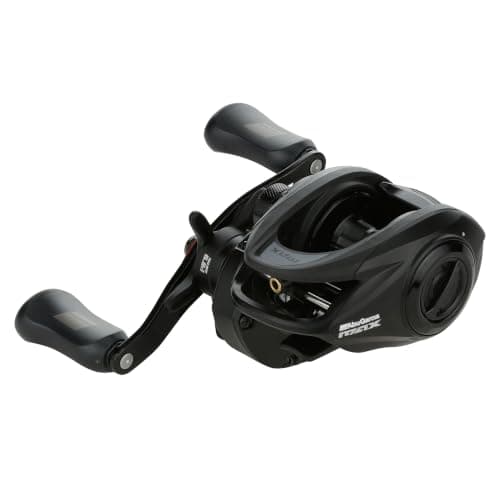
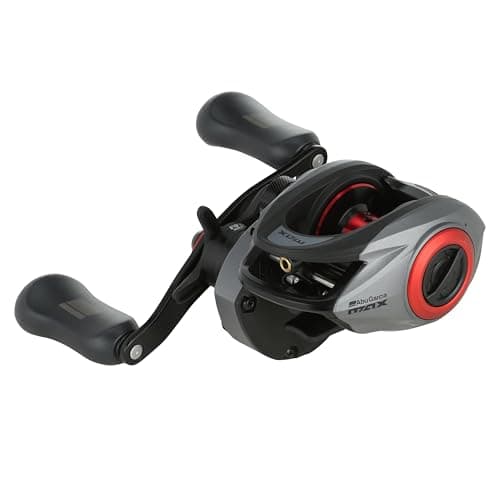
Abu Garcia Max Elite
Carbon body and sideplatesDuragear brass gearCarbon Matrix dragRight hand
8.4/10
Carbon body, brass gears and Abu Garcia's Carbon Matrix drag — the reel that makes learning a baitcaster far less painful.
Casting control
9
Drag
9
Build quality
9
Ergonomics
8
Value
7
What's good
+Carbon body keeps weight down without the flex of graphite
+Brass main gear lasts far longer than the alloys used at lower prices
+Carbon Matrix drag is genuinely smooth from the start of a run
+Abu Garcia service and parts are widely available
What's not
−Most expensive reel here
−Still requires braking adjustment for each lure weight — no baitcaster escapes this
Skip it if…
…this is your first baitcaster. Learn the thumb on a cheaper reel; the birds' nests are identical and less expensive.
Set the spool tension first, every time you change lures
Tie on your lure, hold the rod at ten o'clock, press the thumb bar and let the lure fall. Adjust the spool tension knob until the lure falls slowly and the spool stops the moment the lure hits the ground with no overrun. That single adjustment prevents most beginner backlashes and it has to be redone for every lure weight.
Start with the brakes high
Set braking at 70 to 80 percent for your first sessions. You will lose casting distance and gain the ability to keep fishing rather than picking line. Back it off gradually as your thumb learns.
Learn to thumb the spool
Brakes slow the spool; your thumb stops it. Feather the spool lightly through the cast and press down as the lure lands. This is the actual skill and no braking system replaces it.
Do not learn with light lures
Baitcasters need weight to cast — a spool has to be driven by the lure, and light lures do not drive it. Start with three-eighths to half an ounce. Trying to learn with a quarter-ounce lure is the most common reason people give up.
Frame material and gear material
Aluminum and carbon frames resist flex under load, which keeps the gears meshed and the reel smooth; graphite frames flex. Brass main gears outlast the alloy gears used in budget reels by a large margin. Those two specifications are where durability actually lives.
How these were picked
I haven't handled these. Here's what I did instead.
Everyone in this category says they tested twenty of these. I haven't tested any, and I say so. What I do instead: read the manufacturer's manual and published specification, compile the numbers that decide the purchase, do the arithmetic in the open, check the live price, and name one product to skip. The scores above are judgments from that research against a published rubric — they are not measurements I took, because I do not have a lab and I am not going to pretend otherwise.
Questions
Frequently asked
What gear ratio should I get for a baitcaster?+
7.2:1 is the best single choice. Go to 6.4:1 for deep crankbaits where you need torque and a slower presentation, and 8:1 or higher for jigs, frogs and anything needing fast slack pickup.
How do I stop a baitcaster backlashing?+
Set the spool tension knob for each lure so the lure falls slowly and stops dead on landing, start with brakes at 70 to 80 percent, and thumb the spool as the lure lands. Also avoid casting into a headwind while learning.
Magnetic or centrifugal brakes?+
Magnetic for learning — it is externally adjustable and applies steady resistance. Centrifugal once you can cast, because it brakes hardest early in the cast where overruns actually begin. Some reels combine both.
What is the lightest lure a baitcaster can throw?+
Most standard baitcasters struggle below a quarter ounce, and three-eighths is a comfortable minimum. Below that a spinning reel is genuinely the better tool, which is why finesse fishing is still done on spinning gear.
We do not run a testing lab and we do not pretend to. Where a measured number came from a manufacturer's published specification or someone else's lab, we name them and link them. Where we could not verify something, we say so on the page rather than quietly leaving it out. Read the full method.