The part of the hunt nobody plans for and everyone remembers. Which tool to own comes down to one question about your ground, and the answer is not the capacity rating.
We earn a commission when you buy through our Amazon links, at no extra cost to you. It never changes the order of the picks, and we say so when the cheaper thing is the better buy. How this works.
The verdict first: if there is anything resembling a trail, buy a cart. If there is snow or leaf litter, buy a sled. If there is neither, buy a drag harness and accept that it is going to be work. Almost nobody needs all three, and the deciding factor is your ground, not the animal.
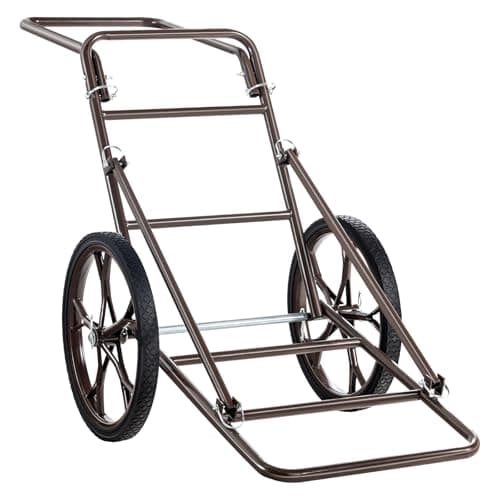
The number on the box is a distraction. A 500-pound cart and a 550-pound cart both haul a deer fine. What actually stops you is wheel diameter — a small wheel drops into every hole and stops at every root, and a large one rolls over both. Shop the tires.
The second thing nobody plans for is the lift. Getting the animal into the truck, or hung for skinning, is a genuinely two- or three-person job done by hand and a one-person job with twenty-six dollars of pulley.
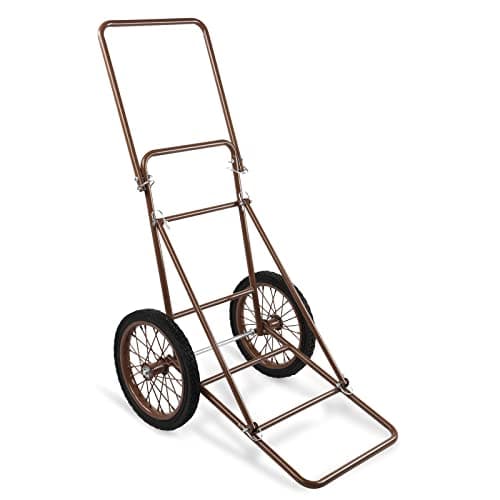
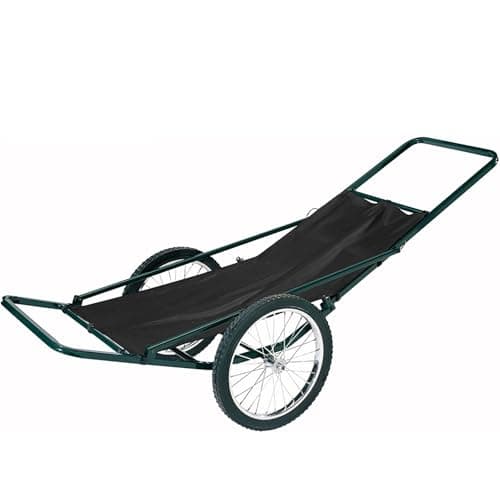
Five hundred pounds of rated capacity, folds into a truck bed, and costs less than a hundred dollars. For one person moving a deer out of country a truck cannot reach, nothing else on this page is close.
The same rated capacity for eighty dollars. It is a lighter-tube frame with smaller wheels, which is a fair trade if your ground is reasonable and your budget is not.
A harness moves the load onto your shoulders and hips and frees both hands. Dragging a deer by a rope in one fist is how people fall on ice and how backs get hurt.
Eight dollars, weighs nothing, and lives in the bottom of the pack forever. The cheapest insurance on this page against a successful hunt turning into a very long night.
In snow, brush and leaf litter a sled beats a cart and a drag together, because the animal rides on plastic instead of on the ground. It also keeps the meat and the hide clean, which nothing else here does.
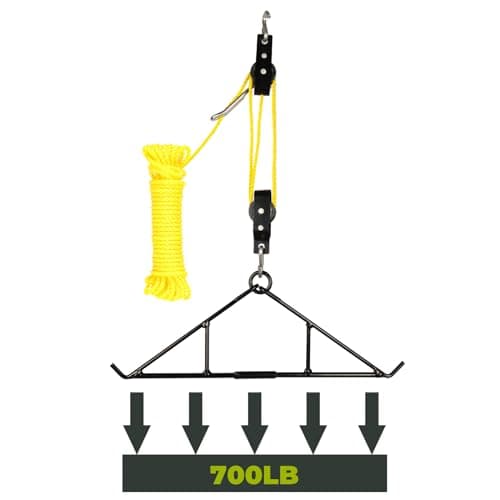
The pulley ratio is the point: a 4:1 block lets one person lift an animal one person cannot lift. Twenty-six dollars is a rounding error against the alternative of asking three neighbors.
One hundred and eighty dollars for fifty pounds more rated capacity than a cart costing under a hundred. In a category where the real limit is wheel diameter and ground condition, the capacity number is not what you should be buying.
#ad · Live prices from the Amazon Creators API, as of Sep 7, 2026. Where we have no verified live price we show none — a gap beats a number that has rotted.
Five hundred pounds of rated capacity, folds into a truck bed, and costs less than a hundred dollars. For one person moving a deer out of country a truck cannot reach, nothing else on this page is close.
Capacity
9
Terrain handling
7
Portability
8
Build quality
6
Value
10
What's good
+One person can move an animal that two people struggle to drag
+Folds small enough to actually live in the truck through the season
+Capacity covers a whole deer plus the pack you carried in
What's not
−Two wheels means uneven ground still fights you — a cart is not a wheelbarrow
−Assembly quality is marketplace-grade; check every fastener before the first trip
Skip it if…
…you hunt thick timber with no trails. A cart needs something resembling a path, and in real brush a sled or a drag beats it.
The same rated capacity for eighty dollars. It is a lighter-tube frame with smaller wheels, which is a fair trade if your ground is reasonable and your budget is not.
Capacity
8
Terrain handling
6
Portability
8
Build quality
6
Value
10
What's good
+The cheapest cart here with a capacity rating worth believing
+Light enough to carry in and out on your back when empty
+Doubles as a general gear hauler for stands and blinds in the off season
What's not
−Smaller wheels sink in soft ground where a larger-diameter tire rolls over
−Lighter tubing flexes under a full load
Skip it if…
…you are moving elk-sized animals or crossing soft ground. Buy the bigger wheels; the capacity number is not the constraint, the tire diameter is.
Shoulder harnessAdjustable strapsRope and loopPackable
8.2/10
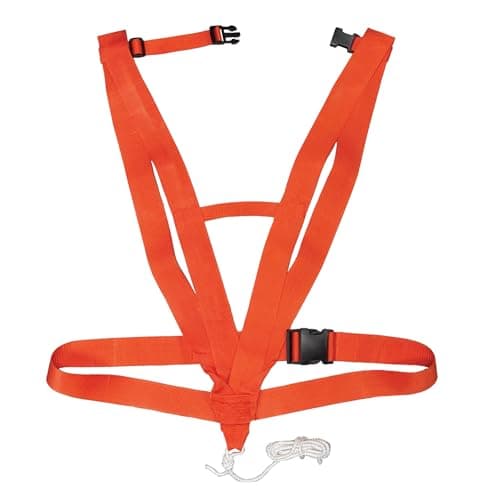
A harness moves the load onto your shoulders and hips and frees both hands. Dragging a deer by a rope in one fist is how people fall on ice and how backs get hurt.
Load transfer
8
Comfort
7
Packability
10
Durability
7
Value
9
What's good
+Both hands stay free, which matters far more than the leverage does
+Load through the shoulders and hips instead of one arm and one side of your back
+Packs to nothing, so it lives in the day pack all season
What's not
−Still a drag — on bare ground and gravel it is brutal work no matter the harness
−Webbing quality varies across the marketplace listings in this category
Skip it if…
…you can get a cart or a sled to the animal. A harness is the fallback for country where wheels do not go, not the first choice.
Adjustable strapHeavy-duty webbingLoop and handlePocket-sized
7.6/10
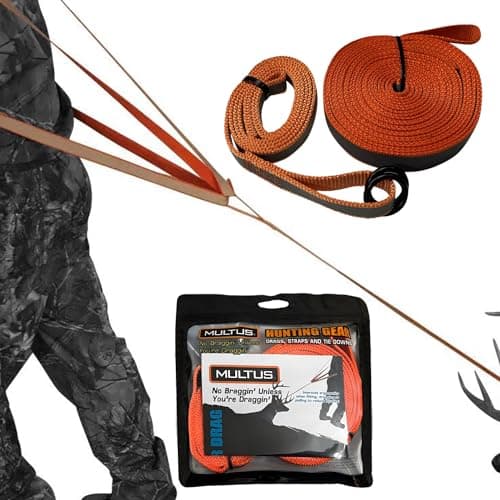
Eight dollars, weighs nothing, and lives in the bottom of the pack forever. The cheapest insurance on this page against a successful hunt turning into a very long night.
Load transfer
5
Comfort
5
Packability
10
Durability
8
Value
10
What's good
+Costs less than a box of ammunition and takes up no room at all
+Simple — there is nothing on it to break in the cold
+Works as a general tie-down when you are not dragging anything
What's not
−Single strap loads one shoulder rather than distributing across both
−No padding, so it bites through a light jacket
Skip it if…
…you regularly drag animals any distance. Spend the extra ten dollars on the harness — your back will make the argument for you eventually.
Molded plastic hullRolls up for transportTow ropeFull-body length
8.2/10
In snow, brush and leaf litter a sled beats a cart and a drag together, because the animal rides on plastic instead of on the ground. It also keeps the meat and the hide clean, which nothing else here does.
Snow performance
10
Meat protection
9
Portability
7
Durability
6
Value
9
What's good
+Slides over snow, leaves and deadfall where wheels simply stop
+Keeps hair, dirt and grit off the carcass, which matters for the meat
+Rolls up small enough to strap to a pack frame on the way in
What's not
−Useless uphill and hard work on bare rock
−Plastic gets brittle in real cold and this is where sleds crack
Skip it if…
…you hunt dry, warm country with trails. A sled needs a slick surface to earn its keep, and on dry ground the cart wins.
Highwild Game Hoist Gambrel and Deer Hanger Kit, 700lb
700lb ratedGambrel includedPulley systemRope and hooks
8.2/10
The pulley ratio is the point: a 4:1 block lets one person lift an animal one person cannot lift. Twenty-six dollars is a rounding error against the alternative of asking three neighbors.
Lifting advantage
9
Capacity
8
Build quality
6
Versatility
8
Value
10
What's good
+Turns a two- or three-person job into a one-person job
+Hanging the animal makes skinning and quartering dramatically easier and cleaner
+Works off a tree limb, a garage rafter or a hitch mount
What's not
−The rated capacity assumes a sound anchor point — the weak link is always the branch
−Rope and hardware are the cheap end of the category; inspect before every use
Skip it if…
…you process at a butcher's. If the animal goes straight from the truck to a shop, you are buying a tool for a job you do not do.
Price as of Sep 7, 2026. Prices move — Amazon's is the one that counts.
#ad · we may earn a commission from this link to Highwild Game Hoist Gambrel and Deer Hanger Kit, 700lb
07
Skip this one
Leader Accessories Super Mag Hauler Steel Game Cart, 550lb
550lb capacitySteel frameTwo-wheelFolding
6.0/10
One hundred and eighty dollars for fifty pounds more rated capacity than a cart costing under a hundred. In a category where the real limit is wheel diameter and ground condition, the capacity number is not what you should be buying.
Capacity
8
Terrain handling
7
Portability
5
Build quality
7
Value
3
What's good
+Heavier steel frame flexes less under a genuinely full load
+Slightly higher rated capacity than the budget carts
What's not
−Roughly twice the price of a 500lb cart that does the same job
−The extra fifty pounds of rating is irrelevant for deer-sized animals
−Heavier to carry in and to lift into a truck
Skip it if…
…you are hauling deer, which is almost everybody. Buy the cheaper 500lb cart, and if you are moving elk, buy a game sled and quarter the animal instead.
Price as of Sep 7, 2026. Prices move — Amazon's is the one that counts.
#ad · we may earn a commission from this link to Leader Accessories Super Mag Hauler Steel Game Cart, 550lb
How to choose
Match the tool to the ground, not the animal
Trails, two-tracks, field edges: cart. Nothing else is close.
Snow, wet leaves, pine needles: sled. It slides where wheels stop, and it keeps grit off the meat.
Thick timber, deadfall, blowdown: harness. A cart is a liability where you have to lift it over things every twenty feet.
Steep, long, or elk-sized: none of the above. Quarter the animal and pack it out. Our game bag roundup covers that side.
Harness beats rope, for a reason that is not leverage
The harness does not make the animal lighter. It puts the load across your shoulders and hips and leaves both hands free — which is what keeps you upright on ice and lets you carry a rifle and a light at the same time. That is the whole argument, and it is enough.
The gambrel is the sleeper purchase
A 4:1 block-and-tackle turns hanging an animal into a one-person job. The rated capacity assumes a sound anchor, and the anchor is always the weak link — inspect the branch, not the rope.
Where the cooler decision comes in
Once the animal is down and hung, the next constraint is cold. That has its own page: what size cooler you need for game, which is a more useful calculation than most people expect.
Assembly is not optional
Every cart in this price bracket ships flat-packed with marketplace-grade hardware. Build it at home, in daylight, in September — and put a wrench on every fastener again after the first trip. Discovering a loose axle bolt at midnight with a deer on the frame is the predictable failure here.
How these were picked
I haven't handled these. Here's what I did instead.
Everyone in this category says they tested twenty of these. I haven't tested any, and I say so. What I do instead: read the manufacturer's manual and published specification, compile the numbers that decide the purchase, do the arithmetic in the open, check the live price, and name one product to skip. The scores above are judgments from that research against a published rubric — they are not measurements I took, because I do not have a lab and I am not going to pretend otherwise.
Questions
Frequently asked
Do I need a 500lb game cart for a deer?+
No — a whitetail is well under that. The rating is marketing headroom. What actually determines whether the cart works is wheel diameter and frame rigidity, so spend the money there rather than on a bigger number.
Cart or sled?+
Ground condition decides it. Wheels need something like a path; a sled needs something slick. In snow the sled wins outright and also keeps the carcass clean, which the cart does not.
Is a drag harness better than a rope?+
Yes, and not because of leverage. It loads your shoulders and hips instead of one arm, and it leaves both hands free for a light, a rifle and catching yourself. That last one is the real safety argument.
How do I get a deer into a truck alone?+
A gambrel and a 4:1 pulley off a branch or a hitch-mounted hoist. Lifting a whole deer into a tailgate by hand is how people injure their backs, and the mechanical advantage costs about twenty-five dollars.
Can I use a game cart on public land?+
Usually, but wheeled conveyances are restricted in designated wilderness and in some other specific areas. Check the rules for the exact unit before you plan an extraction around wheels.
We do not run a testing lab and we do not pretend to. Where a measured number came from a manufacturer's published specification or someone else's lab, we name them and link them. Where we could not verify something, we say so on the page rather than quietly leaving it out. Read the full method.