We earn a commission when you buy through our Amazon links, at no extra cost to you. It never changes the order of the picks, and we say so when the cheaper thing is the better buy. How this works.
A game bag does two things. It keeps dirt, hair and flies off meat, and it lets air move through so the meat can cool. That second one is the part people underestimate: meat that cannot shed heat spoils, and a plastic bag or a sealed tote is the fastest way to lose an animal you just spent four days finding.
The most common failure is not fabric quality. It is size. A bone-in elk hind quarter is a large object, and a 48-inch bag that fits a deer quarter comfortably will not take one. Buying elk bags for elk and deer bags for deer sounds obvious and is routinely got wrong.
Carry more bags than you think you need. Running out at the animal, four miles in, is the scenario every one of these is insurance against.
Two pages that sit either side of this one. For what happens in the first hour after the shot, and the gutless method that puts quarters straight into these bags, see the field dressing kit. And if the animal is an elk rather than a whitetail, the count and the size both change — best gear for a western elk hunt.
#ad · Live prices from the Amazon Creators API, as of October 19, 2026. Where we have no verified live price we show none — a gap beats a number that has rotted.
In detail
The picks, in full
01
Best overall
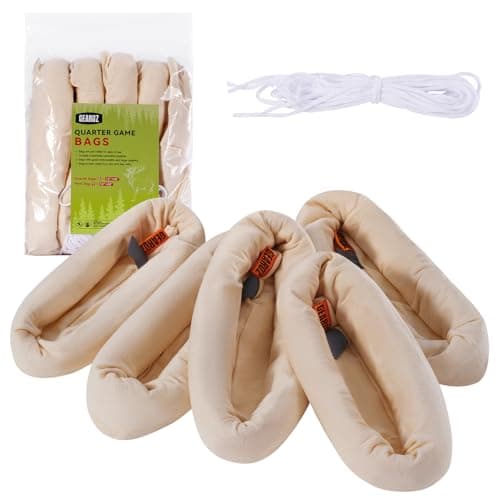
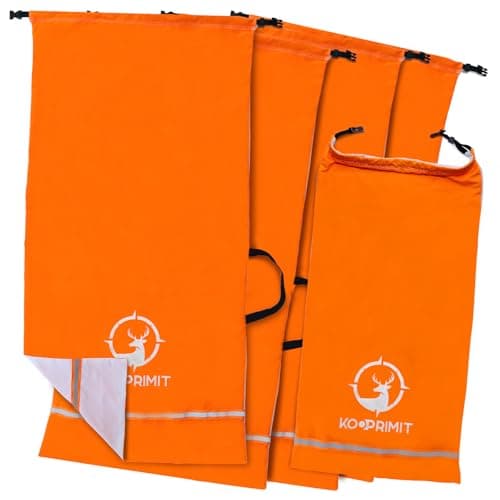
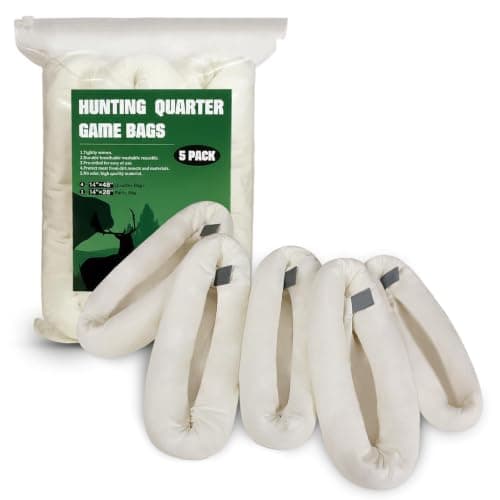
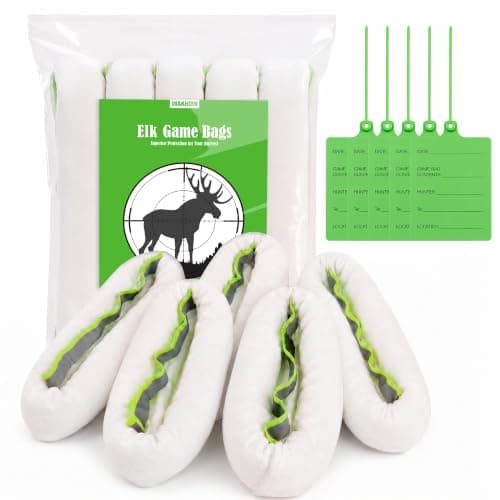
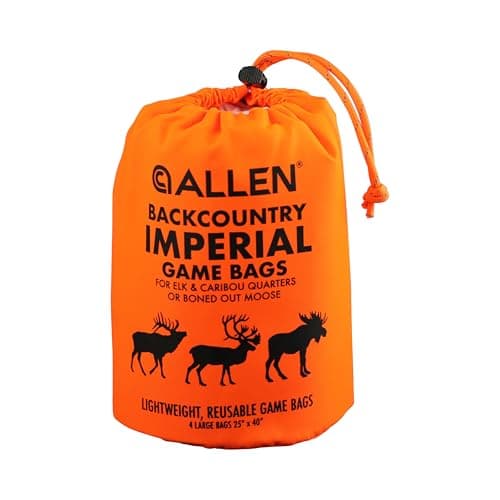
Allen Company Backcountry Quarter Bags
4-packReusableDrawstring closureHeavy-duty fabric
8.2/10
Heavy-duty, reusable, drawstring closure, and sized for elk quarters rather than optimistically labeled for them.
Breathability
8
Durability
9
Size
9
Reusability
9
Value
6
What's good
+Fabric weight is genuinely up to a bone-in elk quarter
+Drawstring closes properly, which cheap bags with a tie do not
+Washable and reusable across seasons
What's not
−Most expensive option here
−Four bags rather than five, so a full elk needs two sets or careful packing
−Heavier to carry in
Skip it if…
…you hunt deer only. Elk-rated bags are heavier and larger than a whitetail needs, and lighter bags do that job fine.
For deer and antelope, 30 to 48-inch bags are ample. For elk, moose and caribou, 48 to 60 inches — the longer bags exist because bone-in quarters from large animals genuinely need them. Boning out reduces the requirement substantially and is worth considering for a long pack-out anyway.
Count: five, not four
Four quarters plus loose meat — backstraps, tenderloins, neck, rib meat — is five bags. Sets sold in fours assume you will improvise for the fifth, and improvising with a t-shirt is how meat gets dirty.
Breathability is the whole point
A synthetic mesh or lightweight woven bag lets air through and keeps flies out. Cotton bags breathe well and hold moisture. Plastic does not breathe at all and should never touch warm meat.
Get it off the ground
Hang quarters in shade with air moving around them, ideally on the north side of something. Bags with hanging loops make this straightforward. Meat lying on ground it cannot cool against is meat spoiling from one side.
Reusable means washable
Wash bags in hot water without fabric softener — softener leaves residue that reduces breathability. Dry them completely before storage. A properly cared-for set of heavy bags will do many seasons, which changes the value calculation entirely.
How these were picked
I haven't handled these. Here's what I did instead.
Everyone in this category says they tested twenty of these. I haven't tested any, and I say so. What I do instead: read the manufacturer's manual and published specification, compile the numbers that decide the purchase, do the arithmetic in the open, check the live price, and name one product to skip. The scores above are judgments from that research against a published rubric — they are not measurements I took, because I do not have a lab and I am not going to pretend otherwise.
Questions
Frequently asked
How many game bags do I need for an elk?+
Five at minimum: four quarters and one for loose meat. Six is better if you plan to separate backstraps and tenderloins, which are the cuts you least want mixed in with everything else.
Can I use pillowcases or trash bags?+
Pillowcases work in a pinch — cotton breathes. Trash bags do not breathe at all and will spoil meat quickly by trapping heat and moisture. Never put warm meat in plastic.
How long can meat stay in a game bag?+
In cool conditions with good airflow and shade, a day or more while you pack out. In warm weather, hours. The controlling factor is getting the meat's temperature down, which is exactly what the bag is designed to allow rather than to do.
Should I bone out meat before bagging?+
For long pack-outs, yes — it removes significant weight, cools faster and needs smaller bags. Check your state's regulations first: some require evidence of sex or species to remain naturally attached during transport.
We do not run a testing lab and we do not pretend to. Where a measured number came from a manufacturer's published specification or someone else's lab, we name them and link them. Where we could not verify something, we say so on the page rather than quietly leaving it out. Read the full method.