Skip to content
Steve's Outpost

Section 02 · Hunting

Cellular vs Non-Cellular Trail Cameras

The subscription outruns the hardware cost inside two seasons. Whether that is money well spent comes down to one question about your property.

By Stephen V.Updated How we pick
#ad

We earn a commission when you buy through our Amazon links, at no extra cost to you. It never changes the order of the picks, and we say so when the cheaper thing is the better buy. How this works.

The verdict first: cellular is worth it when walking to the camera would pressure the spot you intend to hunt, when the camera is genuinely far from a road, or when you are managing several properties. It is not worth it when you drive past anyway, when coverage on your ground is marginal, or when you check cameras on your way in to hunt regardless.

Do the arithmetic before you buy. A cellular plan at $12 a month across a six-month season is $72 per camera per year. Three cameras over three seasons is $648 — which buys twelve card-based cameras outright. Over five years with three cameras you are past a thousand dollars in subscriptions alone.

That is not an argument against cellular. It is an argument for knowing the number, because almost nobody runs it before the first bill arrives.

The short answer

Quick picks

#ProductBest forScorePrice
01
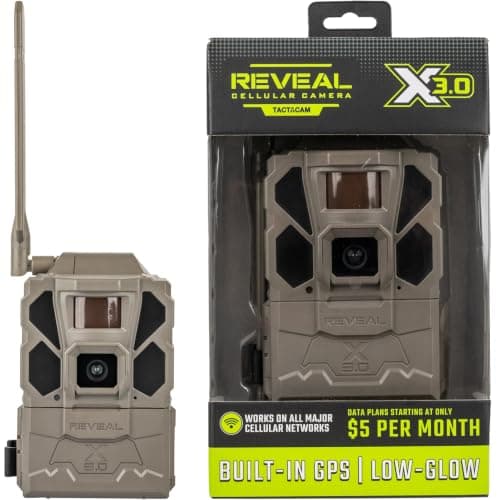
Tactacam Tactacam Reveal X 3.0
Tactacam Reveal X 3.0

The cellular camera to buy if you are going to run cellular at all — good night imagery, and a data plan you can actually read before you commit.

Best cellular
6.8
$99.01Amazon (affiliate link)
02
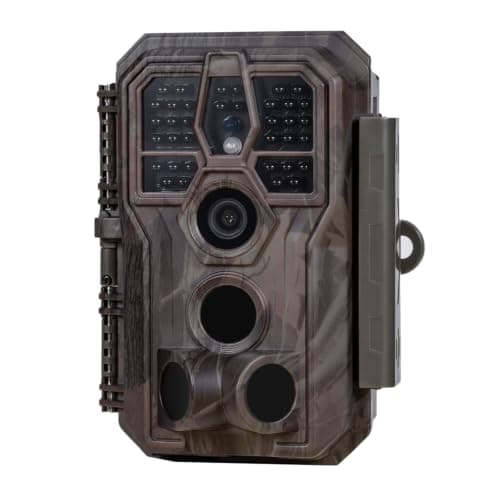
GardePro GardePro E5S
GardePro E5S

No subscription, no monthly bill, no cellular coverage problem — a card-based camera that does the actual job for fifty dollars.

Best non-cellular
8.2
$49.99Amazon (affiliate link)

#ad · Live prices from the Amazon Creators API, as of Sep 4, 2026. Where we have no verified live price we show none — a gap beats a number that has rotted.

In detail

The picks, in full

01
Tactacam Tactacam Reveal X 3.0

Best cellular

Tactacam Reveal X 3.0

Cellular LTENight visionWaterproofApp control
6.8/10

The cellular camera to buy if you are going to run cellular at all — good night imagery, and a data plan you can actually read before you commit.

Trigger speed
8
Night image
8
Battery life
7
Running cost
4
Value
7

What's good

  • Sends images to your phone, so you stop pressuring the area by checking cards
  • Established brand with a documented data plan structure
  • Solid low-light imaging

What's not

  • The subscription is a recurring cost that exceeds the camera price over a couple of seasons
  • Cellular coverage on your property is the real constraint and nobody can tell you in advance
  • More failure points than a card-based camera

Skip it if…

your property has weak cell signal or you check cameras on your way in anyway. The subscription buys you nothing in either case.

$99.01See it on Amazon (affiliate link)

$119.9917% off

Price as of Sep 4, 2026. Prices move — Amazon's is the one that counts.

#ad · we may earn a commission from this link to Tactacam Reveal X 3.0

02
GardePro GardePro E5S

Best non-cellular

GardePro E5S

64MP claimed1296p videoNo-glow IRSD card
8.2/10

No subscription, no monthly bill, no cellular coverage problem — a card-based camera that does the actual job for fifty dollars.

Trigger speed
7
Night image
7
Battery life
8
Running cost
10
Value
9

What's good

  • Zero running cost — the purchase price is the whole price
  • No-glow infrared is invisible to game and to people walking your line
  • Works regardless of cell coverage

What's not

  • You have to physically visit the camera to see images, which pressures the area
  • Megapixel figure is interpolated and should be ignored
  • No published trigger-speed specification

Skip it if…

the camera is somewhere you cannot check without spooking the spot. That is the exact problem cellular solves and the only reason to pay for it.

$49.99See it on Amazon (affiliate link)

$69.9929% off

Price as of Sep 4, 2026. Prices move — Amazon's is the one that counts.

#ad · we may earn a commission from this link to GardePro E5S

Where each one genuinely wins

Cellular wins on pressure

Every trip to a camera leaves scent, disturbs bedding areas and educates deer. On a small property or a heavily hunted piece of public land, that cost is real and it compounds. If your camera sits somewhere you cannot reach without walking through the exact ground you plan to hunt, cellular is buying you something a card cannot.

Cellular wins on scale and distance

Six cameras across three properties is a full day of driving to check. One camera two miles up a drainage is a half-day round trip. In both cases the subscription is buying back time that has a real value.

Card-based wins on total cost, obviously

Zero running cost, forever. Buy the camera, buy two SD cards, and that is the entire expenditure. For a hunter running two cameras on ground they drive past, this is straightforwardly the correct answer.

Card-based wins on reliability

A card camera has fewer failure modes. No coverage problem, no plan lapsing mid-season, no app outage, no SIM issue, no carrier tower maintenance during the rut. It writes to a card and the card works.

The coverage question nobody can answer for you

Cellular camera performance is decided by signal strength at the tree it hangs on, not at your house or your truck. Check your phone's signal at the exact spot before you buy, and if it is one bar, consider a dual-SIM model that can select between carriers — or buy card-based and save the money.

What both share

Trigger speed, detection range and flash type matter identically in both. Do not let the cellular decision distract from the specifications that actually determine whether you get a usable photograph.

How these were picked

I haven't handled these. Here's what I did instead.

Everyone in this category says they tested twenty of these. I haven't tested any, and I say so. What I do instead: read the manufacturer's manual and published specification, compile the numbers that decide the purchase, do the arithmetic in the open, check the live price, and name one product to skip. The scores above are judgments from that research against a published rubric — they are not measurements I took, because I do not have a lab and I am not going to pretend otherwise.
Questions

Frequently asked

How much do cellular trail camera plans cost per year?
Plans vary by manufacturer and photo volume, but budgeting $60 to $150 per camera per year is realistic. Check the manufacturer's current plan page — the plan outlives the camera and it is the larger cost.
Do cellular trail cameras work without service?
Most still record to an SD card when they cannot transmit, so you have not lost the images. You have simply paid for a card camera with extra failure points and a monthly bill.
Which carrier do cellular cameras use?
It varies by manufacturer, and this is the specification to check against coverage at your specific location. Dual-SIM models select whichever carrier is stronger, which is the single most useful cellular feature if your ground is marginal.
Can I run cellular cameras on solar?
Yes, and it is close to essential — transmitting is what drains batteries, so a cellular camera on internal cells alone may need swaps every few weeks. A solar panel removes the trips that cellular was meant to eliminate.

Keep reading

Receipts

Sources

We do not run a testing lab and we do not pretend to. Where a measured number came from a manufacturer's published specification or someone else's lab, we name them and link them. Where we could not verify something, we say so on the page rather than quietly leaving it out. Read the full method.