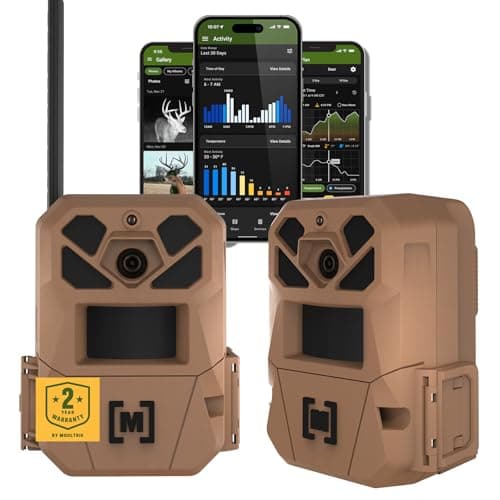
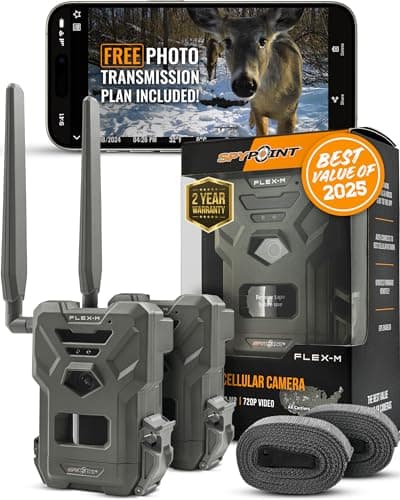
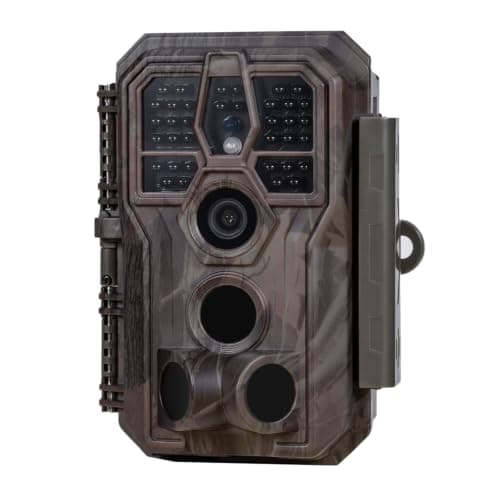
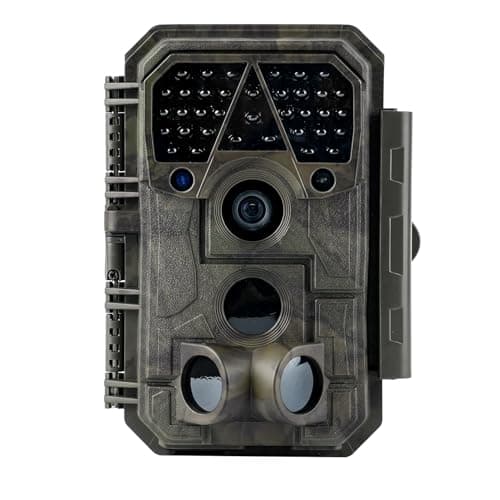
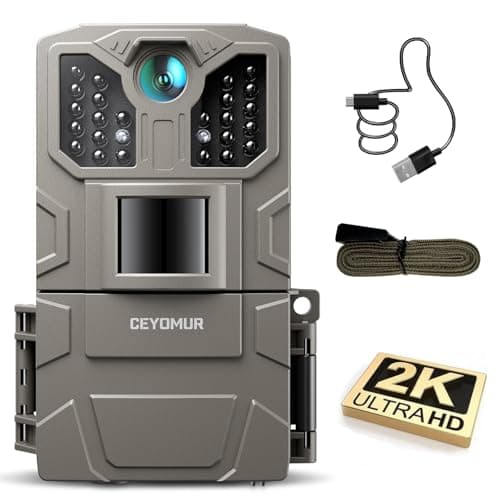
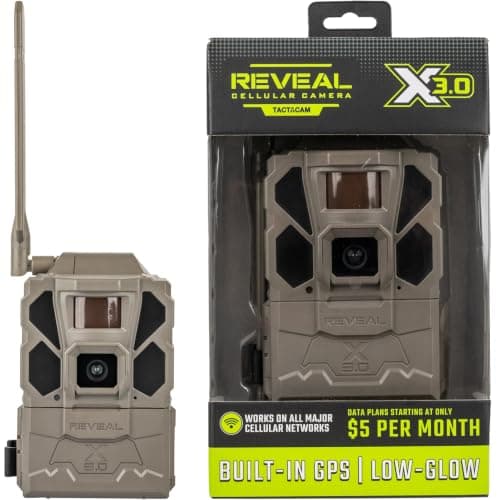
The verdict first: if you want to know while it is happening, buy a cellular camera and pay for the plan — the Tactacam Reveal X 3.0 is the one to buy, and it is for the property owner watching a gate, a yard or an outbuilding with no power anywhere near it. If you only need to know eventually, buy the GardePro E5S, put a big SD card in it, and keep the subscription money.
This is a different buyer from our hunting trail camera pages and the criteria genuinely change. Our main roundup weights image quality and battery life for a camera checked once a month on a food plot. A security camera is weighted on how fast it tells you and whether it misses the thing entirely — and a beautiful photo that arrives four weeks later is worth nothing.
What changes when the subject is a person, not a deer
- Trigger speed and recovery time move to the top. A deer browses past at walking pace. A vehicle does twenty miles an hour and a person crossing a gate is gone in two seconds. A camera with a one-second trigger gets a photo of a tailgate; a half-second trigger and a fast recovery gets three usable frames.
- You want the alert, not the album. A cellular camera emails or pushes a photo within minutes. That is the only feature that makes any of this a security system rather than a record.
- No-glow infrared matters more than image quality. A low-glow camera shows a faint red ring when it fires, which a person notices and a deer does not. No-glow is invisible, and the trade is shorter night range and grainier night photos. For security, take the no-glow.
- Detection range beats megapixels, every time. Thirty-six megapixels of a photo you did not trigger is nothing. Read the detection range and the field of view, and ignore the headline resolution — it is usually interpolated anyway.
- The camera itself gets stolen. Which is its own problem, below.
Cellular or not: do the arithmetic
A cellular plan is typically somewhere between five and fifteen dollars a month per camera, depending on photo volume. Over three years, two cameras on a mid-tier plan can cost more than the cameras did.
That is not an argument against it. It is an argument for being honest about which you need:
- Cellular, if a photo needs to reach you. A gate you cannot see from the house, a property you visit monthly, a barn with tools in it. Knowing today is worth the money.
- Non-cellular, if you just want the record. A camera on a fence line you walk weekly. An SD card holds thousands of images and costs nothing per month.
- Both, usually. One cellular camera on the choke point everything has to pass, and cheap non-cellular cameras filling in. That is the setup most people land on, and it is why the pair packs here are on the list.
We compare the two properly here, and the no-subscription page covers the cellular cameras with a free tier — which is a real thing and worth knowing about before you commit to a plan.
Placement, which decides everything
Watch the choke point, not the open ground. Everybody has to come through a gate, a driveway, a gap in a hedge. One camera on the gate beats three cameras pointed at a field.
- Mount high and angle down. Eight to ten feet up, tilted down, is harder to spot, harder to reach, and gets faces rather than knees. It also reduces false triggers from vegetation at ground level.
- Shoot across the path, never along it. A camera facing down a driveway watches a subject approach slowly and triggers late. A camera at forty-five degrees to the path catches movement across the sensor, which is what the sensor is good at.
- Never point it east or west. Sunrise and sunset into the lens produces hundreds of false triggers and a white frame at exactly the time of day you care about. North is the safe answer.
- Clear the vegetation in front of it. A branch moving in the wind in front of a PIR sensor will fill an SD card in a day and burn through a data plan in a week.
- Check the signal before you commit the location. A cellular camera in a dip with no bars is a non-cellular camera you paid extra for.
Then protect the camera. A security lock box and a cable or python lock is twenty to forty dollars and is the difference between a camera that watches your gate and a camera that was stolen from your gate. Also: a cheap second camera, hidden, watching the first one is an old and effective trick.
The legal part, which almost nobody mentions
Audio is the risk, not video. Recording video on your own property is generally straightforward in the United States. Recording audio is governed by wiretapping and eavesdropping law, and several states require the consent of all parties to a recorded conversation. A trail camera that records video with sound can put you on the wrong side of that without you ever thinking about it. If your camera has audio and you are not sure, turn it off.
Beyond that: do not aim a camera where someone has a reasonable expectation of privacy — a neighbor's window, a shared bathroom, inside someone else's building — and be aware that rules differ again if you rent the property, if it is a workplace, or if you are in a homeowners association.
Nothing on this page is legal advice. State law varies substantially and changes. If a camera is going anywhere a stranger might reasonably object to, spend twenty minutes checking your own state's rules first.
Buying notes
Read the trigger speed, and the recovery time next to it
Trigger speed is how fast the first photo happens; recovery is how long until it can take another. For a moving vehicle or a person, recovery is what gives you a second usable frame.
No-glow, if you have the choice
Low-glow night flash shows a faint red ring when it fires. A deer does not care; a person looks right at it. Accept the shorter night range.
Lithium batteries, not alkaline
Lithium AAs hold voltage in the cold, where alkalines collapse, and a camera that quits in January is a camera that was not watching anything in January. External battery packs and solar are worth it on a camera you cannot easily reach.
Budget for the lock box
Twenty to forty dollars, and it makes the camera a nuisance to steal rather than a gift. On a cellular camera the box also means a thief cannot simply pull the SD card and walk.
Check the plan price per camera, not per account
Most providers bill per device. Two cameras on a mid-tier plan is a real monthly number, and it is the figure to compare against a wired camera system if you do have power available.