The whole argument in one line: the tourniquet is the cheap part. Knowing when to reach for it, and being able to put it on one-handed while shaking, is the part that costs an afternoon — and almost nobody spends it.
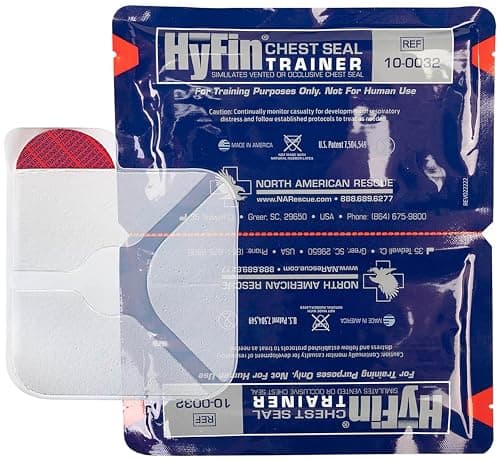
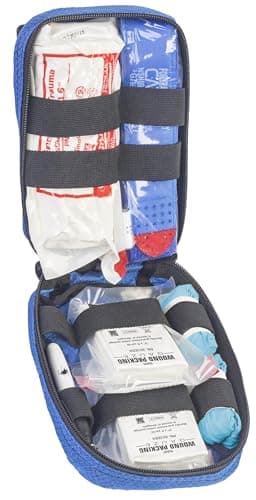
This page has products on it, and every one of them is deliberately non-functional practice equipment. Blue, clearly marked, and useless in an emergency by design. Nothing on this page belongs in a real kit, ever, under any circumstances. If you want the kit itself, that is what's actually in an IFAK.
The course to take first: Stop the Bleed
Stop the Bleed is a national bleeding-control program run through the American College of Surgeons. It is short — typically a couple of hours — frequently free, and taught in fire stations, hospitals and community centers across the country. It covers the three things that actually save someone: pressure, packing, and tourniquets.
There is no prerequisite and no medical background required. If you carry a tourniquet and have not taken it, that is the gap, and it is a two-hour gap.
The second course, if you hunt anywhere remote
Wilderness First Aid is a different curriculum with a different assumption behind it: help is hours away rather than minutes. It covers evacuation decisions, improvisation and long-duration patient care — the things an urban course does not, because in a city it never has to.
For anyone who hunts backcountry, hunts alone, or overlands somewhere a truck cannot easily get to, this is the more relevant of the two. It costs real money and takes a weekend, and it is the only thing on this page that changes what you can do at hour three.
What the class teaches that a page cannot
- How much gauze a wound actually takes. It is always more than people expect, and reading that sentence does not prepare you for it.
- How tight a tourniquet has to be. Tight enough to stop the bleeding is tighter than almost everyone applies unsupervised. It hurts. It is supposed to.
- How to do it one-handed on yourself. The scenario people train for is helping someone else. The scenario that argues for carrying a kit on your belt is the other one.
- What order to do things in when there is more than one problem, which is a decision and not a technique.
After the class: keeping the skill
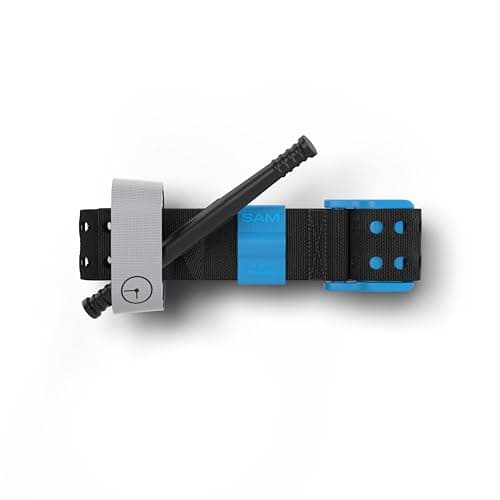
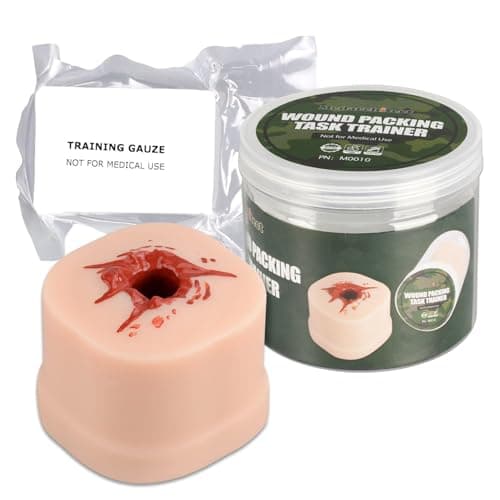
Skills decay, and bleeding-control skills decay fast because nobody uses them. That is what the blue trainer gear below is for. A trainer tourniquet on your own leg once a month, and a wound-packing block on the kitchen table twice a year, is the whole maintenance program.
It also means you are never practicing on the tourniquet that has to work. A live C-A-T that has been applied fifty times for practice is a used tourniquet, and it should not be the one in your kit.
Buying practice gear without buying the wrong thing
Blue means trainer, and the distinction is absolute
Training tourniquets are made in blue on purpose. It is not a color preference — it is so that a trainer can never be confused for a live device in a bag, in a class, or at 2 a.m. Keep them physically separate from your kit, and never let a trainer migrate into it.
Train on the design you carry
Muscle memory for a tourniquet is design-specific. If you carry a C-A-T, practice on a C-A-T trainer; if you carry a SOFTT, practice on that. Practicing on a third design and carrying a fourth is worse than practicing on nothing, because it builds a sequence that will not match the device in your hand.
Order of purchase, if the budget is real
- The class. Free or near-free in most places, and it is the whole point.
- One genuine tourniquet, from the manufacturer's listing.
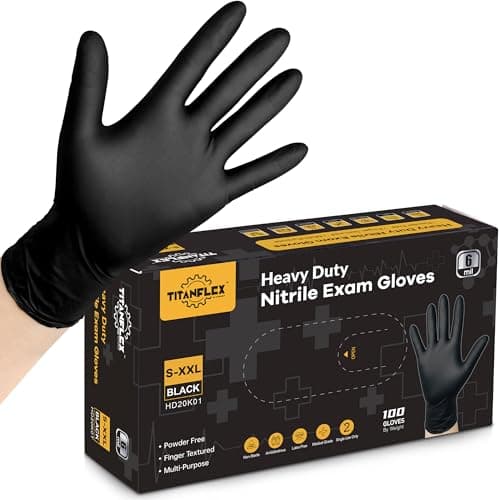
- Gauze, a pressure bandage, shears and gloves.
- A trainer tourniquet, so the skill survives the year.
- A wound-packing block, if you are serious.
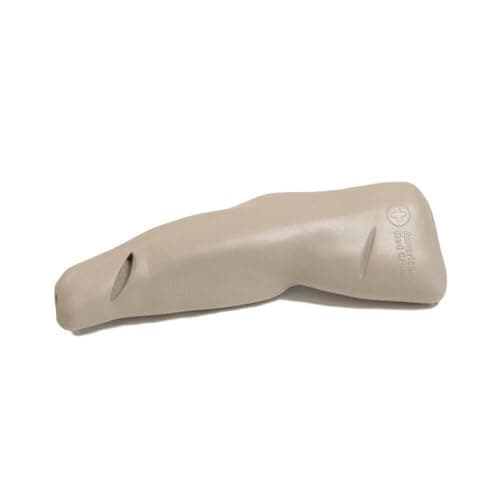
Everything past item five is optional. A manikin arm is a teaching purchase and the wrong buy for an individual, which is why it is the skip pick above.
The limit of this page
This is a gear site and this page is about gear and where to get taught. It contains no medical instruction and it is not a substitute for a course, a protocol, or a professional. Everything here is written on the assumption that you will go and be trained by someone qualified.