Three guns, ammunition for all three, a loaded belt and eight hours in a field. Here is everything that goes in the cart, including the small kit that will eventually rescue somebody's match.
We earn a commission when you buy through our Amazon links, at no extra cost to you. It never changes the order of the picks, and we say so when the cheaper thing is the better buy. How this works.
A 3-Gun match is a logistics exercise with some shooting in it. You are moving three guns, ammunition for all three, a loaded belt, eye and ear protection, food, water and a chair between four to six bays that may be a considerable walk apart, and you are doing it in whatever weather turned up.
Nobody tells new shooters this, and it is the thing that makes a first match exhausting in a way the shooting never does.
A loaded cart between stages. Everything for the day in one place, which is the entire argument for a cart over a bag: you move once and you never leave anything behind at a bay.
The cart is the real purchase
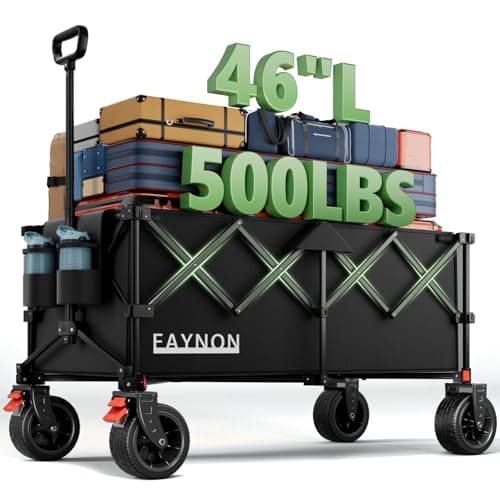
You can carry a match load in bags. It is a bad time. A folding wagon carries all three guns, a full ammunition load, your bag and your chair in one trip, and it doubles as a staging table at every stage.
Three things actually matter when choosing one:
Wheel width. The single most important specification and the one people ignore. Narrow hard wheels dig into grass, sand and gravel with weight on them. Wide all-terrain wheels roll over. Every club range I have been to is at least partly one of those surfaces.
Length. Long guns are long. A bed that will not take a rifle without it hanging over the end means the rifle rides badly or rides somewhere else.
Brakes. Not a gimmick. The first time you park a loaded cart on a slope with your guns in it, you will understand why they are worth paying for.
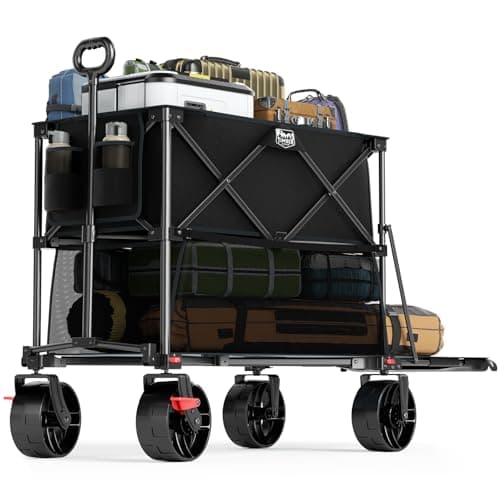
A second deck is genuinely useful — it separates guns from loose gear so nothing rests on a scope — and it costs packed size and money. Both carts ranked below are defensible; they are just different answers to that trade.
The checklist
Guns and ammunition
All three guns, cased or bagged as your club requires.
Ammunition for each — the published round count plus a real margin. Missed steel and reshoots cost rounds you did not plan for.
Every magazine you own, loaded before you leave the house.
Shotgun shells in the caddy AND a reserve in a box. Loading on the clock uses more than you think.
Chamber flags for every gun. Some clubs require them; all clubs appreciate them.
On the belt
Belt, holster, mag pouches, shell caddy, dump pouch — assembled the night before, not in the parking area. See competition belts and holster setups.
Electronic muffs, plus foam plugs for the loud bays.
Spare batteries for the muffs and for every optic on every gun. This is the most commonly forgotten item on the list.
The spare parts kit
Small, cheap, and the thing that turns a broken day into a delayed one. It also makes you extremely popular on a squad.
A multi-tool and a set of hex keys that fit your optic mounts and rail hardware.
A screwdriver set for scope rings and mount screws.
Thread locker. Rail hardware works loose and it always does it at a match.
Spare springs and small parts for anything on your guns you know is a wear item.
A bore snake or a cleaning rod, for the squib nobody expects.
Electrical tape and zip ties. They fix an astonishing range of problems for a day.
You, for eight hours outdoors
More water than you think. Dehydration shows up as bad shooting before it shows up as thirst.
Food that survives a hot car. You will not be leaving to find lunch.
Sunscreen, a hat, and a rain layer regardless of the forecast.
A folding chair. Most of your day is waiting, and the ground is where your gear goes.
A towel. Rain, sweat, a wiped-down optic, somewhere clean to set a gun down.
A trauma kit with a genuine tourniquet, and the training to use it. Same kit that lives in the truck, and the same warning applies — counterfeit tourniquets are a documented problem, so buy from the manufacturer's own listing. See vehicle trauma and first-aid kits.
Admin
Match registration confirmation and any membership card the club needs.
A pen. Squad duties involve scoresheets more often than people expect.
A charged phone — this is how squadding and results reach you on match day.
The night before
Load magazines. Load the shell caddy. Assemble the belt completely and put it on to check it. Charge the phone and put fresh batteries in the muffs. Pack the cart and put it in the vehicle.
Doing this at 5am in the dark is how people arrive at a match having forgotten their shotgun ammunition, which is a genuine thing that happens more often than you would believe.
A match list is longer than a practice list, and if what you are packing is a range session rather than a stage, the shorter version is its own page — what to put in a range bag covers the practice-day kit, including the split between what travels in the bag and what stays in the car.
#ad · Live prices from the Amazon Creators API, as of October 19, 2026. Where we have no verified live price we show none — a gap beats a number that has rotted.
In detail
The picks, in full
01
Best match cart
TIMBER RIDGE 400L Double Decker Wagon
400L capacityDouble deckerWheel brakes54" long
7.0/10
Two decks and brakes — the brakes are the part you will care about the first time you park it on a slope with your guns in it.
Capacity
9
Terrain ability
7
Build quality
8
Packed size
4
Value
7
What's good
+Two decks separate guns from gear instead of piling everything together
+Brakes stop it rolling away on uneven ground, which most wagons cannot do
+54 inches takes long guns without them hanging over the end
What's not
−Heavy and bulky folded — it takes real trunk space
−Most expensive cart option
Skip it if…
…your club has short walks from the parking area. A cart you have to lift in and out of a car for a fifty-yard walk is a net loss.
Wide all-terrain wheels or nothing. Wheel width determines whether a loaded cart crosses a wet berm or plows into it, and no other specification compensates for getting it wrong.
Then length, then brakes
Long enough for your longest gun without overhang, and brakes if your club has any gradient at all. Both carts ranked here clear the length requirement; only one has brakes.
Then packed size
Carts fold, but the folded size varies a lot and it has to fit in your actual vehicle alongside the guns. Measure the trunk before ordering. This is where the double-decker costs you.
What to skip
Do not buy a cart with narrow hard wheels because it is cheaper — it will fail on the first soft ground and you will buy twice. And do not buy a purpose-marketed "shooting cart" at a premium over a general-purpose wagon of the same capability. The wheels and the bed length are the product; the branding is not.
How these were picked
I haven't handled these. Here's what I did instead.
Everyone in this category says they tested twenty of these. I haven't tested any, and I say so. What I do instead: read the manufacturer's manual and published specification, compile the numbers that decide the purchase, do the arithmetic in the open, check the live price, and name one product to skip. The scores above are judgments from that research against a published rubric — they are not measurements I took, because I do not have a lab and I am not going to pretend otherwise.
Questions
Frequently asked
Do I really need a cart for my first match?+
No. Bags will work and plenty of people do it. You will be tired and you will make two trips at every stage. Go to one match, see how far the bays are apart at your club, and then decide with real information.
What is the most commonly forgotten item?+
Spare batteries, for both the electronic muffs and the optics. Second place is shotgun ammunition, because people count rifle and pistol rounds carefully and then guess at shells.
How much water is enough?+
More than feels necessary in the car park. You are outdoors for most of a day doing intermittent physical work in gear, and dehydration degrades your shooting well before you notice being thirsty. A gallon jug in the cart is not excessive in summer.
Do I need a chair?+
Yes, and it is the item people are most surprised by. You shoot for two minutes and wait for seven hours. Somewhere to sit that is not the ground your gear is on makes a real difference to how you shoot the last stage.
We do not run a testing lab and we do not pretend to. Where a measured number came from a manufacturer's published specification or someone else's lab, we name them and link them. Where we could not verify something, we say so on the page rather than quietly leaving it out. Read the full method.