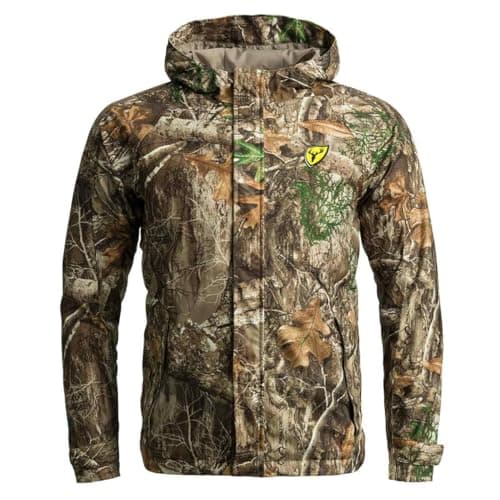
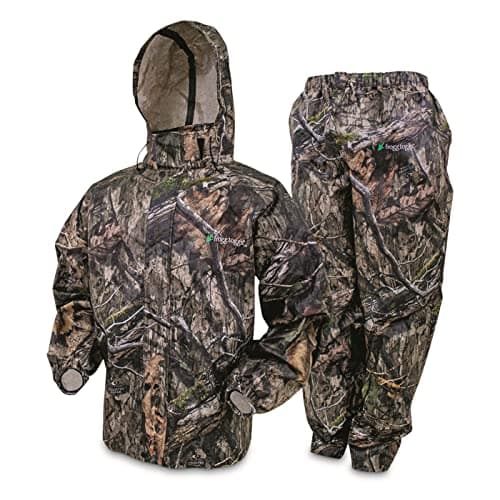
The short version: water resistant means it will cope with drizzle for a while. Water repellent describes a surface treatment that makes water bead and roll off, and it wears away. Waterproof is the only one of the three that means a sustained downpour, and even then it is only useful if the fabric also breathes. If you want the one-line answer for hunting: buy waterproof and breathable like the ScentBlocker Drencher, or if budget decides it, the Frogg Toggs All-Sport suit, which is the cheapest version of the word being true.
Once you know which word you want, our rain gear roundup ranks the category, and if you shoot a bow, the quiet-fabric version of that page reaches a different winner.
Water resistant
A water resistant garment slows water down. Usually that means a tightly woven face fabric, sometimes with a treatment on it, and no membrane behind it. It is genuinely useful: a water resistant shell handles drizzle, wet brush and snow that is not melting, and it breathes far better than anything waterproof because there is nothing in the way.
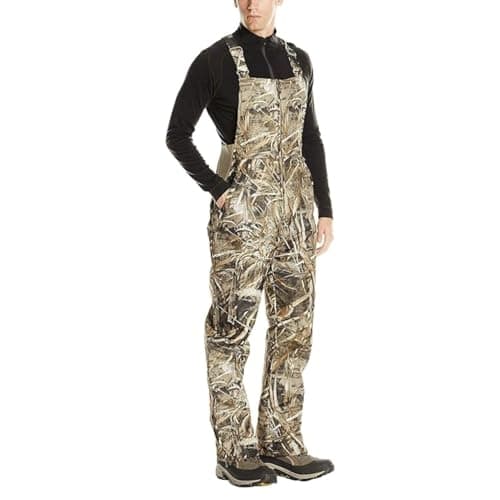
It is also a word that gets used because the product cannot claim the better one. The Arctix insulated bibs above describe a water-resistant shell, and that is the correct and honest word for them. They are an excellent cold-and-dry garment and they are the wrong buy for a day of rain. Nothing is wrong with the product; what is wrong is reading the label as if it said something else.
Water repellent, and what DWR actually is
DWR stands for durable water repellent. It is a finish applied to the OUTSIDE of a fabric, and its only job is to make water bead up and roll off rather than soak into the face cloth. It is not what makes a jacket waterproof — the membrane or coating behind the face fabric does that. DWR is the thing that lets the membrane do its job.
Here is why that matters, and it is the single most useful thing on this page. When DWR wears off, the face fabric absorbs water and becomes saturated. The membrane behind it is still keeping the rain out, but it can no longer pass your sweat vapor out through a soaked layer, so moisture condenses inside the jacket. You get wet. It feels exactly like a leak and it is not one. The term for it is wetting out, and the fix is washing the garment and renewing the DWR — not replacing it.
Practical consequences:
- Dirt kills DWR. Body oils, campfire smoke and plain mud all degrade it. Washing rain gear makes it work better, which is the opposite of what most people assume.
- Wash it with the right stuff. Ordinary detergent leaves residues that attract water. Use a technical wash, follow the label, and if the label permits heat, tumble or iron-on-low is often what reactivates the finish.
- Re-treat when water stops beading. That visual — droplets soaking in rather than rolling off — is the whole test. No equipment required.
Waterproof, and the number behind it
Waterproof means the fabric resists water under pressure, and pressure is what separates standing in rain from kneeling on wet ground. Where a maker publishes a figure it is usually a millimeter rating from a hydrostatic head test — the height of a column of water the fabric holds back before it leaks. Roughly: 5,000mm handles real rain, 10,000mm and up handles rain plus pressure from a pack strap or a knee.
Most hunting rain gear does not publish this number, including most of what is on this site, and we are not going to assign one. Where a listing gives you a figure, use it. Where it does not, you are judging the claim on the brand and the construction, which is a weaker basis and worth knowing that you are doing.
Breathability is the half nobody reads
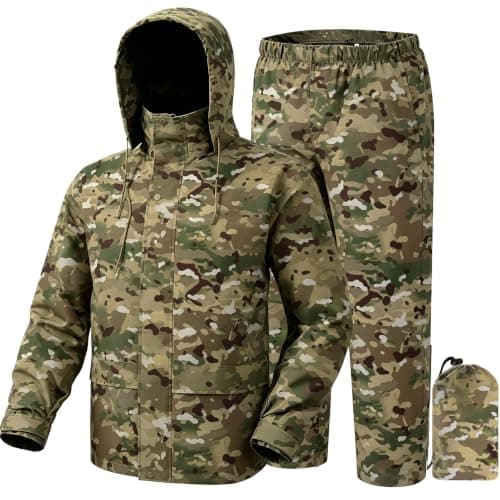
A bin liner is perfectly waterproof. It is also useless, because your own sweat has nowhere to go. Everything that makes modern rain gear worth buying is in the second half of the phrase "waterproof breathable", and that is why the cheapest suit in our picks is a skip: it claims waterproof and states no breathability figure at all. A shell like that does not keep you dry, it just decides which side of the fabric your water is on.
Breathability is quoted as a moisture vapor transmission rate when it is quoted at all, and in hunting gear it frequently is not. Two practical rules survive the missing data: vents and zips beat any membrane for dumping heat, and the walk in is when you overheat, so carry the shell and put it on when you stop.
Seams, zips and the places water actually gets in
Fabric is rarely the failure point on decent gear. Seams are. Every stitch is a hole, and a waterproof garment deals with that by taping the seams on the inside — look for the shiny strips when you turn it inside out. If a listing does not mention seam sealing or taping on a garment that claims waterproof, that absence is the thing to be suspicious about, and it is the second reason our skip pick is a skip.
After that: the zip (storm flap or a water-resistant zip), the hood opening, and the cuffs. A jacket that is perfect everywhere else and has an unprotected main zip will wet your chest in a headwind.
What to buy, by what you do
- Cold and dry, mostly sitting: insulated and water-resistant is right, and waterproof is unnecessary weight. The Arctix bibs are the example.
- Rain is possible and you are moving: waterproof breathable jacket, and carry it rather than wear it. The Drencher.
- Rain is certain and you are sitting: a full suit or bibs, not a jacket. The Frogg Toggs suit is the value answer, with the noise caveat if you hunt with a bow.
- Boots are a separate problem. A rubber upper has no seams to leak and is the only truly waterproof boot construction — see our boot page.
Buying notes
Read the word, then look for the number
The label word tells you the category; a published millimeter rating tells you where in the category it sits. A claim with no number is not necessarily false, but it is not checkable either, and it should cost less.
Buy the seam tape, not the brand name
Turn the garment inside out. Taped seams are visible. On a waterproof claim they are not optional, and their absence is the most reliable warning sign in this category.
Wash your rain gear, genuinely
The most common reason hunting rain gear "fails" is a dirty face fabric that has wetted out. Washing with a technical wash and renewing the DWR restores it, and it costs a fraction of a replacement.
Size for the layers underneath
A shell that binds over a fleece restricts you and gets louder. Try it on over what you will actually wear in November, not over a t-shirt in August.