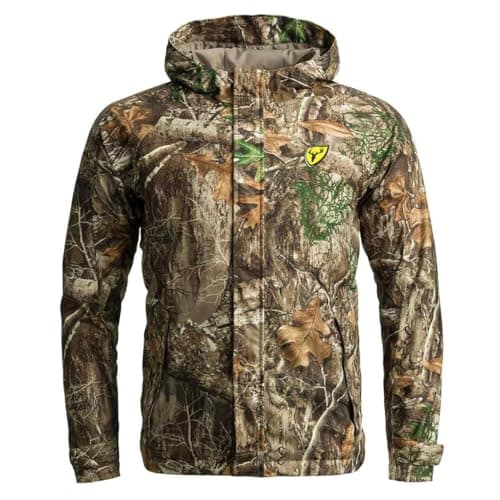
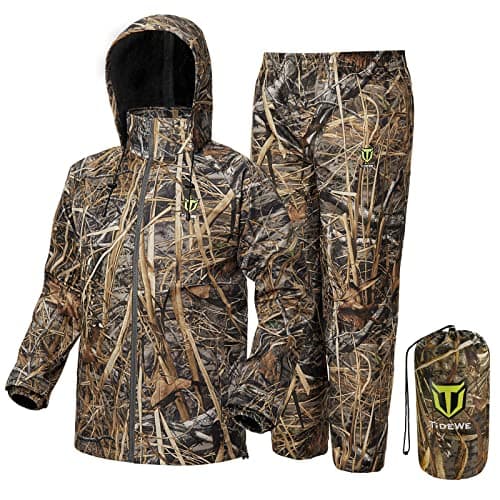
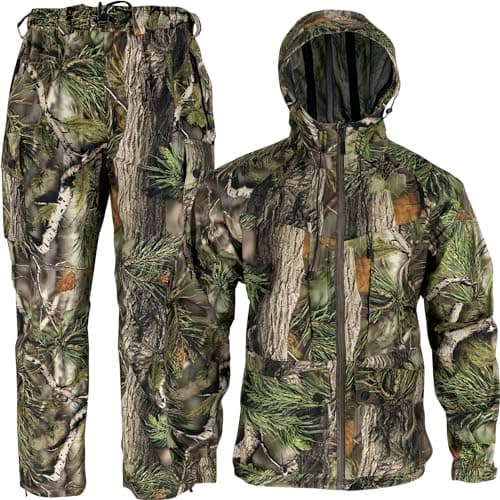
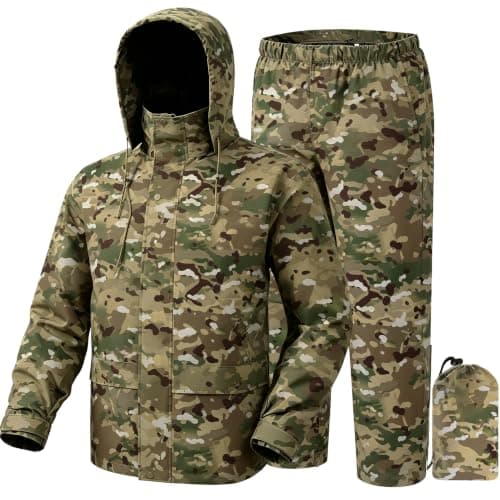
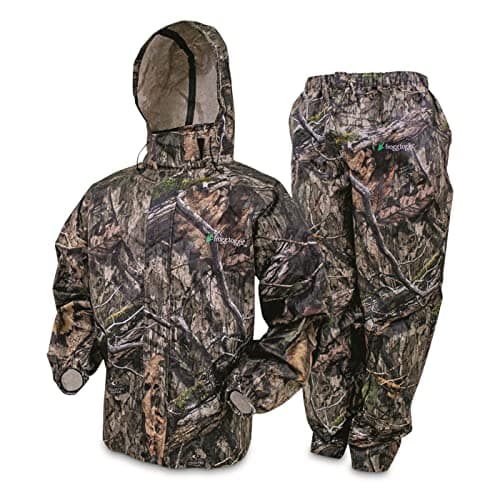
Hunting rain gear has to solve three things at once, and they fight each other. It has to keep rain out. It has to let sweat vapor out, or you get just as wet from the inside. And it has to be quiet, because a crinkly shell inside forty yards of a deer is the end of the hunt.
Fabrics that are excellent at the first two — non-woven laminates like Frogg Toggs — are audibly the worst at the third. Brushed fabrics that are genuinely quiet are heavier, dry slower and pack larger. There is no product on the market that wins all three, and any listing implying otherwise is not being straight with you.
So buy for the failure you can least afford. A rifle hunter sitting at 200 yards should optimize for staying dry. A bowhunter working brush at 25 yards should optimize for silence and accept a heavier pack.
Two things this ranking takes as given and explains elsewhere. If you shoot a bow, noise outranks value and the order above changes — quiet rain gear for bow hunting ranks the same category on fabric sound and reaches a different winner, deliberately. And if the labels on these listings are doing the confusing, waterproof against water resistant explains what each word promises, what the repellent finish on the outside is doing, and why a jacket that has wetted out is not leaking.
The three-way trade
Waterproofing is measured, and rarely stated
Hydrostatic head, quoted in millimeters, is the standard measure — 5,000mm handles light rain, 10,000mm handles sustained rain, 20,000mm handles anything. Most hunting rain gear does not publish it, which is itself informative. Seam taping matters as much as the fabric: an untaped seam leaks regardless of the membrane.
Breathability is where cheap gear fails
A fully waterproof, non-breathable shell keeps rain out and traps every bit of sweat. After a mile of walking you are as wet as you would have been, just warmer and more uncomfortable. Pit zips and mesh-lined pockets help enormously and cost the manufacturer very little, which is why their absence tells you something.
Noise is the specification nobody quotes
There is no standard for it, so you are relying on material type. Non-woven laminates are loud. Coated nylon is loud. Brushed polyester and fleece-faced softshells are quiet. If you bowhunt, this is the first thing to check and the hardest to check remotely.
Suit or jacket
A jacket alone in real rain just relocates the problem to your thighs, and wet legs cost body heat fast when you sit down. If you sit in the rain, buy the suit.
Reproof it
The DWR finish on the face fabric wears off, and when it does the fabric wets out and stops breathing even though the membrane is intact. Wash and reproof annually — most people replace a perfectly good jacket that just needed treating.
How these were picked
I haven't handled these. Here's what I did instead.
Everyone in this category says they tested twenty of these. I haven't tested any, and I say so. What I do instead: read the manufacturer's manual and published specification, compile the numbers that decide the purchase, do the arithmetic in the open, check the live price, and name one product to skip. The scores above are judgments from that research against a published rubric — they are not measurements I took, because I do not have a lab and I am not going to pretend otherwise.