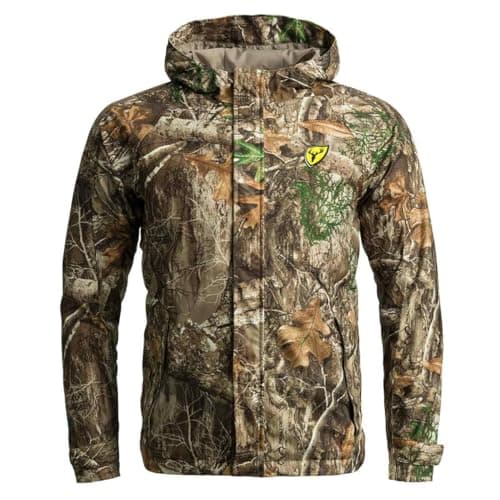
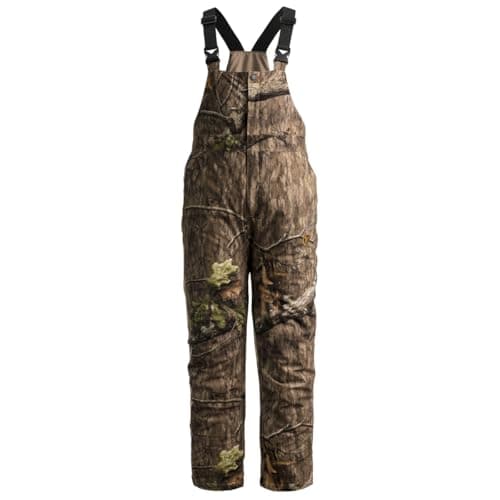
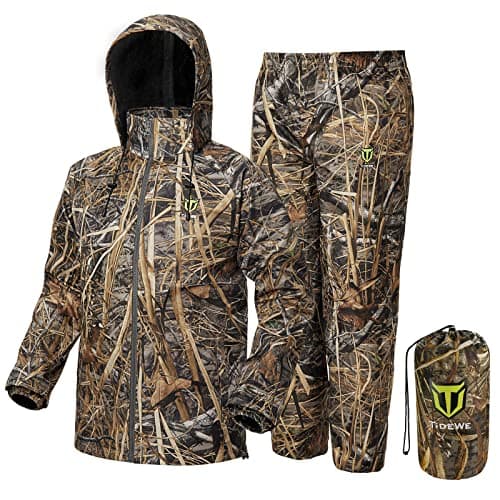
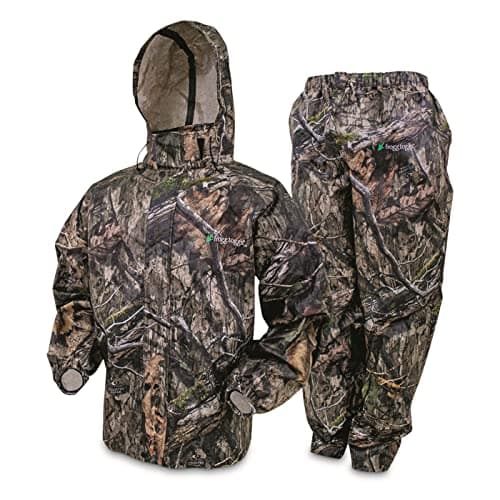
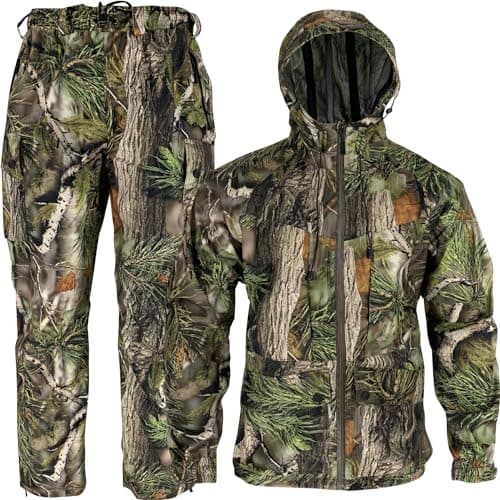
The verdict first: buy the AYIN Silent Rain Suit. It is for the bowhunter who sits or still-hunts inside forty yards and has already learned that the cheap rain suit in the pack is the reason the deer looked up. It is the only suit in our registry sold on being quiet rather than on being cheap or light, and quiet is the specification that matters at bow range. If you still-hunt and move more than you sit, buy the ScentBlocker Drencher jacket and accept wet thighs in a downpour. If you are sitting a late-season rain in cold weather, add the insulated Drencher bibs underneath.
If noise is not your constraint — you hunt with a rifle, or you sit in a blind — then our main rain gear roundup is the page you want. It ranks the same category on staying dry for the money and reaches a different winner, deliberately. This page is not a reshuffle of that one; it is the same products judged against a criterion that reverses the order.
Why fabric noise is a real specification and not a preference
A bow shot happens inside the distance at which an animal can hear you shift your weight. Rifle hunters get to be slightly loud at two hundred yards; a bowhunter does not get to be loud at twenty. Every time you reach for a release, draw, or turn your shoulders, the outer layer you are wearing rubs against itself, and whether that produces a rustle or a crack is a property of the fabric.
The worst offender is the non-woven material that makes budget rain gear so good value. It is genuinely waterproof, it packs to nothing and it costs very little — and it is audibly crinkly. That is not our opinion about it, it is what the category's own listings acknowledge: the Frogg Toggs All-Sport suit, which we recommend to everyone else, states that this material is a real disadvantage inside forty yards. We have taken it at its word and put it at the bottom of this page.
What makes a shell quieter is a brushed or napped face fabric. The soft surface deadens the sound of fabric moving across fabric instead of amplifying it. That is the construction the AYIN is built around and the reason it leads.
What we can and cannot tell you about noise
There is no industry noise rating for hunting clothing. Nobody publishes a decibel figure, there is no standardized test, and we have not built one — so nothing on this page claims that one suit is a measured number of decibels quieter than another. What we have worked from is what each listing states about its own construction: brushed and napped fabrics, described as silent or quiet by the maker, versus non-woven shells whose own product pages concede the crinkle. That is a defensible basis for ranking and it is not a test, and we would rather say so than invent a figure. How we pick says the same thing about every score on this site.
Jacket or full suit
A jacket alone is the common compromise and it is the right one if you are moving. It is lighter, it breathes better and you can hike in it. What it does not do is keep your legs dry, and if you then sit down for two hours, the water that ran off the jacket is now in your lap. The honest rule: if your hunt involves sitting still in rain, you want pants or bibs, not a jacket.
For a cold late-season sit the answer is the insulated waterproof bib rather than rain pants over a base layer — it is one layer doing two jobs and there are fewer fabric surfaces to rub together. Our cold-weather layering page covers the rest of that system, and the static stand kit covers what else a long sit in bad weather needs.
The quiet-and-dry conflict, resolved honestly
You cannot have all three of quiet, waterproof and packs-to-nothing. Pick two:
- Quiet and waterproof costs you packed size and weight. That is the AYIN and the Drencher.
- Waterproof and tiny costs you silence. That is the Frogg Toggs, and it is why it lives in a pack as an emergency layer rather than as a bowhunting shell.
- Quiet and light costs you full waterproofing — that is a soft shell, and it is a drizzle garment, not a rain garment.
Which is also the gap on this page, stated plainly: we link no soft shell or wool outer layer here. They are a genuine answer for quiet hunting in light weather, and nothing in this site's registry is one — the quiet options we have verified are rain shells. We are not going to hand-write a listing to round the page out. If a drizzle layer is what you want, buy a brushed soft shell from a hunting brand and keep a packable waterproof in the bag behind it.
Three things that matter more than the brand
Size up. Rain gear goes over your hunting layers, and a shell that fits over a base layer in the shop will bind over a fleece in November. Binding fabric is loud fabric, so this is a noise decision as well as a comfort one.
Keep it clean, and re-treat it. A face fabric loaded with dirt and body oils wets out, and a wetted-out shell stops breathing and starts feeling like a bin liner. Wash it per the label and renew the water-repellent finish on the outside — we explain what that finish actually is here.
Put it on before it rains. Obvious, and the most common failure. A shell pulled on after you are already damp is managing a problem instead of preventing one, and the noisiest thing you will do all morning is get dressed in a treestand. Our preseason checklist has the packing side of this.
Buying notes
Test the noise yourself, in the store or at home
Put the jacket on and rub your forearm across your chest with your eyes shut. You will know within two seconds whether you want to draw a bow in it. This is the only noise test anybody can actually run and it is better than any marketing word.
Hoods are where noise hides
A hood sits next to your ears, so its fabric is louder to you than anything else you are wearing, and a stiff hood brim rasps every time you turn your head. Check the hood specifically rather than judging the garment by the body panels.
Zips, cuffs and pockets
Hard plastic zip pulls tap against snaps and against the bow. A strip of tape or a short length of paracord on each pull is a two-minute fix that removes a sound you will otherwise make all season.
Breathability still matters when you walk in
Quiet fabric is heavier and warmer, so the walk to the stand is where you will overheat. Carry the shell in and put it on when you get there, rather than hiking in it and arriving wet from the inside.