We earn a commission when you buy through our Amazon links, at no extra cost to you. It never changes the order of the picks, and we say so when the cheaper thing is the better buy. How this works.
Thirty dollars is the most interesting price point in everyday carry, because it is where the gap between a competent tool and a knife-shaped object is largest. Above a hundred dollars almost everything is good. Below thirty, the distribution is bimodal: name-brand knives with soft-but-honest steel and a real warranty, and unbranded knives with no named steel, no warranty and a serrated tanto blade nobody asked for.
The dividing line is simple and it is printed right in the listing. If the manufacturer names the steel, they are willing to be judged on it. If the listing says "stainless steel" and nothing more, the steel is whatever was cheapest that month.
Everything below except the last entry comes from a company with a warranty department that answers the phone. The last entry is there to show you what the alternative looks like.
#ad · Live prices from the Amazon Creators API, as of October 19, 2026. Where we have no verified live price we show none — a gap beats a number that has rotted.
In detail
The picks, in full
01
Best overall under $30
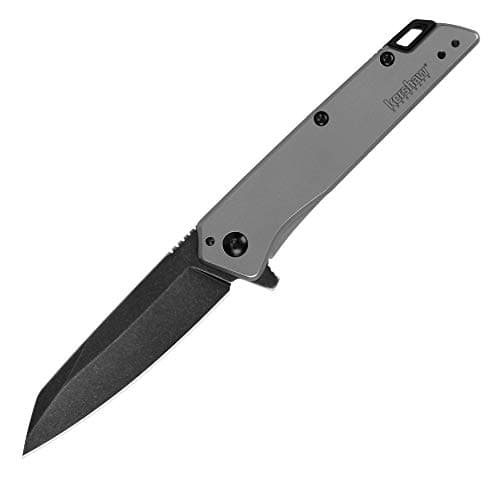
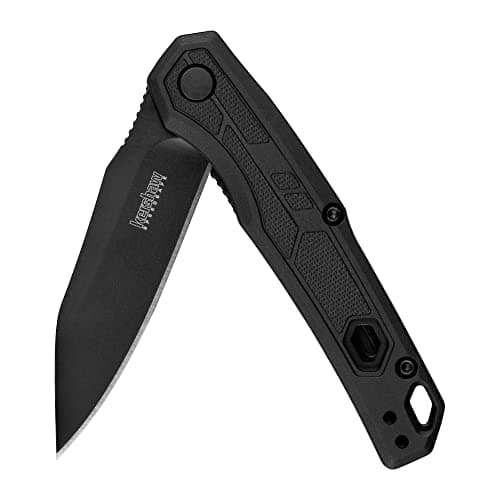
Kershaw Appa
2.75 in bladeReverse tantoAll-black finishFrame lock
7.8/10
A plain-edge reverse tanto from a company with a real warranty department, for the price of two sandwiches.
Edge retention
5
Lock security
7
Carry weight
9
Sharpening ease
9
Value
9
What's good
+Kershaw's US warranty actually answers, which is not true of most knives in this bracket
+Reverse tanto puts a lot of steel behind the tip, so it resists chipping
+Under three inches keeps it legal almost everywhere
What's not
−Budget stainless dulls faster than D2 or S30V
−No bearings, so the action needs breaking in
Skip it if…
…you cut abrasive material daily. Soft steel plus daily cardboard equals a weekly sharpening habit.
The three things that separate a good budget knife from a bad one
A named steel
8Cr13MoV, 4Cr13, 1.4116 and 14C28N are all budget steels, and all of them are fine. What they have in common is that they are named, so their hardness and corrosion behavior are documented and predictable. A listing that declines to name the steel is telling you something.
A plain edge
Serrations look aggressive and are almost always the wrong choice at this price, for one practical reason: sharpening them requires a tapered ceramic or diamond rod, which most buyers do not own. A serrated budget knife is a knife that gets dull once and then stays dull. A plain edge comes back on a $10 stone.
A warranty that exists
Kershaw, Gerber and CIVIVI all have functioning warranty processes. That matters less for replacing a broken knife than it does as a signal — a company that expects to service a product for years builds it differently than one that does not expect to hear from you again.
What you are giving up
Be clear-eyed about the trade. At this price you get softer steel that needs sharpening more often, looser machining tolerances, and pocket clips that are usually not deep-carry. None of that stops the knife working. All of it is why the tier above exists.
How these were picked
I haven't handled these. Here's what I did instead.
Everyone in this category says they tested twenty of these. I haven't tested any, and I say so. What I do instead: read the manufacturer's manual and published specification, compile the numbers that decide the purchase, do the arithmetic in the open, check the live price, and name one product to skip. The scores above are judgments from that research against a published rubric — they are not measurements I took, because I do not have a lab and I am not going to pretend otherwise.
Questions
Frequently asked
What is the best pocket knife under $20?+
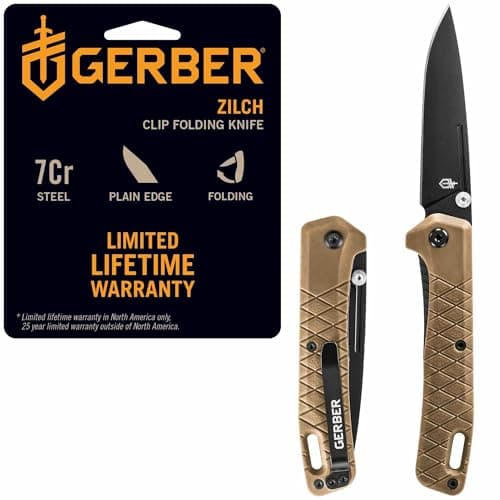
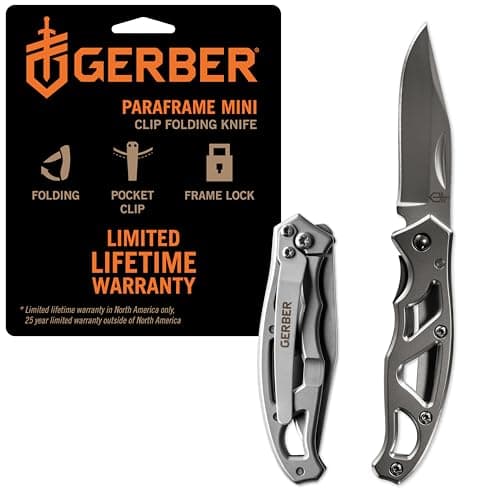
The Kershaw Appa and the Gerber Paraframe Mini are the two we would put in front of anyone at that price: both plain edge, both from companies with real warranties, both under three inches so they stay carry-legal in restrictive jurisdictions.
Why do cheap knives use serrated blades so often?+
Because serrations stay functionally "sharp enough" for longer on soft steel — the teeth keep tearing even after the edge is gone. It is a way of hiding poor edge retention, and the cost is that you can never properly restore the edge without a specialized rod.
Is 8Cr13MoV a bad steel?+
No. It is a soft, easy-sharpening stainless with decent corrosion resistance, and it is entirely adequate for everyday cutting if you touch it up regularly. It is only a bad steel if you expected it to behave like S30V.
How long should a $25 knife last?+
Years, if the lock is sound and you sharpen it. The failure mode at this price is rarely catastrophic — it is the edge degrading faster than the owner is willing to maintain, and the knife quietly going in a drawer.
We do not run a testing lab and we do not pretend to. Where a measured number came from a manufacturer's published specification or someone else's lab, we name them and link them. Where we could not verify something, we say so on the page rather than quietly leaving it out. Read the full method.