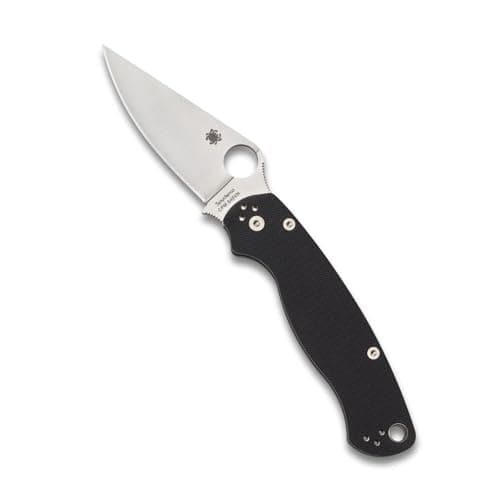
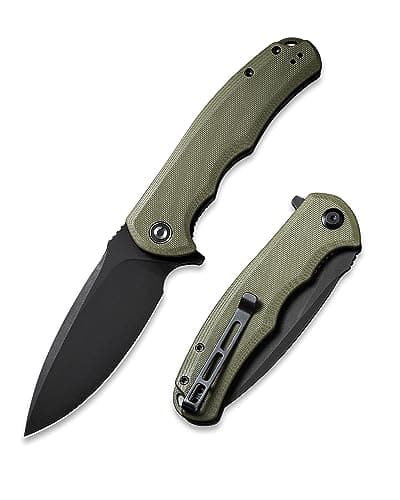
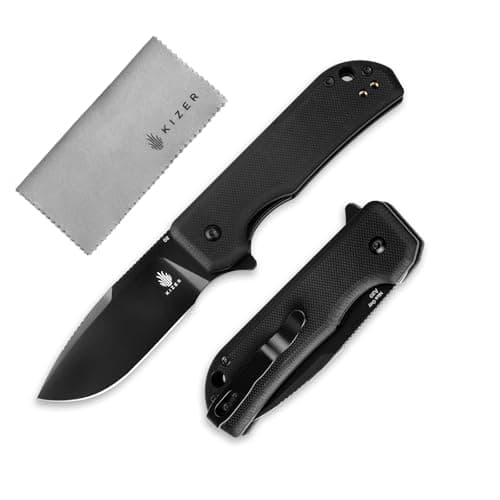
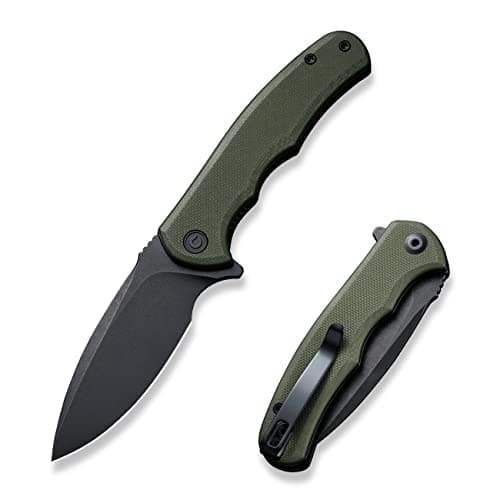
Six folders judged on the only three things that decide an everyday carry knife: how long the edge lasts, whether the lock holds, and whether you actually carry it.
We earn a commission when you buy through our Amazon links, at no extra cost to you. It never changes the order of the picks, and we say so when the cheaper thing is the better buy. How this works.
There is a version of this list on every gear site, and almost all of them are ordered by price. That is not how anybody actually chooses a pocket knife. You choose one by deciding how much steel performance you are willing to pay for, how much weight you will tolerate on your pocket seam, and how much sharpening you are honestly going to do. Every ranking below falls out of those three answers.
I have not handled these knives. What I have done is read the manufacturers' published specifications, compare the steels against their known property trade-offs, and check the live price before showing it to you. Where a number appears on this page — blade length, steel designation, weight in ounces — it came from the maker's own listing, not from a guess.
The short version, if you want to stop reading here: the Benchmade Bugout is the best knife on this list and costs more than most people should spend. The CIVIVI Praxis does eighty percent of the job for a fifth of the money and is the pick I would actually hand someone. The Spyderco Para Military 2 is what you buy if the knife has to work hard. And the Smith & Wesson that appears at the top of nearly every Amazon search for this term is the one I would leave alone.
Prices below update daily from Amazon's API. If a number is missing, the button says "Check price" instead — we would rather show a gap than a figure that has gone stale.
Two neighbors worth knowing about. A folder is the right answer for a pocket and the wrong one for a belt — fixed blades are stronger, easier to clean and the better tool outdoors. And if what you actually want is pliers with a blade attached, that is a different argument entirely: Leatherman versus Gerber.
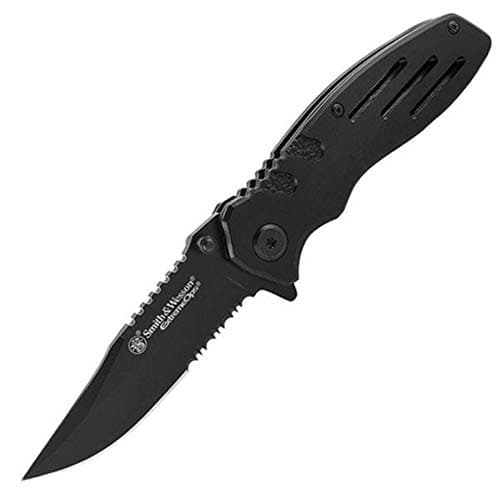
The knife that shows up first in every search and the one I would not buy — a serrated tanto in soft steel is the wrong answer to almost every everyday cutting job.
#ad · Live prices from the Amazon Creators API, as of October 19, 2026. Where we have no verified live price we show none — a gap beats a number that has rotted.
In detail
The picks, in full
01
Best overall
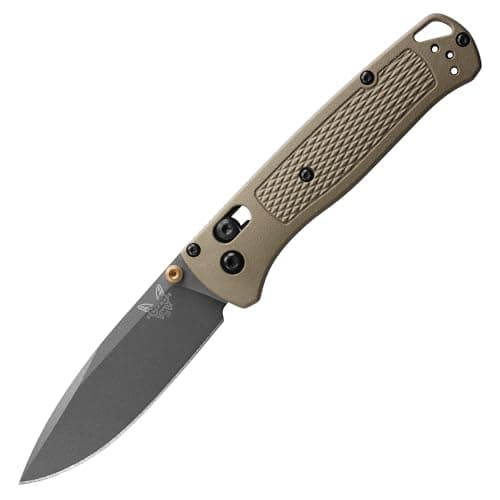
Benchmade Bugout 535GRY-1
3.24 in bladeCPM-S30V steelAxis lock1.85 oz
8.0/10
The lightest serious folder most people will ever carry, and the reason it wins is that you forget it is in your pocket.
Edge retention
9
Lock security
9
Carry weight
10
Sharpening ease
6
Value
6
What's good
+Under two ounces, which is the number that decides whether a knife gets carried
+S30V holds an edge far longer than the budget steels at a third of the price
+Axis lock works identically left- or right-handed and closes with one hand
+Benchmade's LifeSharp warranty covers sharpening and lock service for the life of the knife
What's not
−The price is roughly six times what a competent budget folder costs
−Thin handle scales flex under a hard grip — deliberate, and still not for everyone
−S30V needs a guided system or diamond stones to bring back properly
Skip it if…
…your knife spends its day on cardboard and zip ties. A $30 folder does that identically, and the money is better spent on a sharpener.
3.1 in bladeSerrated clip pointAluminum handleLiner lock
4.0/10
The knife that shows up first in every search and the one I would not buy — a serrated tanto in soft steel is the wrong answer to almost every everyday cutting job.
Edge retention
3
Lock security
4
Carry weight
6
Sharpening ease
2
Value
5
What's good
+Genuinely cheap, and it does open a box
+Aluminum handle survives being thrown in a toolbox
What's not
−The listing does not name the steel, which in this price bracket means an unspecified low-carbon stainless
−Serrations cannot be sharpened without a dedicated tapered rod, so most owners never sharpen it
−A serrated tanto tears material instead of slicing it
−Blade play out of the box is a common complaint at this price
Skip it if…
…you want a knife you can maintain. This one is functionally disposable, and for a few dollars more the Gerber Paraframe Mini is a plain edge you can actually sharpen.
How to choose an EDC knife without overthinking it
Start with the blade length your city allows
This is the constraint that overrides preference, and it is the one most buying guides skip entirely. Blade-length limits are set at the state and often the municipal level, and they vary from three inches to no limit at all. The American Knife & Tool Institute maintains state-by-state summaries, and checking yours takes two minutes. Buying a 3.75-inch folder for a city with a three-inch limit is an expensive way to learn this.
Then pick the steel that matches your sharpening habit
Steel is a three-way trade between edge retention, toughness and corrosion resistance. Push one up and something else comes down. Budget stainless like 8Cr13MoV and 4Cr13 dulls quickly and comes back on anything. D2 holds an edge two to three times longer and wants diamond abrasives. S30V and S45VN hold longer still and are genuinely difficult on a cheap pull-through.
So the honest sequence is: decide what you will sharpen with first, then buy steel that system can handle. Someone with a Work Sharp Precision Adjust should buy S30V. Someone whose plan is a $10 kitchen sharpener should buy 14C28N or 9Cr18MoV and be happier for it.
Weigh it, literally
The listing weight in ounces predicts whether a knife gets carried better than any other specification. Under three ounces disappears. Three to five is noticeable but tolerable. Above five, most people stop carrying within a month. A brilliant knife in a drawer scores zero, which is why carry weight is a scored metric on every card above rather than a footnote.
Check the lock before you use it
Whatever the lock type, do this once when the knife arrives: open it, grip the handle only, and tap the spine firmly against your palm. If the lock shifts or the blade begins to close, it is defective and should go back. That is a check we are describing, not a test we performed — we have not handled these units and we are not going to imply otherwise.
How these were picked
I haven't handled these. Here's what I did instead.
Everyone in this category says they tested twenty of these. I haven't tested any, and I say so. What I do instead: read the manufacturer's manual and published specification, compile the numbers that decide the purchase, do the arithmetic in the open, check the live price, and name one product to skip. The scores above are judgments from that research against a published rubric — they are not measurements I took, because I do not have a lab and I am not going to pretend otherwise.
Questions
Frequently asked
What is the best all-around EDC knife blade length?+
Between 2.75 and 3.25 inches covers almost every everyday task while staying inside the blade-length limit in most US jurisdictions. Below 2.5 inches you start losing leverage on anything tougher than an envelope; above 3.5 inches you are carrying more knife than most days require and you are in legal-check territory.
Is S30V worth the extra money over D2?+
Only if you sharpen with diamond abrasives or a guided system. S30V is genuinely more corrosion resistant and holds a working edge longer, but both steels are hard enough that a basic pull-through sharpener will frustrate you. If your sharpening plan is a whetstone and patience, D2 gets you most of the performance for a quarter of the price.
Are assisted-opening knives legal?+
In most US states, yes — but assisted opening is treated differently from a manual folder in some jurisdictions, and automatic knives are restricted much more widely. The American Knife & Tool Institute publishes state summaries, and your municipality may be stricter than your state. Check before you order, not after.
How often should an EDC knife be sharpened?+
When it stops slicing paper cleanly, which for a budget stainless steel under daily cardboard use is roughly weekly, and for S30V under the same use is closer to monthly. Stropping on a leather strop between sharpenings extends both figures substantially and takes about thirty seconds.
Do I need a liner lock, frame lock or Axis lock?+
For everyday cutting, any of them is strong enough — lock strength is rarely the limiting factor. The practical difference is handedness and finger position. Axis-style locks work identically left- and right-handed and keep your fingers clear of the blade path. Compression locks do the same. Liner and frame locks put your thumb near the closing blade, which matters if you use the knife one-handed all day.
We do not run a testing lab and we do not pretend to. Where a measured number came from a manufacturer's published specification or someone else's lab, we name them and link them. Where we could not verify something, we say so on the page rather than quietly leaving it out. Read the full method.