Skip to content
Steve's Outpost

Section 05 · Overlanding

GMRS Base Station Setup

Four components, and the radio is the least important of them. Height, antenna and coax decide what a base station can do; the wattage is the last thing to worry about.

By Stephen V.Updated How we pick
#ad

We earn a commission when you buy through our Amazon links, at no extra cost to you. It never changes the order of the picks, and we say so when the cheaper thing is the better buy. How this works.

The verdict first: get the antenna as high as you safely can, feed it with low-loss coax, run the radio from a proper regulated supply, and buy whatever radio the remaining budget allows. In that order. A twenty-watt radio on a roof antenna will beat a fifty-watt radio in a window every day of the week.

A GMRS base station is a house-side radio — for reaching the truck on the way home, working a local repeater, and having a real radio when the power and the internet are both out. This page assumes you already have the license, because you need one.

1. Height, which is the whole game

UHF is line of sight. Every foot of antenna height extends your radio horizon, and it does it far more efficiently than any amount of transmitter power. An antenna on a roof beats the same antenna on a fence post by more than doubling your power would.

Do this safely and legally. Roof work, mast work and anything near power lines has killed people; if you are not confident on a roof, pay somebody who is. Check local ordinances and, if applicable, your HOA before you mount anything permanent.

2. The antenna, and one honest caveat

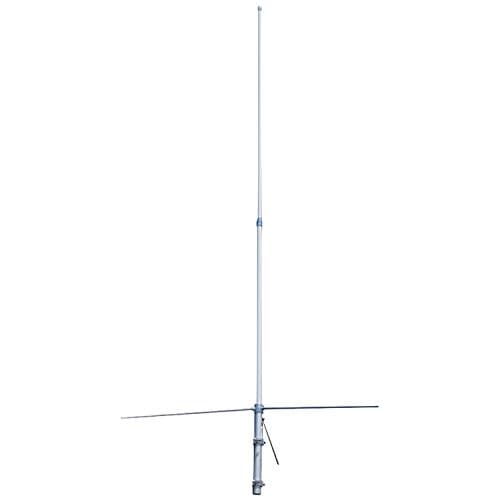
Buy an antenna cut for GMRS. The GMRS allocation sits at 462 to 467 MHz, which is above the 70cm amateur band. A great many attractive, well-made, well-reviewed "dual-band" base antennas are cut for the amateur bands and are not tuned for GMRS.

They may still work acceptably. They may not. The only way to know is to measure the SWR on your actual channels before you transmit through it at power. We have listed a widely available fiberglass base antenna above with that caveat stated on the product itself, rather than quietly implying it is a GMRS antenna because it is convenient to.

3. Coax: the component people economize on and should not

At 462 MHz, cable loss is significant. Thin coax such as RG8X is common, cheap and flexible, and over a fifty-foot run at UHF it discards a meaningful fraction of your transmit power as heat before it ever reaches the antenna.

For any run over about fifteen feet, use LMR-400-type cable. It is thick, stiff and awkward to route, and it is the difference between the power your radio produces and the power your antenna radiates. This is invisible: the radio works either way, you just do not get out as far, and nothing tells you.

Keep the run as short as the installation allows, and weatherproof every outdoor connector properly — water in a connector will ruin an installation faster than anything else on this page.

4. Power: 13.8 volts, and real current

A mobile radio pressed into base service expects 13.8V DC and draws real current on transmit — a 50-watt radio can pull upward of twelve amps. A regulated 30-amp supply runs anything in this class with enormous headroom and will still be right when you buy your next radio.

Do not run it from a battery charger or an unregulated wall supply. Voltage sag on transmit causes distorted audio and, over time, damaged radios.

5. Check your SWR before you trust any of it

An inline SWR meter tells you whether the antenna system is working. High SWR means power reflecting back down the coax into the radio, and on a 50-watt radio that is how output stages fail.

Check it once at installation, and check it again after any weather event that could have moved the antenna. It is a fifty-dollar instrument protecting a four-hundred-dollar radio.

What a base station is actually for

  • Working a repeater that a handheld cannot reach — the repeater page covers that.
  • Talking to the truck at a range no handheld will manage.
  • Being the fixed point for a family or a group, so somebody is always reachable.
  • Working when nothing else does, which is the reason a lot of people build one.

The short answer

Quick picks

#ProductBest forScorePrice
01
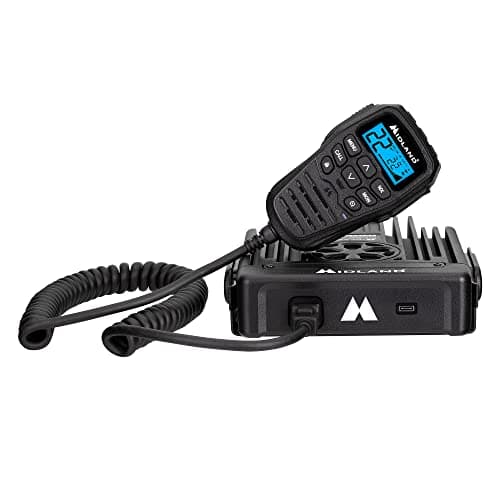
Midland Midland MXT575 MicroMobile GMRS Radio, 50W
Midland MXT575 MicroMobile GMRS Radio, 50W

Fifty watts is the legal maximum for GMRS and this is the accessible way to have it. In a base station the power matters more than it does mobile, because the antenna is fixed and the height is doing most of the work.

Best base radio
8.6
$439.99Amazon (affiliate link)
02
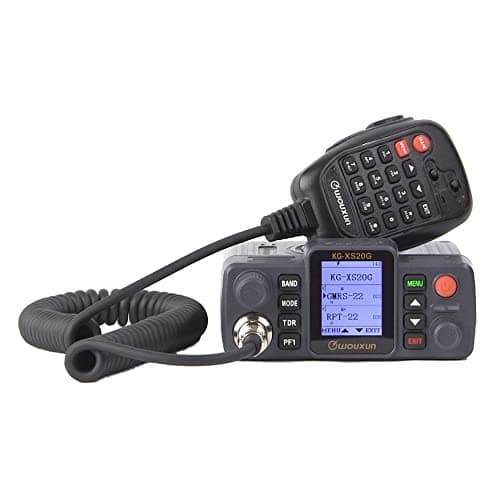
Wouxun Wouxun KG-XS20G Plus GMRS Base/Mobile Radio
Wouxun KG-XS20G Plus GMRS Base/Mobile Radio

A hundred and forty dollars for a radio designed to work as a base as well as a mobile. For a house station where the antenna is fixed and high, twenty watts and a good antenna beats fifty watts and a compromised one.

Best value base radio
8.4
$139.99Amazon (affiliate link)
03
Midland Midland MXTA26 MicroMobile 6dB Gain Whip Antenna
Midland MXTA26 MicroMobile 6dB Gain Whip Antenna

Tuned for the GMRS band rather than adapted into it, and 6 dB of gain is a genuine multiplier on what you already transmit. On any radio, the antenna does more for your range than the power setting does.

Best GMRS-specific antenna
8.6
$69.99Amazon (affiliate link)
04
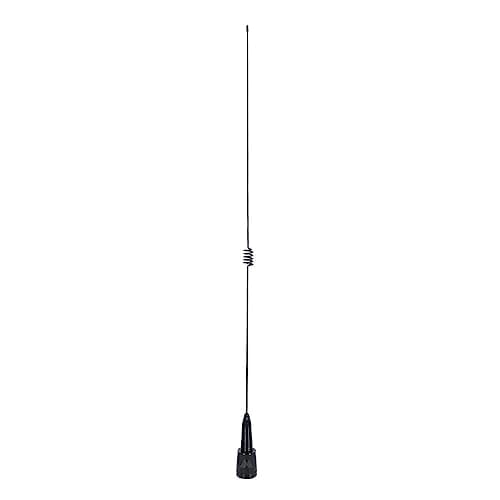
Tram Tram Dual-Band Fiberglass Base Antenna, 8ft
Tram Dual-Band Fiberglass Base Antenna, 8ft

An eight-foot fiberglass base antenna on a roof does more for a base station than any amount of transmit power. Read the honest caveat below before you order this one, because band coverage is the whole question.

Best base antenna mast
7.2
$99.99Amazon (affiliate link)
05
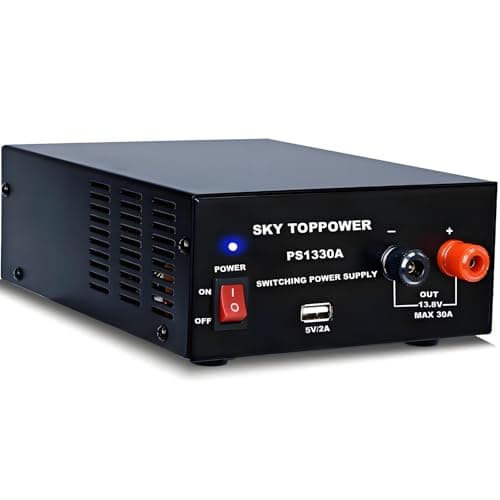
SKY TOPPOWER 13.8V 30A Regulated DC Bench Power Supply
13.8V 30A Regulated DC Bench Power Supply

A mobile radio expects 13.8 volts at real current. A regulated 30-amp supply runs any GMRS radio with enormous headroom and will still be the right supply when you buy your next radio.

Best power supply
8.2
$79.98Amazon (affiliate link)
06
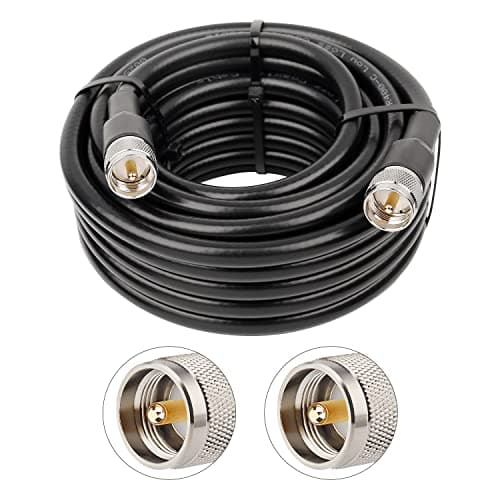
XRDS-RF KMR-400 Low-Loss Coax, 50ft with PL-259 Connectors
KMR-400 Low-Loss Coax, 50ft with PL-259 Connectors

At UHF frequencies, cable loss is not a rounding error — it is the difference between the power leaving your radio and the power leaving your antenna. Over fifty feet, LMR-400-type cable is the correct choice and thin coax is a mistake.

Best coax run
7.8
$49.99Amazon (affiliate link)
07
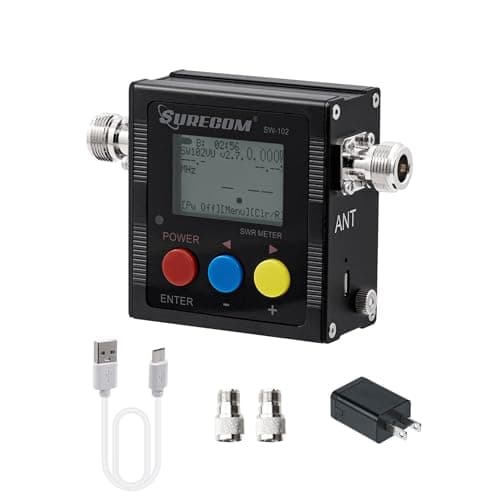
Surecom Surecom SW-102 Digital VHF/UHF Power and SWR Meter
Surecom SW-102 Digital VHF/UHF Power and SWR Meter

The instrument that tells you whether your antenna installation works, and the one nobody buys. High SWR means power reflecting back into the radio, and on a 50-watt radio that is how finals die.

Best SWR meter
8.0
$57.99Amazon (affiliate link)
08
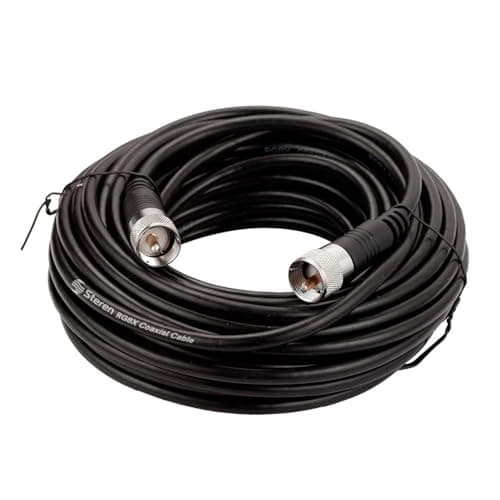
Steren RG8X Coaxial Cable, 50ft with PL-259 (2-pack)
RG8X Coaxial Cable, 50ft with PL-259 (2-pack)

Sixty-nine dollars for two fifty-foot runs of thin coax, which is more than one run of the low-loss cable that would actually deliver your power. RG8X is a CB cable and CB is at 27 MHz, where loss barely matters. GMRS is at 462 MHz, where it does.

Skip this one
5.2
$68.97Amazon (affiliate link)

#ad · Live prices from the Amazon Creators API, as of Sep 7, 2026. Where we have no verified live price we show none — a gap beats a number that has rotted.

In detail

The picks, in full

01
Midland Midland MXT575 MicroMobile GMRS Radio, 50W

Best base radio

Midland MXT575 MicroMobile GMRS Radio, 50W

50WControl-in-micRepeater channelsNOAA weather scan
8.6/10

Fifty watts is the legal maximum for GMRS and this is the accessible way to have it. In a base station the power matters more than it does mobile, because the antenna is fixed and the height is doing most of the work.

Output power
10
Features
9
Build quality
8
Ecosystem
9
Value
7

What's good

  • Full legal power, which is the ceiling — nothing you can legally buy transmits harder
  • Same MicroMobile ecosystem, so mobile and base share antennas and accessories
  • Repeater capable out of the box, which is what a base station is usually for

What's not

  • Needs a proper 13.8V supply at 12 to 15 amps — this is not a wall-wart radio
  • Four hundred and forty dollars before antenna, coax, mount or power supply

Skip it if…

your base station is a radio on a desk with a small antenna in a window. Fifty watts into a poor antenna is fifty watts wasted, and the antenna is where a base station is won.

$439.99See it on Amazon (affiliate link)

Price as of Sep 7, 2026. Prices move — Amazon's is the one that counts.

#ad · we may earn a commission from this link to Midland MXT575 MicroMobile GMRS Radio, 50W

02
Wouxun Wouxun KG-XS20G Plus GMRS Base/Mobile Radio

Best value base radio

Wouxun KG-XS20G Plus GMRS Base/Mobile Radio

20WBase/mobile chassisRepeater channelsFront panel controls
8.4/10

A hundred and forty dollars for a radio designed to work as a base as well as a mobile. For a house station where the antenna is fixed and high, twenty watts and a good antenna beats fifty watts and a compromised one.

Output power
7
Desk usability
9
Features
8
Build quality
8
Value
10

What's good

  • A third of the price of the 50W radio, and the antenna matters more than the difference
  • Front-panel controls suit a desk far better than a control-in-mic design does
  • Wouxun's build quality is solid and there is a real US importer behind it

What's not

  • Twenty watts against fifty is a real difference at the margins of coverage
  • Fewer accessories and mounts than the Midland ecosystem

Skip it if…

you are already at the limit of your coverage with a good antenna. That is the specific case where the extra power earns its money.

$139.99See it on Amazon (affiliate link)

Price as of Sep 7, 2026. Prices move — Amazon's is the one that counts.

#ad · we may earn a commission from this link to Wouxun KG-XS20G Plus GMRS Base/Mobile Radio

03
Midland Midland MXTA26 MicroMobile 6dB Gain Whip Antenna

Best GMRS-specific antenna

Midland MXTA26 MicroMobile 6dB Gain Whip Antenna

6 dB gainGMRS tunedNMO base1.5in base diameter
8.6/10

Tuned for the GMRS band rather than adapted into it, and 6 dB of gain is a genuine multiplier on what you already transmit. On any radio, the antenna does more for your range than the power setting does.

Band match
10
Gain
9
Durability
7
Mount compatibility
9
Value
8

What's good

  • Actually cut for 462-467 MHz, which most dual-band antennas are not
  • Gain concentrates energy toward the horizon, which is where the other vehicles are
  • NMO base fits every standard mount, mag or permanent

What's not

  • A tall whip on a vehicle catches branches — this is the tradeoff the ghost antennas exist to avoid
  • Higher-gain antennas have a flatter pattern, which is worse in genuinely steep terrain

Skip it if…

the vehicle lives under low branches or in a garage with a tight lintel. An antenna you take off is worth less than a shorter one you leave on.

$69.99See it on Amazon (affiliate link)

Price as of Sep 7, 2026. Prices move — Amazon's is the one that counts.

#ad · we may earn a commission from this link to Midland MXTA26 MicroMobile 6dB Gain Whip Antenna

04
Tram Tram Dual-Band Fiberglass Base Antenna, 8ft

Best base antenna mast

Tram Dual-Band Fiberglass Base Antenna, 8ft

Dual band VHF/UHF8ft fiberglassSO-239 connector200W rated
7.2/10

An eight-foot fiberglass base antenna on a roof does more for a base station than any amount of transmit power. Read the honest caveat below before you order this one, because band coverage is the whole question.

Construction
8
Height advantage
9
GMRS band match
4
Weather resistance
9
Value
6

What's good

  • Height and a real ground-independent design is what makes a base station a base station
  • Fiberglass sleeve survives weather far better than an exposed metal element
  • SO-239 is the standard base connector, so any coax you buy will fit

What's not

  • This is an AMATEUR dual-band antenna, cut for the 2m and 70cm bands. GMRS at 462-467 MHz sits above the 70cm amateur band and this antenna is not tuned for it.
  • You must check SWR on your actual GMRS channels before transmitting through it, and be prepared for it to be unacceptable
  • A GMRS-specific base antenna is the correct purchase and is worth seeking out

Skip it if…

you do not own an SWR meter. Putting 50 watts into an untested, out-of-band antenna is how radios get damaged, and we are not going to pretend a dual-bander is a GMRS antenna because it is convenient.

$99.99See it on Amazon (affiliate link)

Price as of Sep 7, 2026. Prices move — Amazon's is the one that counts.

#ad · we may earn a commission from this link to Tram Dual-Band Fiberglass Base Antenna, 8ft

05
SKY TOPPOWER 13.8V 30A Regulated DC Bench Power Supply

Best power supply

13.8V 30A Regulated DC Bench Power Supply

13.8V output30A continuousRegulatedUSB output
8.2/10

A mobile radio expects 13.8 volts at real current. A regulated 30-amp supply runs any GMRS radio with enormous headroom and will still be the right supply when you buy your next radio.

Current capacity
10
Regulation
8
Noise
7
Build quality
7
Value
9

What's good

  • Thirty amps is far more than any GMRS radio needs, which means it never sags on transmit
  • Regulated output protects the radio from the spikes an unregulated supply passes through
  • Doubles as a bench supply for testing vehicle accessories

What's not

  • Linear supplies are heavy; switching supplies are lighter and can introduce receive noise
  • Eighty dollars for something that is not the radio and not the antenna

Skip it if…

you are running a 5W handheld on a desk charger. This is for mobile radios pressed into base service, and a handheld needs none of it.

$79.98See it on Amazon (affiliate link)

Price as of Sep 7, 2026. Prices move — Amazon's is the one that counts.

#ad · we may earn a commission from this link to 13.8V 30A Regulated DC Bench Power Supply

06
XRDS-RF KMR-400 Low-Loss Coax, 50ft with PL-259 Connectors

Best coax run

KMR-400 Low-Loss Coax, 50ft with PL-259 Connectors

LMR-400 equivalent50ftPL-259 connectors both ends50 ohm
7.8/10

At UHF frequencies, cable loss is not a rounding error — it is the difference between the power leaving your radio and the power leaving your antenna. Over fifty feet, LMR-400-type cable is the correct choice and thin coax is a mistake.

Loss at UHF
9
Build quality
8
Routability
5
Length
8
Value
9

What's good

  • Substantially lower loss at 462 MHz than the thin coax normally supplied with antennas
  • Fifty feet reaches a roof from a room below in most houses
  • Pre-terminated, which removes the hardest part of a base install

What's not

  • Thick and stiff — it does not like tight bends and it does not go through small holes
  • Pre-made assemblies mean you cannot cut it to the exact length you need

Skip it if…

your run is under about fifteen feet. At that length thinner coax is fine, far easier to route, and the loss difference is genuinely small.

$49.99See it on Amazon (affiliate link)

Price as of Sep 7, 2026. Prices move — Amazon's is the one that counts.

#ad · we may earn a commission from this link to KMR-400 Low-Loss Coax, 50ft with PL-259 Connectors

07
Surecom Surecom SW-102 Digital VHF/UHF Power and SWR Meter

Best SWR meter

Surecom SW-102 Digital VHF/UHF Power and SWR Meter

125-525 MHzDigital SWR and powerInlineBattery powered
8.0/10

The instrument that tells you whether your antenna installation works, and the one nobody buys. High SWR means power reflecting back into the radio, and on a 50-watt radio that is how finals die.

Frequency coverage
9
Accuracy
8
Ease of use
8
Build quality
7
Value
8

What's good

  • Covers the GMRS band, which cheaper CB-oriented meters do not
  • Reads forward power, reflected power and SWR, so you can see what is actually happening
  • Small enough to leave inline permanently on a base station

What's not

  • Fifty-eight dollars for a diagnostic tool that does not transmit anything
  • Reads the system, not the antenna — a bad connector shows up as an antenna problem

Skip it if…

you bought a pre-tuned, band-correct antenna and a mag mount and nothing else. Even then, checking once is cheap insurance on a 50-watt radio.

$57.99See it on Amazon (affiliate link)

Price as of Sep 7, 2026. Prices move — Amazon's is the one that counts.

#ad · we may earn a commission from this link to Surecom SW-102 Digital VHF/UHF Power and SWR Meter

08
Steren RG8X Coaxial Cable, 50ft with PL-259 (2-pack)

Skip this one

RG8X Coaxial Cable, 50ft with PL-259 (2-pack)

RG8X50ft x 2PL-259 connectors50 ohm
5.2/10

Sixty-nine dollars for two fifty-foot runs of thin coax, which is more than one run of the low-loss cable that would actually deliver your power. RG8X is a CB cable and CB is at 27 MHz, where loss barely matters. GMRS is at 462 MHz, where it does.

Loss at UHF
3
Routability
9
Build quality
7
Suitability for GMRS base
3
Value
4

What's good

  • Flexible and easy to route, which is genuinely why people choose it
  • Perfectly appropriate for CB, for short jumpers, and for anything at HF

What's not

  • Meaningfully higher loss at 462 MHz over a fifty-foot run than LMR-400-type cable
  • Costs more than a single run of the correct cable, because you are buying two
  • The loss is invisible — the radio works, it just does not get out as far as it should

Skip it if…

the run is long and the frequency is UHF, which describes every GMRS base station. Buy one length of low-loss cable rather than two of this, and spend the same money getting more of your power to the antenna.

$68.97See it on Amazon (affiliate link)

Price as of Sep 7, 2026. Prices move — Amazon's is the one that counts.

#ad · we may earn a commission from this link to RG8X Coaxial Cable, 50ft with PL-259 (2-pack)

Buying notes

Spend in this order

  1. Antenna and mount. This is where range comes from.
  2. Coax, matched to the run length.
  3. Power supply, regulated, with headroom.
  4. SWR meter, because everything above needs verifying.
  5. The radio, with whatever is left.

That order looks wrong and it is right. Radios differ far less than installations do.

Mobile radio or dedicated base?

Most GMRS base stations are mobile radios on a bench supply, because there are very few dedicated GMRS base radios and the mobiles are good. A radio with front-panel controls suits a desk better than a control-in-mic design does, which is the one place the usual mobile recommendation flips.

Weatherproofing is not optional

Every outdoor connection needs proper sealing — self-amalgamating tape over the connector, then electrical tape over that. Water ingress into coax wicks along the cable and destroys it from the inside, and the symptom is a station that slowly stops working over a year.

Grounding and lightning

An outdoor antenna on a mast is a lightning consideration and it is a genuine one. Proper grounding and surge protection for an antenna system is beyond a gear page — read the manufacturer's guidance and, if in any doubt, get a qualified installer. At minimum, disconnect the coax from the radio during electrical storms.

Check the rules before the roof

Local ordinances, HOA covenants and rental agreements all bear on outdoor antennas. Check before you drill, not after.
How these were picked

I haven't handled these. Here's what I did instead.

Everyone in this category says they tested twenty of these. I haven't tested any, and I say so. What I do instead: read the manufacturer's manual and published specification, compile the numbers that decide the purchase, do the arithmetic in the open, check the live price, and name one product to skip. The scores above are judgments from that research against a published rubric — they are not measurements I took, because I do not have a lab and I am not going to pretend otherwise.

Questions

Frequently asked

Can I use a mobile GMRS radio as a base station?
Yes, and most people do. It needs a regulated 13.8V supply with enough current for transmit — a 30-amp supply covers anything in this class. Front-panel controls are more pleasant on a desk than a control-in-mic radio.
How high does the antenna need to be?
As high as you can safely and legally manage. UHF is line of sight, so height buys range more efficiently than power does. A roof beats a fence post by more than doubling your wattage would.
Will a dual-band ham antenna work on GMRS?
Sometimes, and you cannot assume it. GMRS at 462-467 MHz sits above the 70cm amateur band, so an amateur dual-bander is not tuned for it. Measure SWR on your actual channels before transmitting at power, and prefer a GMRS-specific antenna where you can find one.
What coax should I use?
LMR-400-type for any run over about fifteen feet. RG8X is fine for short jumpers and for CB at 27 MHz, but at 462 MHz over fifty feet it discards a meaningful fraction of your power as heat — and nothing warns you that it is happening.
Do I need an SWR meter?
For a fixed installation with a real antenna, yes. It is the only way to know the system works, and high SWR reflects power back into the radio, which is how output stages fail. Fifty dollars protecting a four-hundred-dollar radio is not a difficult decision.
Is a base station worth it if I have a mobile radio?
If you want to be reachable from home, work a distant repeater, or have communications when the power and internet are out, yes. If the truck is always at the house anyway, the mobile radio already covers most of it.

Keep reading

Receipts

Sources

We do not run a testing lab and we do not pretend to. Where a measured number came from a manufacturer's published specification or someone else's lab, we name them and link them. Where we could not verify something, we say so on the page rather than quietly leaving it out. Read the full method.