Skip to content
Steve's Outpost

Section 05 · Overlanding

GMRS Repeater Basics

A repeater is a radio on a hill that hears you and shouts. It is the single biggest range multiplier available on GMRS, and the part everyone finds confusing is three settings long.

By Stephen V.Updated How we pick
#ad

We earn a commission when you buy through our Amazon links, at no extra cost to you. It never changes the order of the picks, and we say so when the cheaper thing is the better buy. How this works.

What a repeater is: a radio in a good location — a hilltop, a tower, a tall building — that listens on one frequency and simultaneously re-transmits everything it hears on another, at high power from a very good antenna.

You are no longer trying to talk to the other vehicle. You are trying to talk to the hill, and the hill talks to everybody. Two handhelds that cannot hear each other across a ridge can both work the same repeater and have a perfectly clear conversation.

This is the biggest range multiplier available on GMRS. More than power, more than antennas. It is why the eight repeater channels exist.

The three settings, and that is genuinely all of it

1. The offset

A repeater receives on one frequency and transmits on another. On GMRS this is standardized: the repeater listens on the 467 MHz pair of a channel and transmits on the 462 MHz one.

Your radio does this automatically when you select a repeater channel. On a GMRS radio you do not calculate anything — you pick channel 16 in repeater mode and the radio handles the split. This is much simpler than the equivalent on amateur radio.

2. The tone

Most repeaters require a sub-audible tone — CTCSS, sometimes called a privacy code, or the digital equivalent DCS — sent along with your transmission. Without the right tone, the repeater simply ignores you.

This is not privacy and it does not encrypt anything. It is a filter that stops the repeater keying up on every distant signal that drifts across its input. The tone for a given repeater is published by whoever runs it, and putting the wrong one in is the most common reason a correctly-configured radio hears a repeater but cannot get into it.

3. Which repeater

Repeaters are run by individuals and clubs, not by the government or the manufacturers. They are listed in directories — myGMRS is the main one — with their channel, tone and coverage area.

The part nobody mentions: permission

Many GMRS repeaters are not open. Somebody paid for the equipment, pays for the site, and maintains it, and a lot of them ask you to request access before using it. That request is usually a form or a message, it is usually granted, and it is usually free.

Using a closed repeater without asking is the fastest way to be unwelcome in a local radio community that is otherwise extremely helpful. Ask first. It costs you an email and it is how the whole thing keeps working.

Getting into a repeater is about your transmitter

The repeater has a tall antenna and lots of power, so hearing it is usually easy. Being heard by it is the hard part — and that is entirely down to your radio and your antenna.

This is why a mobile radio with a roof antenna will work repeaters that a handheld cannot touch from the same spot. If you can hear a repeater clearly but cannot get into it, the answer is almost always a better antenna, not a different radio.

Operating on a repeater, briefly

  • Listen first. Somebody may be mid-conversation and you will not have heard their half.
  • Pause after keying up. Repeaters take a fraction of a second to open, and your first syllable gets eaten otherwise.
  • Leave gaps between transmissions so somebody else can break in. This is courtesy and it is also how emergencies get through.
  • Identify with your call sign periodically and at the end. It is required and it takes two seconds.
  • Do not ragchew on a travel repeater that a road network depends on.

When there is no repeater

Plenty of areas have none, and a repeater-capable radio then behaves as an ordinary simplex radio — which is what your group is using among itself anyway. Check the directory for your area before you buy a radio for its repeater capability, because a feature you cannot use is not a feature.

The short answer

Quick picks

#ProductBest forScorePrice
01
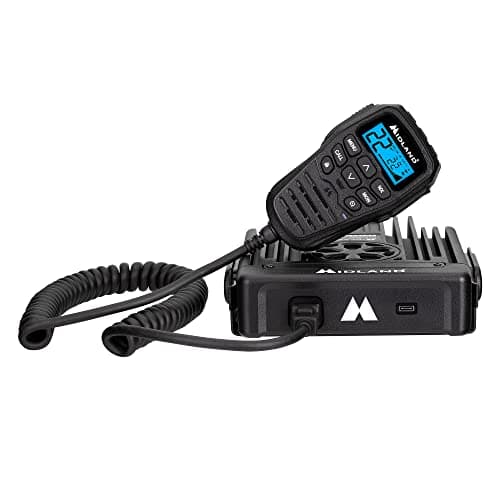
Midland Midland MXT575 MicroMobile GMRS Radio, 50W
Midland MXT575 MicroMobile GMRS Radio, 50W

The eight repeater channels are the reason to buy a mobile radio at all. Reaching a repeater on a hill turns a five-mile radio into a fifty-mile one, and fifty watts is what gets you into a distant one.

Best repeater-capable mobile
8.6
$439.99Amazon (affiliate link)
02
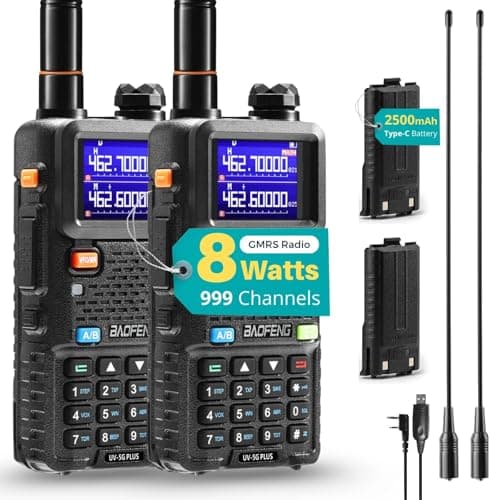
BAOFENG BAOFENG UV-5G Plus GMRS Handheld, Repeater Capable (2-pack)
BAOFENG UV-5G Plus GMRS Handheld, Repeater Capable (2-pack)

Sixty-five dollars for two handhelds that will work a repeater. Programming is far easier with a cable and CHIRP than through the keypad, and this model supports that.

Best repeater-capable pair
7.6
$64.99Amazon (affiliate link)
03
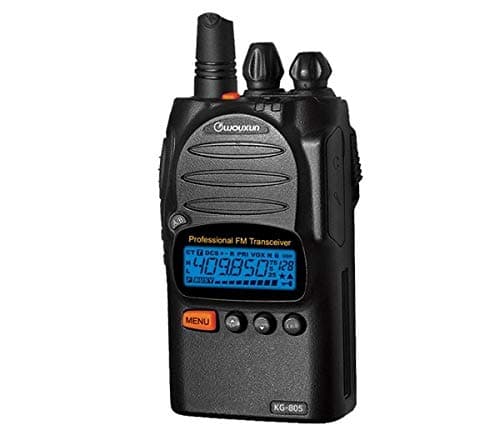
Wouxun Wouxun KG-805G Professional GMRS Two-Way Radio
Wouxun KG-805G Professional GMRS Two-Way Radio

Eighty dollars for a handheld with the receiver quality to actually hear a distant repeater cleanly. Receive is half of a radio contact and it is the half budget radios compromise hardest.

Best single repeater handheld
8.2
$79.99Amazon (affiliate link)
04
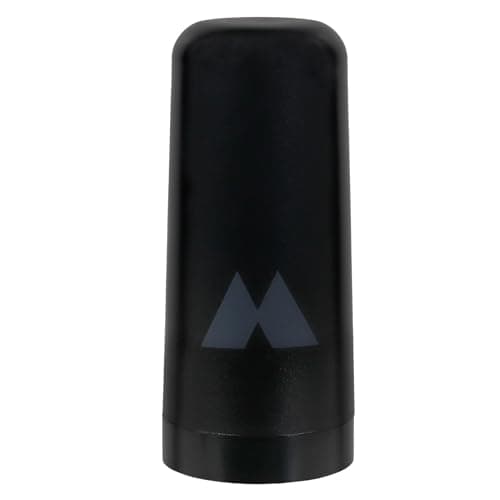
Midland Midland MXTA25 3dB MicroMobile Ghost Antenna
Midland MXTA25 3dB MicroMobile Ghost Antenna

A stubby 3 dB antenna on an NMO base, for people who want the radio to work and the truck to still fit under things. Less gain than a whip, and an antenna you never remove is worth more than a better one you keep taking off.

Best low-profile antenna
8.0
$59.99Amazon (affiliate link)
05
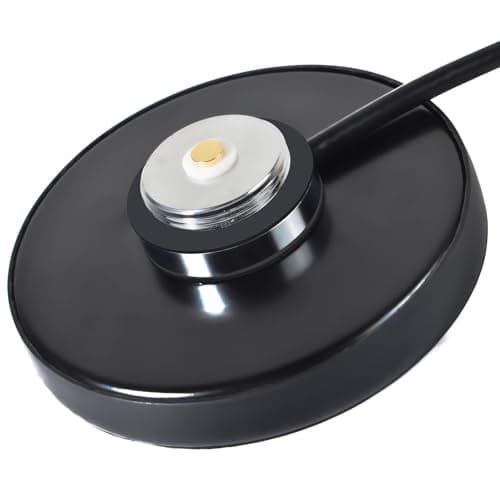
HYS HYS NMO Magnetic Antenna Mount, Heavy Duty with 16.4ft Cable
HYS NMO Magnetic Antenna Mount, Heavy Duty with 16.4ft Cable

The fastest way to put an antenna in the middle of a metal roof, which is the best place an antenna can be. A mag mount on the roof center outperforms a permanent mount anywhere worse.

Best mag mount
8.2
$27.99Amazon (affiliate link)
06
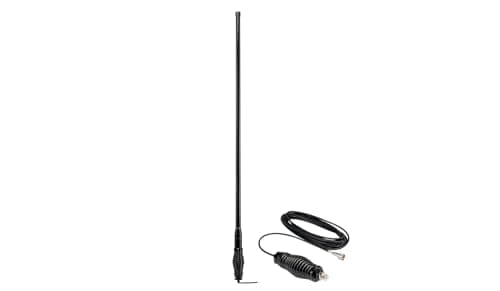
Midland Midland Heavy-Duty Bull Bar Antenna Bundle
Midland Heavy-Duty Bull Bar Antenna Bundle

Two hundred and eighty-five dollars for an antenna and a bracket, when a gain whip on a mag mount costs about a hundred and puts the antenna somewhere electrically better.

Skip this one
5.4
$284.99Amazon (affiliate link)

#ad · Live prices from the Amazon Creators API, as of Sep 7, 2026. Where we have no verified live price we show none — a gap beats a number that has rotted.

In detail

The picks, in full

01
Midland Midland MXT575 MicroMobile GMRS Radio, 50W

Best repeater-capable mobile

Midland MXT575 MicroMobile GMRS Radio, 50W

50W8 repeater channelsProgrammable tonesControl-in-mic
8.6/10

The eight repeater channels are the reason to buy a mobile radio at all. Reaching a repeater on a hill turns a five-mile radio into a fifty-mile one, and fifty watts is what gets you into a distant one.

Output power
10
Repeater features
9
Ease of use
9
Build quality
8
Value
7

What's good

  • Full legal power gives you the best chance of hitting a distant repeater input
  • Repeater channels and tone programming handled from the microphone
  • Wide accessory ecosystem for antennas and mounts

What's not

  • Repeater access is often permission-based, and the radio cannot get you that
  • Needs a good antenna and a real power supply to deliver what it promises

Skip it if…

there is no repeater within reach of your area. Check the coverage first — a repeater-capable radio with no repeater to use is just an expensive simplex radio.

$439.99See it on Amazon (affiliate link)

Price as of Sep 7, 2026. Prices move — Amazon's is the one that counts.

#ad · we may earn a commission from this link to Midland MXT575 MicroMobile GMRS Radio, 50W

02
BAOFENG BAOFENG UV-5G Plus GMRS Handheld, Repeater Capable (2-pack)

Best repeater-capable pair

BAOFENG UV-5G Plus GMRS Handheld, Repeater Capable (2-pack)

GMRSRepeater capableCHIRP compatibleTwo radios
7.6/10

Sixty-five dollars for two handhelds that will work a repeater. Programming is far easier with a cable and CHIRP than through the keypad, and this model supports that.

Repeater features
8
Programmability
9
Output power
5
Build quality
6
Value
10

What's good

  • Repeater capability at handheld prices, which was not true a few years ago
  • CHIRP support means you can program a dozen repeaters in ten minutes instead of an evening
  • A pair, which is the useful quantity

What's not

  • Handheld power and a rubber antenna will not reach a distant repeater input
  • License required, as with every GMRS radio on this site

Skip it if…

the repeater you want is far away. Hitting a repeater is about the uplink from your radio, and a handheld is the weakest transmitter in this whole category.

$64.99See it on Amazon (affiliate link)

Price as of Sep 7, 2026. Prices move — Amazon's is the one that counts.

#ad · we may earn a commission from this link to BAOFENG UV-5G Plus GMRS Handheld, Repeater Capable (2-pack)

03
Wouxun Wouxun KG-805G Professional GMRS Two-Way Radio

Best single repeater handheld

Wouxun KG-805G Professional GMRS Two-Way Radio

GMRSRepeater capableUSB-C chargingExtended battery
8.2/10

Eighty dollars for a handheld with the receiver quality to actually hear a distant repeater cleanly. Receive is half of a radio contact and it is the half budget radios compromise hardest.

Receiver quality
9
Repeater features
8
Battery life
9
Build quality
8
Value
7

What's good

  • Notably better receiver than the budget handhelds, which matters most on weak repeater signals
  • Extended battery means a full day of monitoring
  • Built and supported by a manufacturer with a US presence

What's not

  • Sold singly, so a pair costs more than twice the budget two-pack
  • Still handheld power on the uplink, which is the real limitation

Skip it if…

you need two radios today on a budget. Two working radios beat one better radio every single time in a group.

$79.99See it on Amazon (affiliate link)

Price as of Sep 7, 2026. Prices move — Amazon's is the one that counts.

#ad · we may earn a commission from this link to Wouxun KG-805G Professional GMRS Two-Way Radio

04
Midland Midland MXTA25 3dB MicroMobile Ghost Antenna

Best low-profile antenna

Midland MXTA25 3dB MicroMobile Ghost Antenna

I run this one

The antenna on the hood-lip mount of my 4Runner.

3 dB gainLow-profile ghost bodyNMO baseMicroMobile compatible
8.0/10

A stubby 3 dB antenna on an NMO base, for people who want the radio to work and the truck to still fit under things. Less gain than a whip, and an antenna you never remove is worth more than a better one you keep taking off.

Gain
6
Durability
9
Profile
10
Build quality
8
Value
7

What's good

  • Survives car washes, garage lintels and low branches, which a whip does not
  • Nothing to snag on a trail, which is the entire reason low-profile antennas exist
  • NMO base swaps onto any NMO mount later

What's not

  • 3 dB is real gain but it is not a 6 dB whip — you trade range for the low profile
  • Costs more than a taller antenna that would perform better

Skip it if…

reaching a distant repeater is the whole point and nothing overhangs your parking. A taller gain whip outperforms a ghost antenna every time; the ghost is a packaging decision, not a performance one.

$59.99See it on Amazon (affiliate link)

Price as of Sep 7, 2026. Prices move — Amazon's is the one that counts.

#ad · we may earn a commission from this link to Midland MXTA25 3dB MicroMobile Ghost Antenna

05
HYS HYS NMO Magnetic Antenna Mount, Heavy Duty with 16.4ft Cable

Best mag mount

HYS NMO Magnetic Antenna Mount, Heavy Duty with 16.4ft Cable

NMO baseMagnetic mount16.4ft cableHeavy-duty magnet
8.2/10

The fastest way to put an antenna in the middle of a metal roof, which is the best place an antenna can be. A mag mount on the roof center outperforms a permanent mount anywhere worse.

Ground plane quality
8
Ease of install
10
Cable length
8
Paint safety
6
Value
9

What's good

  • Roof center is the best ground plane on a vehicle and this is how you use it without drilling
  • Comes off in a car wash or when the vehicle is sold
  • Sixteen feet of cable reaches from a roof into a dash on most vehicles

What's not

  • Magnets can mark paint if grit gets under them — clean both surfaces before mounting
  • A magnetic base is a capacitive ground rather than a bonded one, which is slightly worse electrically
  • It will come off at highway speed if you fit a tall whip and do not check it

Skip it if…

the vehicle has an aluminum or composite roof, which many modern trucks do. A magnet needs steel, and without it this does not work at all.

$27.99See it on Amazon (affiliate link)

Price as of Sep 7, 2026. Prices move — Amazon's is the one that counts.

#ad · we may earn a commission from this link to HYS NMO Magnetic Antenna Mount, Heavy Duty with 16.4ft Cable

06
Midland Midland Heavy-Duty Bull Bar Antenna Bundle

Skip this one

Midland Heavy-Duty Bull Bar Antenna Bundle

Bull bar mountHeavy-duty antennaBundleMidland ecosystem
5.4/10

Two hundred and eighty-five dollars for an antenna and a bracket, when a gain whip on a mag mount costs about a hundred and puts the antenna somewhere electrically better.

Durability
9
Antenna position
3
Range benefit
4
Build quality
8
Value
3

What's good

  • Genuinely rugged hardware built for a vehicle that sees real abuse
  • A bull bar mount survives trail contact that would take a roof antenna off

What's not

  • Nearly three times the cost of a whip and a mag mount that will out-perform it
  • A bumper-height antenna is below the roofline, and the vehicle body blocks a large part of the pattern
  • You are buying mounting hardware, not radio performance

Skip it if…

you want range. Height and ground plane decide antenna performance, and a bumper mount gives up both. Buy the gain whip, put it on the roof, and spend the difference on the license and a second radio.

$284.99See it on Amazon (affiliate link)

Price as of Sep 7, 2026. Prices move — Amazon's is the one that counts.

#ad · we may earn a commission from this link to Midland Heavy-Duty Bull Bar Antenna Bundle

Buying notes

Confirm repeater capability on the listing

Not all GMRS radios do repeater channels, and the ones that do not are frequently sold alongside the ones that do with almost identical titles. It varies within a single manufacturer's line. Check the model number, not the marketing.

Programming software saves an evening

Entering a dozen repeaters with their tones through a keypad is genuinely miserable. A programming cable and CHIRP or the manufacturer's software turns it into ten minutes. If a radio supports it, buy the cable with the radio.

Antenna over power, again

The limitation on repeater access is your uplink. A 6 dB gain whip on a roof mount does more for getting into a distant repeater than doubling your transmit power would, and it costs less. That is the same conclusion as every other page in this cluster and it keeps being true.

Height still matters, even mobile

Pulling to the top of a rise before transmitting is free and it works. UHF is line of sight, and moving a hundred yards to somewhere with a view of the hill the repeater is on will frequently do what an antenna upgrade would.

Where the low-profile compromise fits

A ghost antenna trades gain for surviving branches and garage lintels. That is a reasonable trade for a trail vehicle and a bad one if distant repeaters are the whole point. My own truck runs the low-profile version, and the 4Runner page explains why I made that trade.
How these were picked

1 of these is mine. The rest are research, and I say which is which.

Anything carrying the "I run this one" stamp above is gear I actually own and use, and I write about it in those terms. What I do not do is invent numbers to dress that up — there are no group sizes, round counts or chronograph figures on this site, because I did not record them. For everything without the stamp: I read the manufacturer's published specification, compile the numbers that decide the purchase, do the arithmetic in the open, check the live price, and name one product to skip. Those scores are judgments against a published rubric, not measurements I took.

Questions

Frequently asked

What does a GMRS repeater actually do?
It listens on one frequency and simultaneously re-transmits on another, from a high site with a good antenna and more power. You talk to the hill and the hill talks to everybody, which is why two radios that cannot hear each other directly can both work the same repeater.
Do I need special settings?
Three: the repeater channel, which handles the frequency offset automatically on a GMRS radio, and the CTCSS or DCS tone the repeater requires. The tone is the one people get wrong, and it is published by whoever runs the repeater.
Is a privacy code the same as encryption?
No, and this is a genuinely misleading name. A CTCSS tone is a filter that stops your radio and the repeater responding to unwanted signals. Everything you say is still in the clear and anybody scanning can hear it.
How do I find repeaters near me?
Directory sites list them by area with channel, tone and coverage. myGMRS is the main one. Check what exists near you before buying a radio for its repeater capability — plenty of areas have none.
Do I need permission to use a repeater?
Often, yes. Repeaters are privately owned and maintained, and many owners ask you to request access first. It is usually a short form, usually granted and usually free. Ask rather than assuming — it is how the network keeps working.
I can hear the repeater but it will not hear me. Why?
Almost always your uplink. The repeater has height, power and a good antenna; you have a handheld with a rubber duck. The fix is a better antenna or getting higher, not a different radio.

Keep reading

Receipts

Sources

We do not run a testing lab and we do not pretend to. Where a measured number came from a manufacturer's published specification or someone else's lab, we name them and link them. Where we could not verify something, we say so on the page rather than quietly leaving it out. Read the full method.