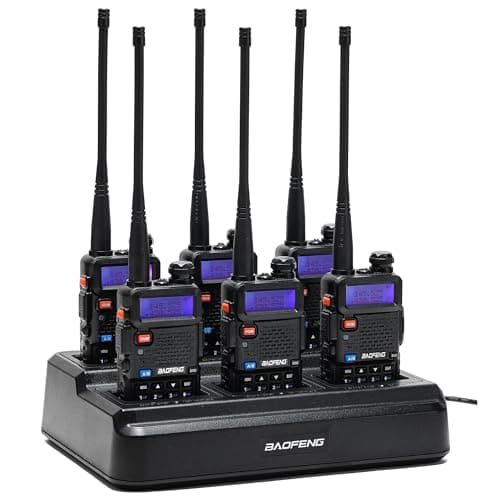
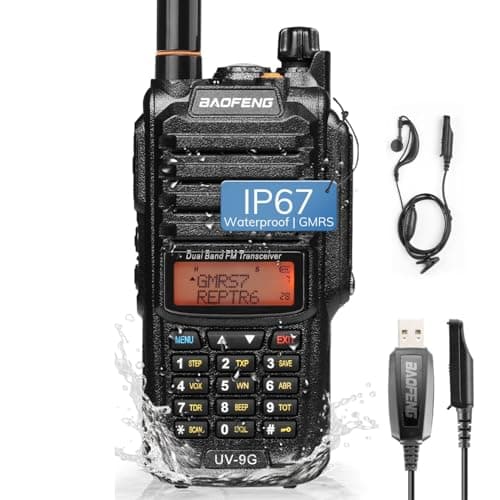
The verdict first. For a family, a hunting camp or a trail group: GMRS. No exam, one license covers your whole immediate family, and everybody can be on the air this week. For somebody who wants to understand radio, talk further, or build things: amateur. The exam is the price of admission to a much bigger space.
Most people arguing about this online are arguing about identity. The actual decision comes down to four questions and they have clear answers.
1. Who needs to be on the air?
This is usually the whole decision. One GMRS license covers your immediate family — spouse, children, parents, grandparents, siblings, in-laws — under one call sign. Amateur licenses are individual. Every person who transmits needs their own, and everyone has to pass the exam.
For a family of five, that is one thirty-five-dollar form against five people studying for an exam. There is no version of that comparison where amateur wins for a family.
2. How much do you want to learn?
The Technician exam is thirty-five multiple-choice questions from a published pool, and it is genuinely passable in a weekend of study. It covers regulations, basic electronics, antennas and operating practice.
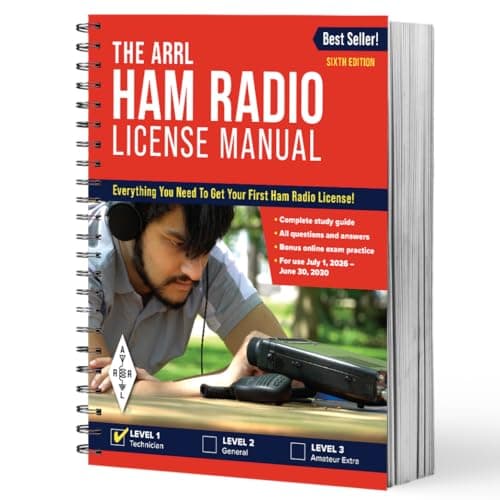
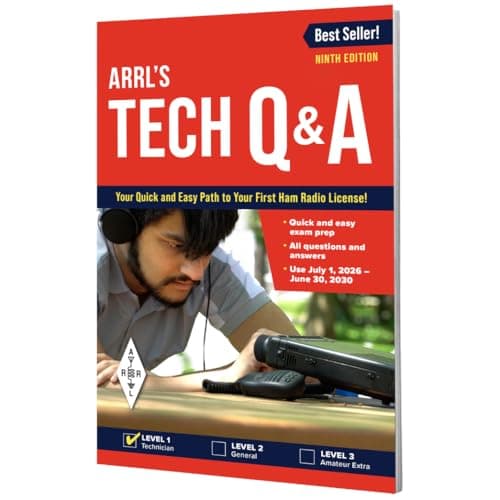
That is not a barrier so much as a filter. If the idea of learning how antennas work sounds good, amateur radio is a hobby you will enjoy for decades. If you want a radio that works so your group can talk on a trail, it is homework standing between you and a solved problem. The ARRL publishes the process and the study material.
3. How far do you need to talk?
- Within a group on a trail, or across a property: both work. GMRS is entirely adequate and simpler.
- Across a county: both, via repeaters. Amateur has far more repeaters and they are more consistently open to any licensed operator.
- Across a state or further: amateur, and it is not close. HF privileges, digital modes and satellites are all amateur territory and GMRS has no equivalent.
4. What do you want to do with it?
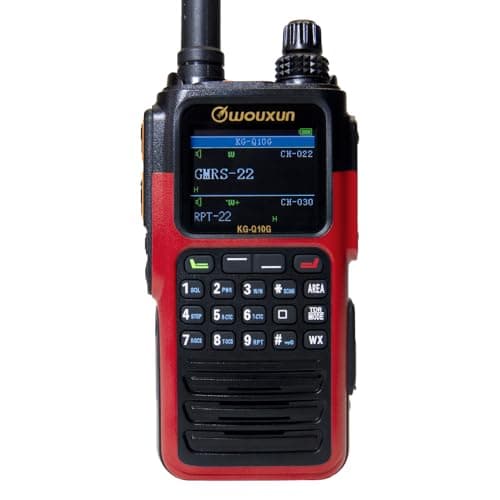
GMRS is twenty-two channels of type-accepted equipment. That constraint is a feature — it is why there is no exam and why anyone can pick up a radio and be useful immediately.
Amateur radio gives you enormous spectrum, the right to build and modify equipment, digital modes, satellite work and emergency communications networks. It is a hobby rather than a tool, and people who want a tool sometimes find that frustrating.
Where GMRS genuinely wins
- Family coverage under one license. Nothing else in US radio does this.
- No exam, so the whole group is on the air immediately.
- Simplicity. Fixed channels mean anybody can pick up a radio and use it without training.
- Cheap type-accepted equipment, with mobiles designed specifically for vehicle installs.
Where amateur genuinely wins
- Range, by orders of magnitude, once you go beyond VHF and UHF.
- Far more repeaters, and more of them openly available.
- Technical freedom — building antennas, modifying equipment, running digital modes.
- An organized emergency communications community that GMRS has no equivalent of.
The answer a lot of people land on
Both. Get the GMRS license immediately, because it takes fifteen minutes and puts your whole family on the air. Then, if the subject interests you, study for the Technician exam over a few weekends. They are not competing purchases and there is no reason to choose.
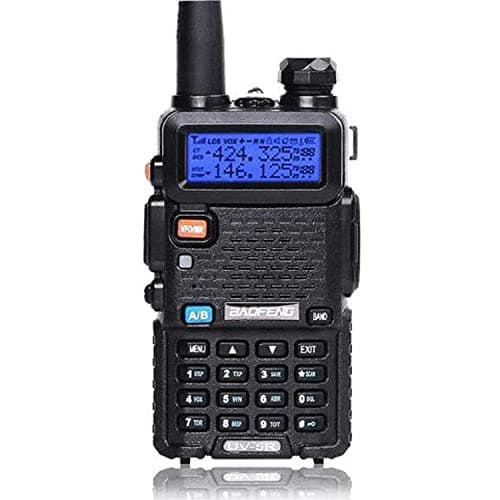
One rule that is not negotiable in either direction: a radio type-accepted for one service is not legal on the other. An amateur handheld is not a GMRS radio however many frequencies you can program into it, and that distinction matters to the FCC even where it does not matter to the antenna.
Buying notes
Buy for the service you are licensed for
Type acceptance is the rule and it is not a technicality. GMRS radios for GMRS, amateur radios for amateur. The fact that a radio can transmit on a frequency does not make it legal to.
Watch the listing prices in this category
Budget radios appear on the same marketplace at wildly different prices under near-identical titles — the same model number can be sixteen dollars in one listing and well over a hundred in another. Compare model numbers rather than titles. That is the skip pick above and it is the most practically useful thing on this page.
The study guide is the real ham purchase
The radio is sixteen dollars and the license is the barrier. Buy the study material first, pass the exam, then buy the radio — that ordering means the radio is never sitting in a drawer as a reproach.
Where this fits in a truck
For overlanding specifically, my own answer is GMRS and CB together, and the reasoning is on the 4Runner build page — GMRS for your own party, CB for everybody else's. Amateur is a third radio and a different purpose, not a replacement for either.