Skip to content
Steve's Outpost

Section 06 · Shooting Gear

Best Ear Protection for Indoor Ranges

Concrete sends the muzzle blast back at you. Ranked on rated attenuation and cushion seal, which is not how the general roundup ranks them — and the winner changes.

By Stephen V.Updated How we pick
#ad

We earn a commission when you buy through our Amazon links, at no extra cost to you. It never changes the order of the picks, and we say so when the cheaper thing is the better buy. How this works.

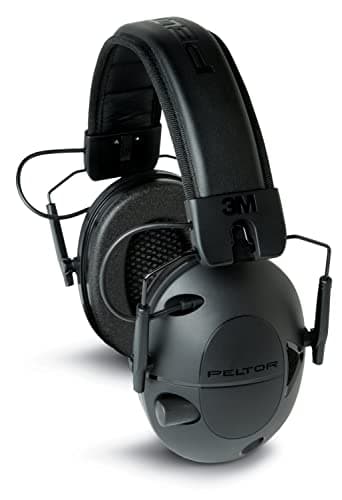
3M Peltor 3M Peltor Sport Tactical 500

The one to buy for an indoor bay

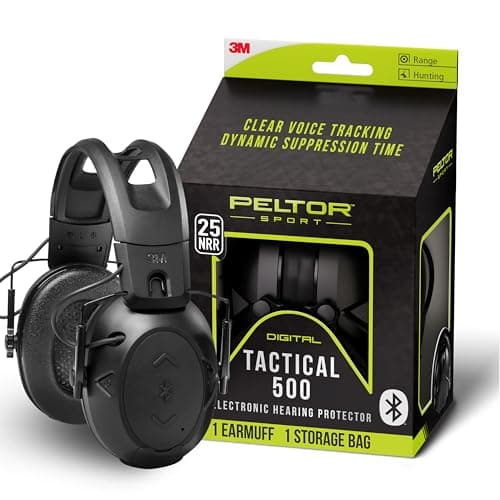
3M Peltor Sport Tactical 500

NRR 25 with the best suppression behavior here — the shot is cut without clipping the speech around it, which is what makes a full indoor session bearable.

The Howard Leight Impact Pro rates higher at NRR 30. Its deep cup is also what a rifle or shotgun stock collides with, which is why it is not the overall pick.

$146.86Amazon (affiliate link)

Price as of November 23, 2026. Prices move — Amazon's is the one that counts.

#ad · we may earn a commission from this link to 3M Peltor Sport Tactical 500

The verdict first: for indoor shooting, buy the 3M Peltor Sport Tactical 500. It is for the shooter who does a full session in a concrete bay and wants to still hear the person next to them afterwards — NRR 25 with the cleanest suppression on this site. If you want the highest rated number available here and you are shooting pistols only, the Howard Leight Impact Pro at NRR 30 is the one, with the caveat that its deep cup fights a long gun. The budget pick is the Walker's Razor Slim, the cheapest set here that is defensible indoors — and even then, put plugs underneath it.

This page exists because the general roundup ranks the category on a sensible overall balance of rating, seal, bulk and price, and an indoor bay breaks that balance. Reflected blast off concrete and a second shooter two feet away promote rated attenuation from a footnote to the whole decision. If your shooting is outdoors, that page and the under-$50 band are the better documents and will save you money.

Why indoors is different

Outdoors, a muzzle blast leaves. Indoors it hits a wall, a ceiling and a divider, and some of it comes back. You are also standing within a few feet of other people's muzzles, firing into the same hard box. The sound you are protecting against is therefore both louder at your ear and arriving from more directions than the one you are pointing.

Two consequences for what you buy. First, rated NRR matters more, and the usual advice to balance it against bulk gives way. Second — and this is the part most pages leave out — real-world attenuation is meaningfully below the laboratory NRR figure, because the laboratory fit is better than yours. That gap is the argument for over-buying rather than buying exactly enough, and it is why the cheap band is marginal here rather than wrong. OSHA's noise material, linked in the sources, is the regulator's own position on exposure.

Doubling up beats buying up

The highest-value thing on this page costs about a dollar: foam plugs under the muffs. The two protections do not simply add their ratings together, but the combination delivers meaningfully more real attenuation than either alone, and it fixes the exact weakness of the cheap band — an imperfect cushion seal — by putting a second barrier inside it.

Our honest read: if your budget is tight, buy the Walker's Razor Slim and a bag of plugs rather than a single better muff. If you can afford the Peltor 500, buy it and keep the plugs anyway for the days when the bay is busy. Nobody regrets this; plenty of people regret the opposite.

The cup-depth trap

The way a muff reaches NRR 30 is a deeper cup with more volume inside it. That deeper cup is exactly what a rifle or shotgun stock hits when you mount the gun, and a muff pushed off your ear at the moment of the shot protects nothing — which is the whole reason the highest-rated set on this page is not the overall recommendation.

So: pistols only, in a bay, buy depth. Long guns, even occasionally, buy a slim cup and add plugs. The Impact Sport is on this page specifically as the slim-cup option, with its NRR 22 stated plainly as the compromise it is, because it is the muff people actually keep on their heads during rifle stages.

Amplification still matters indoors

Every muff here is electronic, which means ambient sound comes through speakers and the shot is compressed. That is not a luxury in a bay: you need to hear a range officer, and the alternative is lifting a cup at the wrong moment. The 3M units are the quietest amplifiers of the group — the Peltor 500's suppression cuts the shot without clipping the speech around it — and on a long indoor session that is the difference between wearing them and not.

Beware the opposite claim. "5X amplification" and similar multiples are not standardized measurements, so they cannot be compared between products. The under-$50 page has the full version of that argument and a muff that is a skip for exactly this reason.

Shopping by brand rather than by bay? Peltor alternatives ranks the same muffs with the Peltors excluded, and reaches the same conclusion about rated NRR being the only number worth comparing.

The short answer

Quick picks

#ProductBest forScorePrice
01
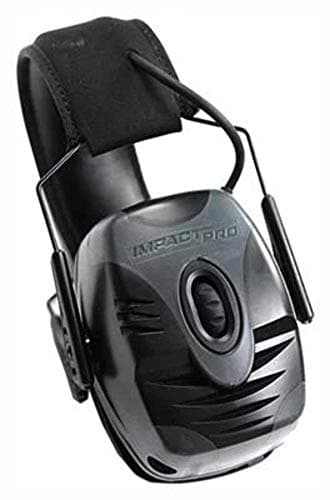
Howard Leight Howard Leight Impact Pro (NRR 30)
Howard Leight Impact Pro (NRR 30)

NRR 30 is the highest rating on this site and the right answer in a concrete bay. The deep cup that gets you there is exactly what a rifle or shotgun stock collides with, which is why it is not the overall pick.

Highest rated attenuation here
7.2
$72.50Amazon (affiliate link)
02
3M Peltor 3M Peltor Sport Tactical 500
3M Peltor Sport Tactical 500

NRR 25 with the best suppression behavior here — the shot is cut without clipping the speech around it, which is what makes a full session indoors bearable. Rechargeable, and the most expensive thing on the page.

Best for an indoor bay
8.2
$146.86Amazon (affiliate link)
03
3M Peltor 3M Peltor Sport Tactical 100
3M Peltor Sport Tactical 100

A nominally lower NRR than some budget muffs and a better real-world seal than any of them, which is the distinction that matters: attenuation happens at the cushion, not on the label.

Best cushion seal for the money
7.8
$74.98Amazon (affiliate link)
04
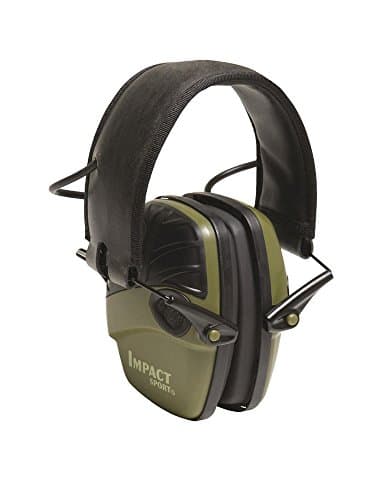
Howard Leight Howard Leight Impact Sport
Howard Leight Impact Sport

The slim cup clears a stock, which the Impact Pro does not. NRR 22 is modest for indoor work, so this is the compromise entry — it is here because a muff you push out of the way protects nothing.

Best slim cup for long guns
8.0
$37.77Amazon (affiliate link)
05
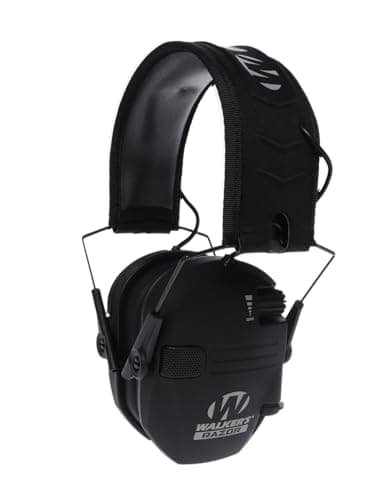
Walker's Walker's Razor Slim Electronic Muff
Walker's Razor Slim Electronic Muff

NRR 23 and a slim cup for a fraction of the Peltor money. Its own listing calls 23 dB marginal indoors, and that is the honest reading — double up with plugs and it stops being marginal.

Best budget — the cheapest defensible indoors
7.6
$30.31Amazon (affiliate link)

#ad · Live prices from the Amazon Creators API, as of November 23, 2026. Where we have no verified live price we show none — a gap beats a number that has rotted.

In detail

The picks, in full

01
Howard Leight Howard Leight Impact Pro (NRR 30)

Highest rated attenuation here

Howard Leight Impact Pro (NRR 30)

NRR 30 dBElectronicDeep cupsFolding
7.2/10

NRR 30 is the highest rating on this site and the right answer in a concrete bay. The deep cup that gets you there is exactly what a rifle or shotgun stock collides with, which is why it is not the overall pick.

Attenuation
9
Stock clearance
4
Amplification
8
Comfort
7
Value
8

What's good

  • NRR 30 is genuinely high for an electronic muff and the right answer indoors
  • Same amplification behavior as the Impact Sport
  • Deep cups seal well on more head shapes

What's not

  • The deep cup is exactly what a shotgun or rifle stock knocks into — a real problem for long-gun stages
  • Heavier and hotter over a full match day

Skip it if…

…you are mounting a long gun. Cup depth breaks the seal at the moment the shot goes off, which throws away the rating you paid for.

$72.50Amazon (affiliate link)

$101.5929% off

Price as of November 23, 2026. Prices move — Amazon's is the one that counts.

#ad · we may earn a commission from this link to Howard Leight Impact Pro (NRR 30)

02
3M Peltor 3M Peltor Sport Tactical 500

Best for an indoor bay

3M Peltor Sport Tactical 500

NRR 25 dBBluetoothAdaptive suppressionRechargeable
8.2/10

NRR 25 with the best suppression behavior here — the shot is cut without clipping the speech around it, which is what makes a full session indoors bearable. Rechargeable, and the most expensive thing on the page.

Attenuation
9
Amplification
10
Comfort
8
Battery life
8
Value
6

What's good

  • NRR 25 is genuinely high for an electronic muff
  • Bluetooth for calls and audio without a second device on your head
  • Best suppression quality here — the shot is cut without clipping the speech around it

What's not

  • Most expensive option by a wide margin
  • Bulkier cups
  • Battery and Bluetooth are additional failure points

Skip it if…

…you shoot a few times a year. The Walker's does the essential job for a quarter of the money.

$146.86Amazon (affiliate link)

Price as of November 23, 2026. Prices move — Amazon's is the one that counts.

#ad · we may earn a commission from this link to 3M Peltor Sport Tactical 500

03
3M Peltor 3M Peltor Sport Tactical 100

Best cushion seal for the money

3M Peltor Sport Tactical 100

NRR 22 dBElectronicAdaptive frequency response3M Peltor
7.8/10

A nominally lower NRR than some budget muffs and a better real-world seal than any of them, which is the distinction that matters: attenuation happens at the cushion, not on the label.

Attenuation
8
Amplification
8
Comfort
8
Battery life
8
Value
7

What's good

  • 3M's cushion seal quality is a genuine step above the budget muffs — real-world attenuation depends on seal, not just on the rating
  • Adaptive frequency response suppresses the gunshot while keeping speech intelligible
  • Built to industrial standards

What's not

  • NRR 22 is nominally lower than some budget muffs — the real-world seal matters more
  • Cups are thicker than the Walker's slims

Skip it if…

…you shoot long guns and need slim cups. Thicker cups get bumped by a stock and break the seal.

$74.98Amazon (affiliate link)

Price as of November 23, 2026. Prices move — Amazon's is the one that counts.

#ad · we may earn a commission from this link to 3M Peltor Sport Tactical 100

04
Howard Leight Howard Leight Impact Sport

Best slim cup for long guns

Howard Leight Impact Sport

NRR 22 dBElectronic amplificationLow-profile cupsFolding
8.0/10

The slim cup clears a stock, which the Impact Pro does not. NRR 22 is modest for indoor work, so this is the compromise entry — it is here because a muff you push out of the way protects nothing.

Attenuation
6
Stock clearance
9
Amplification
8
Comfort
8
Value
9

What's good

  • Slim cups genuinely clear a long-gun stock, which is the whole problem in 3-gun
  • Amplification lets you hear the RO's commands and the beep without lifting a cup
  • So common at matches that spare batteries and pads are always available

What's not

  • NRR 22 is modest — adequate outdoors, marginal beside a braked rifle
  • Battery door is the known weak point

Skip it if…

…you shoot indoors or next to muzzle brakes regularly. Double up with plugs or buy higher attenuation.

$37.77Amazon (affiliate link)

$67.3344% off

Price as of November 23, 2026. Prices move — Amazon's is the one that counts.

#ad · we may earn a commission from this link to Howard Leight Impact Sport

05
Walker's Walker's Razor Slim Electronic Muff

Best budget — the cheapest defensible indoors

Walker's Razor Slim Electronic Muff

NRR 23 dBElectronic amplificationSlim cup profileFolding
7.6/10

NRR 23 and a slim cup for a fraction of the Peltor money. Its own listing calls 23 dB marginal indoors, and that is the honest reading — double up with plugs and it stops being marginal.

Attenuation
6
Amplification
8
Comfort
7
Battery life
7
Value
10

What's good

  • Slim cups genuinely clear a rifle stock, which thick passive muffs do not
  • Amplification lets you hear range commands and conversation while compressing the shot
  • Cheap enough to own several and keep spares for guests
  • Folds flat for a range bag

What's not

  • NRR 23 is adequate outdoors and marginal indoors or beside a muzzle brake
  • Battery compartment is the common failure point
  • Headband padding is thin for long sessions

Skip it if…

…you shoot indoors or beside braked rifles. Double up with plugs, or buy higher-NRR protection.

$30.31Amazon (affiliate link)

Price as of November 23, 2026. Prices move — Amazon's is the one that counts.

#ad · we may earn a commission from this link to Walker's Razor Slim Electronic Muff

Buying notes

Glasses, then muffs

Indoor bays throw brass sideways and ricochets travel further off concrete than off dirt. A stated ANSI Z87.1+ rating on eye protection means a documented high-velocity impact test rather than a marketing word, and it costs less than any muff here — eye and ear protection covers both.

Thin temples or no seal

Thick glasses arms break the cushion seal where they pass under the cup, and a broken seal loses more attenuation than the difference between any two muffs on this page. Shooting glasses with slim temples are not a style preference indoors.

The battery door is the failure point

On the Walker's and the Impact Sport alike, the documented weak point is the battery compartment rather than the electronics. Open it gently, and keep spare cells in the bag — the range bag list has them on it.

Lead is the other indoor hazard

Indoor bays concentrate airborne lead as well as noise, and the mitigation is behavioral rather than purchasable: wash your hands and face before you eat, and do not eat at the bench. It has nothing to do with muffs and everything to do with shooting indoors.
How these were picked

I haven't handled these. Here's what I did instead.

Everyone in this category says they tested twenty of these. I haven't tested any, and I say so. What I do instead: read the manufacturer's manual and published specification, compile the numbers that decide the purchase, do the arithmetic in the open, check the live price, and name one product to skip. The scores above are judgments from that research against a published rubric — they are not measurements I took, because I do not have a lab and I am not going to pretend otherwise.

Questions

Frequently asked

What NRR do I need for an indoor range?
Aim higher than you would outdoors. NRR 25 and up is a comfortable target, and the practical reason is that real-world attenuation sits below the laboratory rating because your fit is worse than the laboratory's. NRR 22 to 23 is the low end indoors and should be paired with foam plugs underneath.
Should I double up on hearing protection indoors?
Yes, and it is the cheapest upgrade available. Foam plugs under muffs put a second barrier inside the one with the imperfect seal, and the combination delivers meaningfully more real attenuation than either alone. A bag of plugs costs less than a box of ammunition.
Are electronic ear muffs good for indoor ranges?
They are better than passive muffs, because they stay on your head. You need to hear a range officer and you will lift a passive cup to do it, which is the moment the protection stops. The 3M units suppress the shot without clipping speech, which is what makes a long indoor session tolerable.
Why is the highest NRR muff not your top pick?
Because the deep cup that gets a muff to NRR 30 is exactly what a rifle or shotgun stock collides with on the mount. A muff that gets pushed off your ear protects nothing at the shot. For pistol-only shooting indoors, the NRR 30 option is the right answer and it is ranked first here on that basis.
Can I use cheap muffs indoors?
With plugs underneath, yes. The Walker's Razor Slim at NRR 23 plus foam plugs is a defensible indoor setup for a fraction of the Peltor money. On its own, 23 dB indoors is the low end and its own listing says so.

Keep reading

Receipts

Sources

We do not run a testing lab and we do not pretend to. Where a measured number came from a manufacturer's published specification or someone else's lab, we name them and link them. Where we could not verify something, we say so on the page rather than quietly leaving it out. Read the full method.