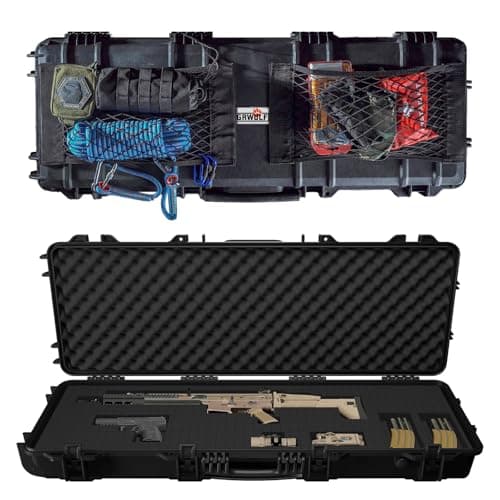
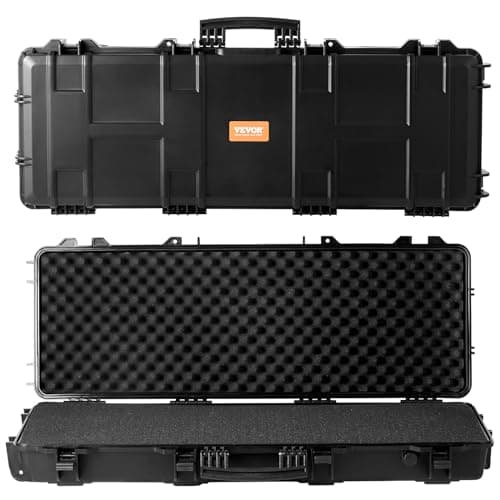
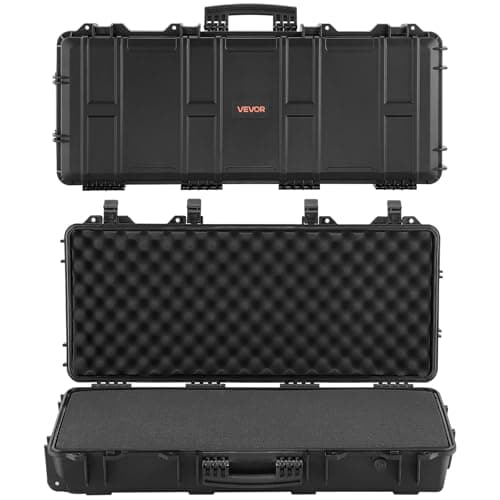
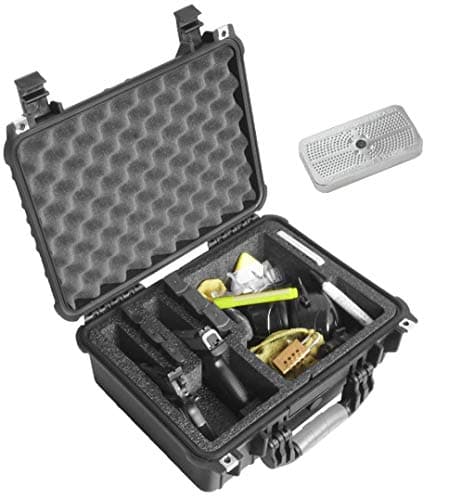
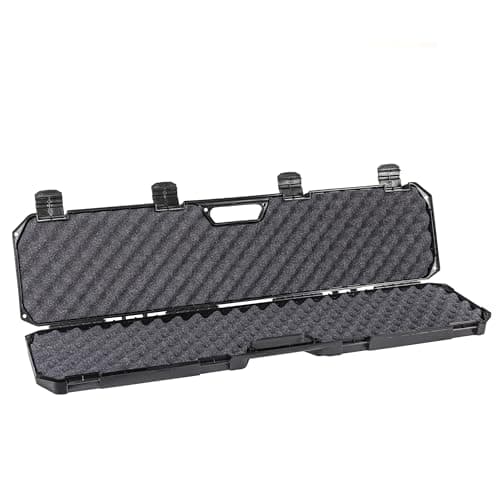
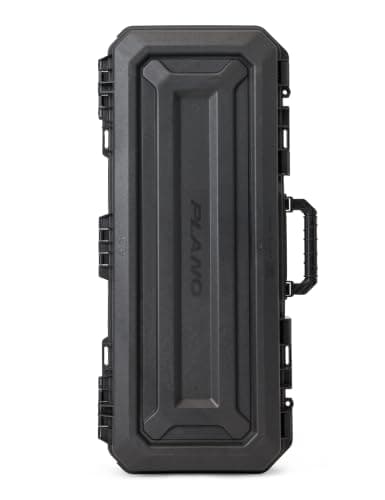
The verdict first: the Plano All Weather 36-inch is the case to fly with, because it has four padlockable latch points and a sealed shell — it is for the traveler who wants to hand the bag over at the counter and not have a conversation about it. If your rifle is longer, the VEVOR 42-inch is the value answer and the GRWOLF wheeled case is the one to buy if you are moving it any distance through a terminal. For pistols, the Case Club two-pistol case is purpose-built for it.
This is a different page from our general gun case roundup, which judges cases on range use and storage and reaches a different verdict about the cheap one. Flying is governed by a published federal rule, and the rule is what decides this page.
What TSA actually requires
Quoting the TSA's own firearms page, which is linked in the sources below so you can read it yourself rather than taking my word for it:
- Firearms must be transported in "a locked hard-sided container as checked baggage only."
- The container "must completely secure the firearm from being accessed. Locked cases that can be easily opened are not permitted."
- "Only the passenger should retain the key or combination to the lock unless TSA personnel request the key." You may use any brand of lock.
- You must "declare the firearm and/or ammunition to the airline when checking your bag at the ticket counter", every time.
- Ammunition is prohibited in carry-on, and in checked baggage must be "packaged in a fiber (such as cardboard), wood, plastic, or metal box specifically designed to carry ammunition" and declared. Magazines, loaded or empty, must be boxed or inside the hard case.
Read that third point twice. It is the opposite of the rule for everything else in your suitcase. A TSA-recognized padlock — the kind with the master keyway that a screener can open — is exactly what you want on a bag of clothes and exactly what you do not want here, because the whole point is that nobody else can open it. Use ordinary non-TSA padlocks on a gun case.
Rules change, and airlines add their own. Ammunition quantity limits, whether a case may be a bag's only contents, and fees all vary by carrier. Check the TSA page and your airline before every trip; nothing on this site is legal advice and a mistake here is not a small one.
What makes a case pass or fail
- Padlockable latch points, not latches. This is the single most common failure. A case with two spring latches and one tiny lock hole can be flexed open at the corner with a thumb — which is precisely what "locked cases that can be easily opened are not permitted" is describing. You want four or more holes, spaced along both long sides.
- A rigid shell. Hard-sided is the written requirement. A padded soft case inside a hard case does not make the soft case compliant.
- Hinges that are part of the shell. External piano hinges with exposed pins are a weak point on an otherwise solid case.
- Internal length you have actually measured. Advertised length is usually the outside. A 36-inch case will not take a 38-inch rifle, and discovering that at the airport is a ruined trip.
- A pressure valve and a gasket, if you can get them. Cargo holds change altitude and temperature. A sealed case without a valve can be hard to open on arrival; one without a gasket lets water in on the ramp.
Packing it so it arrives in the same condition
Unloaded, obviously, and verified twice. Then: scope dialed back to zero and the turret caps on, bolt removed if the rifle allows it and packed separately inside the case, and nothing loose that can move around and hit the glass. Foam that is cut too loose lets a rifle shift; foam that is cut too tight puts constant pressure on a scope tube.
Ammunition goes in its original cardboard box or a purpose-made plastic ammunition box, and it may travel in the same locked case as the firearm if it is packaged that way. Magazines go in the case or in a box, loaded or not.
Do not put anything on the outside of the case that advertises what is in it. No brand stickers, no manufacturer logos facing out, no club decals. Airport baggage theft is opportunistic, and a case that looks like a camera case gets less attention than one that looks like a gun case.
Put a copy of your contact details inside, note the serial numbers somewhere that is not in the case, and consider a cheap tracker in the foam — several airlines now ask for a tracker location when a bag goes missing.
Buying notes
Count the lock holes before you buy
Four or more, spread along the long edges. Two is not enough to stop the shell flexing open at the ends, and a case that flexes open is the case the rule was written about.
Buy ordinary padlocks, not TSA locks
Four identical keyed padlocks, one key on your person and a spare in your carry-on. A master-keyed TSA lock defeats the entire requirement that only you hold the key.
Wheels earn their keep at 42 inches
A loaded full-length rifle case is awkward and heavy, and airports are long. At 36 inches you can carry it; at 42 inches with two rifles in it, you will want the wheels.
Measure, then add two inches
Measure muzzle to buttpad with the scope and bipod fitted, then buy a case with that much internal length plus room for the foam. The 36-inch cases here suit ARs and takedown rifles; a long bolt gun wants 42.
Check your destination's law before you book
Federal travel rules are only the first layer. State and local law at your destination, and at any stop where you have to claim and re-check baggage, can be very different. That is worth an hour of reading before a trip, not after.