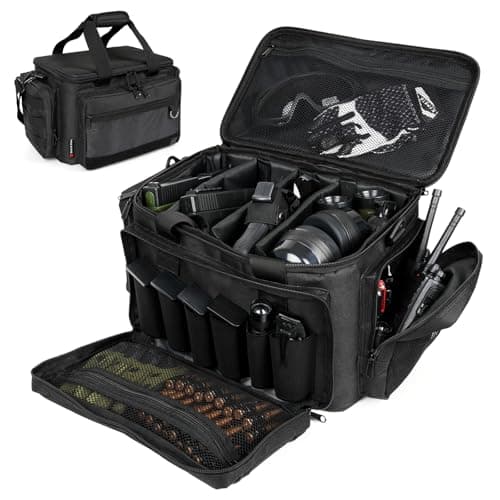
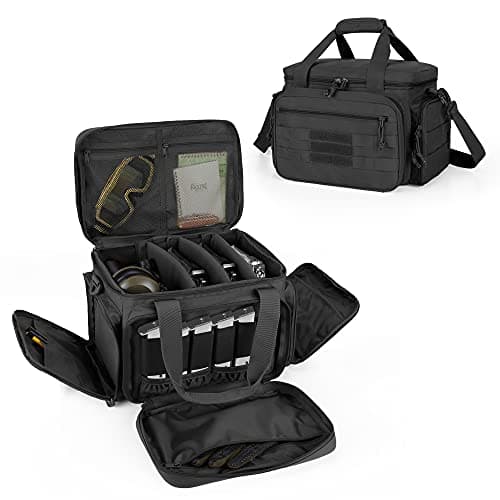
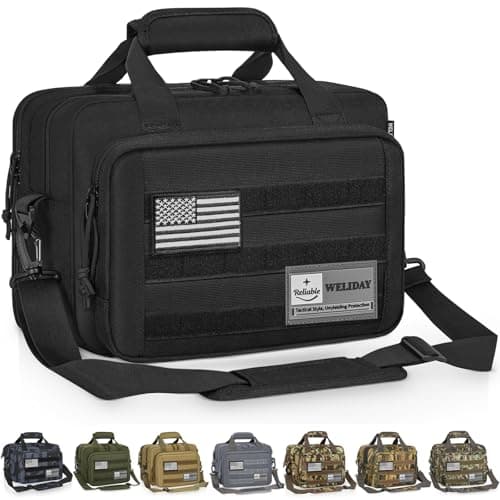
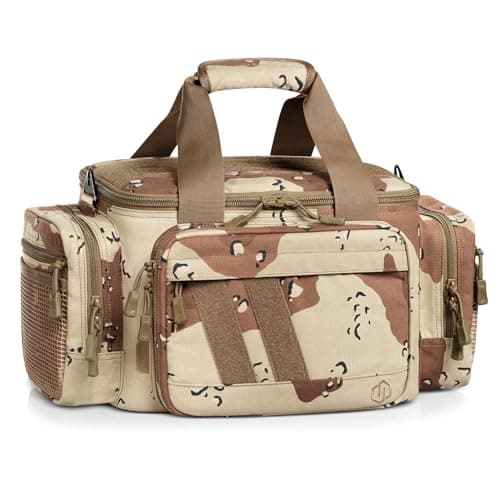
A range bag has one real job: everything you need is in it, you can find it without unpacking, and it survives being loaded with ammunition and thrown in a truck.
The feature most heavily advertised in this category is a lockable zipper, and it is worth being clear about what that is. A padlock through two zipper pulls on a fabric bag is a deterrent against a casual hand. It is not a lock — the zipper can be opened with a ballpoint pen and re-zipped, and the fabric can simply be cut.
Where a locked container is genuinely required, that means a hard-sided case. Buy the range bag for organization and the case for security; they are different products solving different problems.
After organization, the specification that matters is structure. A bag with a rigid internal frame holds its shape and keeps optics from being crushed; a soft duffel collapses onto its contents.
A range bag is the soft half of the problem. The hard half — getting a rifle to a range that is a flight away — is governed by a federal rule rather than by preference, and it is worth reading before you book: best gun cases for air travel.
Once you have the bag, the more common question is what goes in it — and, just as usefully, what belongs in the vehicle instead. Our range bag packing list works through it in tiers, starting with the two items you cannot shoot without and ending with the cheapest thing in the bag that will actually improve your shooting.
What a good range bag contains
The bag itself
- Padded, dividable main compartment sized to what you actually bring
- Separate ammunition compartment — ammunition is heavy and belongs low
- External pockets for eyes and ears, so they are reachable without opening the bag
- A rigid frame if you carry optics
What lives in it permanently
- Eye and ear protection, plus spare sets for guests. This is the item most often forgotten and the one you cannot shoot without.
- A staple gun and target backers, because ranges run out.
- Basic tools — hex keys for your optic mounts, a torque driver if you have one, a small screwdriver set.
- A cleaning rod or a squib rod. A stuck case or an obstructed bore ends the session without one.
- A first aid kit with a tourniquet and pressure dressing, and the training to use them. This is the one item on the list you hope never to open.
- Sharpie and a stapler for marking and hanging targets.
- A folding chair or a mat, depending on your range.
Weight distribution
Ammunition is dense and heavy. Keep it in the lowest, most central compartment. A bag with all its weight in an upper pocket swings, strains the stitching and eventually tears at the strap anchor.
Buy for durability at the stress points
Range bags fail at the zippers and at the shoulder strap anchors, not in the middle of the fabric. Look at the stitching where the strap attaches and at the zipper gauge — those two places predict how long the bag lasts.
How these were picked
I haven't handled these. Here's what I did instead.
Everyone in this category says they tested twenty of these. I haven't tested any, and I say so. What I do instead: read the manufacturer's manual and published specification, compile the numbers that decide the purchase, do the arithmetic in the open, check the live price, and name one product to skip. The scores above are judgments from that research against a published rubric — they are not measurements I took, because I do not have a lab and I am not going to pretend otherwise.