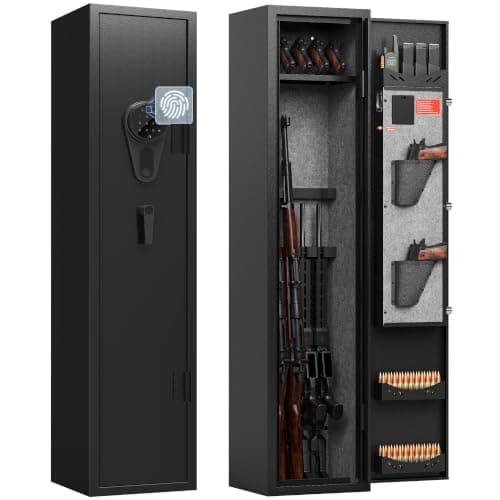
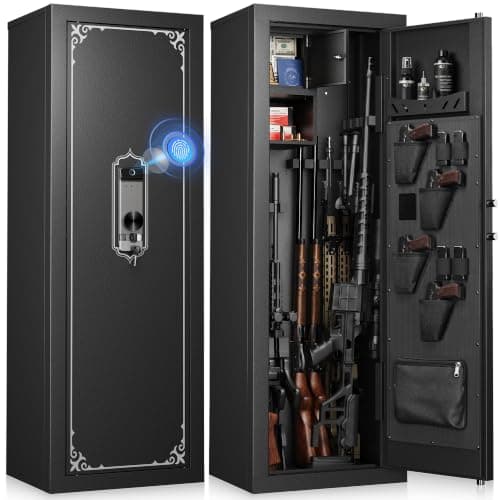
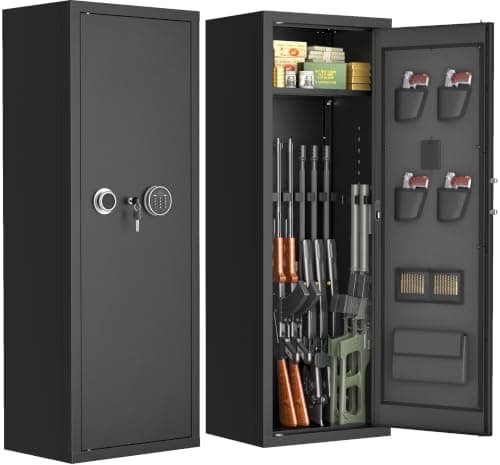
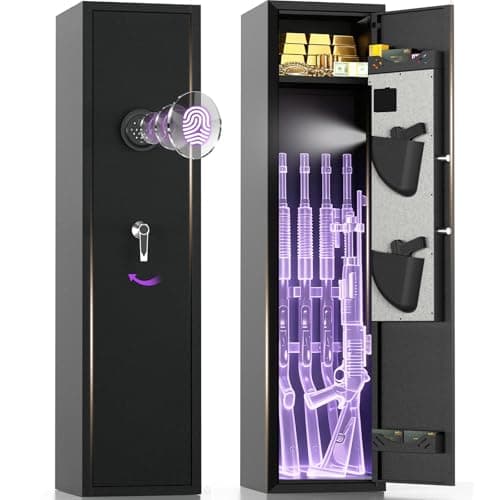
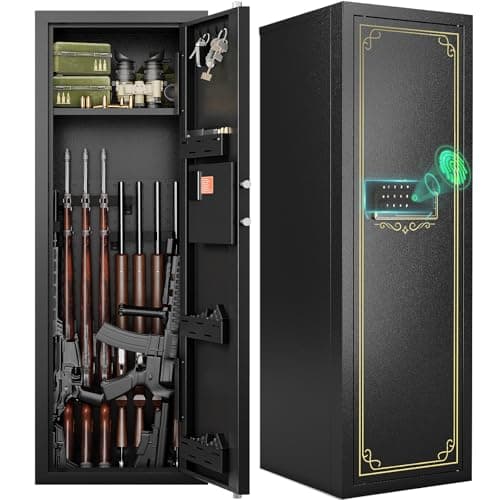
Almost everything sold as a gun safe under $400 is a steel security cabinet. That is a genuinely useful thing to own — as long as you know which one you bought.
We earn a commission when you buy through our Amazon links, at no extra cost to you. It never changes the order of the picks, and we say so when the cheaper thing is the better buy. How this works.
This category has a language problem, so let us fix it first.
A security cabinet is a thin-gauge steel box with a lock. It prevents access by children and casual visitors, satisfies safe-storage obligations in many jurisdictions, and can be opened by a determined person with a pry bar in a few minutes. Essentially everything on this page is one.
An RSC-rated safe has passed UL's Residential Security Container test — a documented attack for a specified time with specified tools. It costs several times more and weighs several times more.
A fire safe carries a separate rating entirely, expressed as a temperature and a duration, and thin-gauge cabinets have none.
None of that makes a cabinet a bad purchase. Preventing a child or a visitor from accessing a firearm is the most common real-world risk, and a cabinet does that job for a fraction of the cost. It is only a bad purchase if you bought it believing it was something else.
Security is only half of storage. A cabinet protects against theft and does nothing at all about the air inside it, which is what actually damages guns left alone for months — long-term gun storage covers humidity, the oil film and the foam problem.
Capacity for a real collection with fingerprint access and adjustable shelving, at a price where most storage is a locking cabinet with no lock worth the name.
The word 'safe' is doing a lot of work across this whole category, and it does the most here. Everything at this price is a thin-gauge steel cabinet: adequate to keep children and opportunists out, and openable by a determined person with a pry bar in minutes.
#ad · Live prices from the Amazon Creators API, as of October 19, 2026. Where we have no verified live price we show none — a gap beats a number that has rotted.
In detail
The picks, in full
01
Best value
KAER 10-15 Gun Biometric Cabinet
10-15 long gun capacityBiometric + keypadAdjustable shelfRemovable racks
7.4/10
Capacity for a real collection with fingerprint access and adjustable shelving, at a price where most storage is a locking cabinet with no lock worth the name.
Steel gauge
5
Lock reliability
7
Capacity
9
Anchoring
7
Value
9
What's good
+Fingerprint access is genuinely faster than a dial in a hurry, and the keypad is a working backup
+Removable racks let you configure for long guns, pistols or a mix
+Capacity that actually matches a collection rather than a starter set
What's not
−This is a steel security cabinet, not a fire-rated or burglary-rated safe — see the note below
−Biometric readers can fail; the keypad and key backup are the real access path
−Needs anchoring to be meaningfully secure
Skip it if…
…you want fire protection or resistance to a determined attack. A cabinet at this price is a deterrent to opportunists and to children, not a safe.
The word 'safe' is doing a lot of work across this whole category, and it does the most here. Everything at this price is a thin-gauge steel cabinet: adequate to keep children and opportunists out, and openable by a determined person with a pry bar in minutes.
Steel gauge
3
Lock reliability
5
Capacity
5
Anchoring
5
Value
6
What's good
+Cheapest option
+Fingerprint access
+No assembly required
What's not
−There is a recognized standard for burglary resistance — UL Residential Security Container (RSC) — and a product that does not claim it has not been tested to it
−Steel gauge is the specification that determines pry resistance, and this listing does not state one
−'No assembly required' on a thin cabinet suggests light construction rather than convenience
−For roughly the same money the KAER 4-5 comes from a brand with a track record, and for genuine security you want an RSC-rated safe at several times the price
Skip it if…
…you are relying on it against theft. Buy it as child-access prevention, which is a real and worthwhile job — and be clear that is what you bought.
An unanchored cabinet is carried away in its entirety and opened somewhere private. Every unit here has pre-drilled holes for exactly this reason. Bolt it through the floor into a joist, or to a wall stud, or both. This single step does more for real security than any upgrade in steel gauge you can afford at this price.
Steel gauge, where it is stated
Lower gauge numbers are thicker steel. 14-gauge is meaningfully more pry-resistant than 18-gauge, and most budget cabinets are at the thin end and do not say so. A listing that states its gauge is being more honest than one that does not.
Biometric locks: convenient, with a caveat
Fingerprint readers are genuinely faster than a dial under stress, and they are also the component most likely to fail — cold fingers, moisture, a flat battery. Buy one with a keypad and a physical key override, keep the key somewhere secure and separate, and change the batteries on a schedule rather than when it stops working.
Buy more capacity than you need
Long-gun capacity ratings assume rifles without optics, scope caps or slings, packed tightly. Real-world capacity is roughly two-thirds of the stated figure. A cabinet rated 10-15 holds about eight to ten scoped rifles comfortably.
Humidity
A sealed steel box in a garage or basement traps moisture against steel. A rechargeable dehumidifier rod or a desiccant canister costs very little and prevents the surface rust that otherwise appears on everything stored long-term.
How these were picked
I haven't handled these. Here's what I did instead.
Everyone in this category says they tested twenty of these. I haven't tested any, and I say so. What I do instead: read the manufacturer's manual and published specification, compile the numbers that decide the purchase, do the arithmetic in the open, check the live price, and name one product to skip. The scores above are judgments from that research against a published rubric — they are not measurements I took, because I do not have a lab and I am not going to pretend otherwise.
Questions
Frequently asked
Is a gun cabinet the same as a gun safe?+
No. A cabinet is thin-gauge steel with a lock — it stops children and opportunists and can be pried open by a determined person. A safe carrying a UL RSC rating has passed a documented attack test and costs several times more.
Do I need to bolt down a gun safe?+
Yes, and it matters more than any other single factor at this price point. An unanchored cabinet is simply carried away and opened elsewhere. Bolt through the floor into a joist or into wall studs.
Are biometric gun safes reliable?+
Convenient and faster than a dial, and the component most likely to fail — cold or wet fingers, or a flat battery. Buy one with keypad and physical key backup, and change the batteries on a schedule rather than when it stops working.
How much capacity do I need?+
Roughly one and a half times the rated capacity of your collection. Ratings assume rifles with no optics, no slings and no scope caps, packed tightly. Real-world capacity is about two-thirds of the number on the box.
Do gun cabinets protect against fire?+
Not unless they carry a specific fire rating, expressed as a temperature and a duration. Thin-gauge cabinets have none, and a cabinet with no stated fire rating should be assumed to offer no meaningful fire protection.
We do not run a testing lab and we do not pretend to. Where a measured number came from a manufacturer's published specification or someone else's lab, we name them and link them. Where we could not verify something, we say so on the page rather than quietly leaving it out. Read the full method.