Skip to content
Steve's Outpost

Section 06 · Shooting Gear

Long-Term Gun Storage

A gun in a safe is protected from theft and not from the air. Rust does not need much time and it does not need much humidity, and foam-lined cases are where it usually starts.

By Stephen V.Updated How we pick
#ad

We earn a commission when you buy through our Amazon links, at no extra cost to you. It never changes the order of the picks, and we say so when the cheaper thing is the better buy. How this works.

KAER KAER 59in Biometric with Top Lock Box

For guns that live in the house

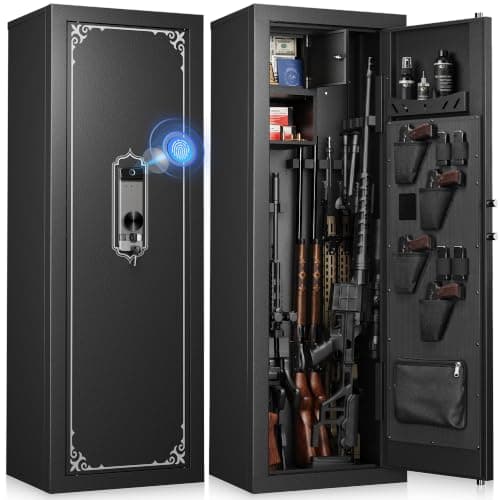
KAER 59in Biometric with Top Lock Box

A tall biometric cabinet with a separate lock box inside it, so rifles stand upright on their own and handguns and documents are secured separately. Upright storage is the thing cabinets at this price get right and cases get wrong.

A cabinet is theft deterrence and organization, not a climate-controlled vault. Whatever you store in, the humidity control and the oil film in this guide are what actually stop rust.

$239.99Amazon (affiliate link)

$269.9911% off

Price as of October 4, 2026. Prices move — Amazon's is the one that counts.

#ad · we may earn a commission from this link to KAER 59in Biometric with Top Lock Box

The verdict first: the container matters less than the air inside it. Clean the gun properly, leave a thin film of oil on every steel surface, store it muzzle down or upright and never in closed foam, keep the relative humidity somewhere around forty to fifty percent, and check on it twice a year. Do that in a hundred-and-seventy-dollar cabinet and the gun will be fine. Skip it in a five-thousand-dollar safe and it will not.

This is a different question from which safe to buy, which is about security, and from which case to fly with, which is about a federal rule. This page is about a rifle you are not going to touch for a year.

Why rust happens in storage and not in use

A gun you shoot gets handled, wiped and oiled constantly. A gun in storage gets none of that, and three things work on it undisturbed:

  1. Moisture in the air. Steel rusts fastest above about sixty percent relative humidity. A garage, a basement or an outside-wall closet routinely sits there for months.
  2. Fingerprints. Skin leaves salt and acid. A thumbprint left on bare steel for a year etches a thumbprint into the steel, permanently. This is the most common storage damage there is and it is entirely preventable with a wipe-down.
  3. Trapped moisture against the metal. Which is the foam problem, below, and the reason a "protective" case can be worse than no case.

The foam problem, which almost nobody is told

Closed-cell foam and fitted egg-crate liners hold moisture against steel. A hard case is sealed, which means whatever humidity was in the room when you shut it is now living in there with the rifle, and the foam gives it somewhere to sit in permanent contact with the metal. Same for a fleece-lined soft case, only worse, because the fabric absorbs and holds water.

This is why a gun stored in a sealed case in a damp garage can come out worse than one leaned in a dry closet. A hard case is the right tool for transport and for impact protection. If you are going to store in one, store it somewhere with stable humidity, put a desiccant pack in with the rifle, and open it twice a year.

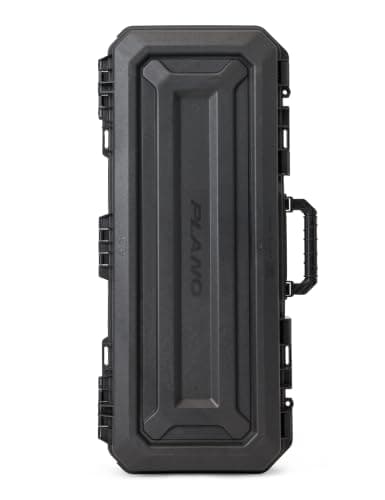
The Plano All Weather case is on this page for the specific case where sealing is what you want — a gun going into a damp outbuilding, where the enemy is liquid water rather than humidity — and it still wants a desiccant inside it.

What to do, in order

  1. Confirm it is unloaded, then confirm it again. Chamber, magazine well, magazine. Every time, no exceptions, and especially on a gun that is about to be out of your hands for a year.
  2. Clean it properly. Powder residue attracts moisture and is mildly corrosive. Bore, chamber, bolt face, locking lugs. A universal kit covers it, and our cleaning kit roundup goes through what is actually in them.
  3. Dry it completely. Solvents evaporate; water in a trigger group does not, quickly.
  4. Oil every steel surface, thinly. A film, not a coating. Pay attention to the bore and to the places you grip. Then wipe the outside with an oiled cloth — and from that point on, handle it by the cloth, not by hand.
  5. Store magazines empty or lightly loaded, and leave springs relaxed where the design allows it. This matters less than the internet claims and costs nothing.
  6. Remove slings and soft accessories. Leather and nylon hold moisture and will mark a finish where they sit.
  7. Put it away muzzle down or standing upright. Excess oil in a bore runs with gravity. Muzzle up means it runs into the action and the stock; muzzle down means it runs out.
  8. Control the humidity, and know what it is. See below.
  9. Diarize a check. Twice a year. Open it, look at it, wipe it, close it. That one habit catches everything else this page is trying to prevent.

Humidity control, and the thing we are not going to link you

Aim for roughly forty to fifty percent relative humidity. Below about thirty percent is hard on wooden stocks; above about sixty percent is where steel starts rusting in earnest. The only way to know where you are is to measure it, and a cheap hygrometer in the cabinet is the most useful ten dollars in this entire guide.

The options, in order of how well they work. A dehumidifier in the room is the real answer, because it fixes the whole environment rather than one box. A low-wattage rod inside a cabinet works by keeping the air slightly warmer than the room so moisture does not condense on the steel. Rechargeable silica gel canisters work in a genuinely sealed container and do very little in a ventilated cabinet. And where you store matters most of all: an interior closet beats a garage and beats a basement, every time, for free.

We are not linking a dehumidifier, a rod or a desiccant canister, and here is why: no such product has ever been resolved into this site's registry against a live listing, and this site does not publish a product link, a price or a recommendation it has not verified. Buy one locally or from whoever you trust — the specification to look for is a UL-listed rod sized to your cabinet's cubic footage, or rechargeable silica gel rated by weight of water absorbed. When we have a verified listing, it will appear here.

Ammunition, separately

Ammunition stores better than guns and still wants the same conditions: cool, dry, dark and stable. Keep it in its original boxes inside a sealed container with a desiccant pack, away from solvents and oils — penetrating oil wicking into a primer is a real way to ruin a case of ammunition quietly. Store it separately from the firearms where your local law requires it, and check what that law says.

Optics come off nothing. A scope left mounted is fine; what you should do is clean the glass properly, leave the caps on, and back the turrets off any hard stop.

The short answer

Quick picks

#ProductBest forScorePrice
01
KAER KAER 59in Biometric with Top Lock Box
KAER 59in Biometric with Top Lock Box

The separate top lock box is genuinely useful — a place for documents, a handgun or ammunition that is not the main compartment.

Best cabinet for storing rifles upright
7.2
$239.99Amazon (affiliate link)
02
KAER KAER 10-15 Gun Biometric Cabinet
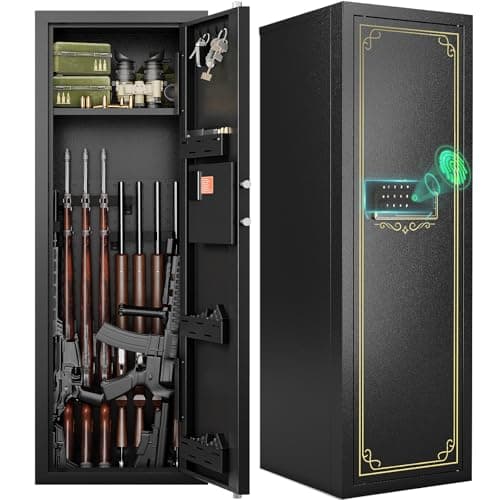
KAER 10-15 Gun Biometric Cabinet

Capacity for a real collection with fingerprint access and adjustable shelving, at a price where most storage is a locking cabinet with no lock worth the name.

Best value cabinet
7.4
$169.99Amazon (affiliate link)
03
Plano Plano All Weather 36in Tactical Case
Plano All Weather 36in Tactical Case

Watertight, dust-proof, airline approved, with pluck-to-fit foam — Plano has been making these long enough that the design is settled.

Best sealed case for a gun going away for a year
8.2
$92.62Amazon (affiliate link)
04
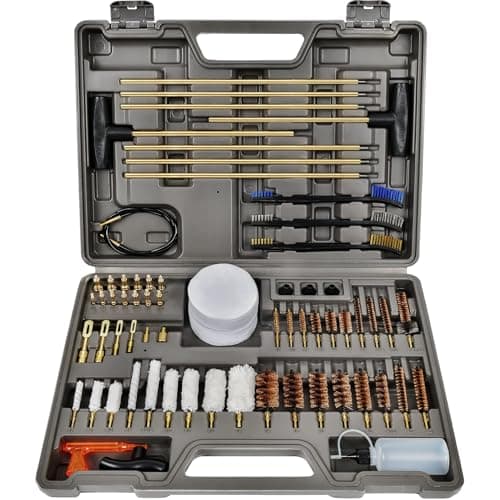
GLORYFIRE GLORYFIRE Elite Universal Kit
GLORYFIRE Elite Universal Kit

Reinforced rods, a proper case and jags rather than only slotted tips — the kit that actually covers a mixed collection.

Best kit for the clean that has to happen first
8.0
$69.99Amazon (affiliate link)

#ad · Live prices from the Amazon Creators API, as of October 4, 2026. Where we have no verified live price we show none — a gap beats a number that has rotted.

In detail

The picks, in full

01
KAER KAER 59in Biometric with Top Lock Box

Best cabinet for storing rifles upright

KAER 59in Biometric with Top Lock Box

59 in tall10-15 capacitySeparate top lock boxDoor organizer
7.2/10

The separate top lock box is genuinely useful — a place for documents, a handgun or ammunition that is not the main compartment.

Steel gauge
5
Lock reliability
7
Capacity
9
Anchoring
7
Value
8

What's good

  • The internal lock box gives you a second security layer for the most sensitive items
  • Door organizer for magazines, tools and optics
  • Full height suits long guns with optics mounted

What's not

  • Tall cabinets are top-heavy and must be anchored to a wall
  • Same cabinet-not-safe caveat

Skip it if…

…you cannot anchor it to a stud. A tall unanchored cabinet is both a security failure and a tipping hazard.

$239.99Amazon (affiliate link)

$269.9911% off

Price as of October 4, 2026. Prices move — Amazon's is the one that counts.

#ad · we may earn a commission from this link to KAER 59in Biometric with Top Lock Box

02
KAER KAER 10-15 Gun Biometric Cabinet

Best value cabinet

KAER 10-15 Gun Biometric Cabinet

10-15 long gun capacityBiometric + keypadAdjustable shelfRemovable racks
7.4/10

Capacity for a real collection with fingerprint access and adjustable shelving, at a price where most storage is a locking cabinet with no lock worth the name.

Steel gauge
5
Lock reliability
7
Capacity
9
Anchoring
7
Value
9

What's good

  • Fingerprint access is genuinely faster than a dial in a hurry, and the keypad is a working backup
  • Removable racks let you configure for long guns, pistols or a mix
  • Capacity that actually matches a collection rather than a starter set

What's not

  • This is a steel security cabinet, not a fire-rated or burglary-rated safe — see the note below
  • Biometric readers can fail; the keypad and key backup are the real access path
  • Needs anchoring to be meaningfully secure

Skip it if…

…you want fire protection or resistance to a determined attack. A cabinet at this price is a deterrent to opportunists and to children, not a safe.

$169.99Amazon (affiliate link)

Price as of October 4, 2026. Prices move — Amazon's is the one that counts.

#ad · we may earn a commission from this link to KAER 10-15 Gun Biometric Cabinet

03
Plano Plano All Weather 36in Tactical Case

Best sealed case for a gun going away for a year

Plano All Weather 36in Tactical Case

36 inWatertight sealPluck-to-fit foamAirline approved
8.2/10

Watertight, dust-proof, airline approved, with pluck-to-fit foam — Plano has been making these long enough that the design is settled.

Protection
9
Sealing
9
Lockability
8
Portability
7
Value
8

What's good

  • Genuine watertight seal with a pressure equalization valve, so the case does not pop open at altitude
  • Pluck-to-fit foam lets you shape it around exactly what you carry
  • Meets airline requirements for a lockable hard-sided case
  • Plano's track record on cases is decades long

What's not

  • 36 inches is short for a full-length rifle with an optic
  • Padlocks not included

Skip it if…

…you need to transport a full-length hunting rifle. Measure first — 36 inches is a carbine case.

$92.62Amazon (affiliate link)

$109.9916% off

Price as of October 4, 2026. Prices move — Amazon's is the one that counts.

#ad · we may earn a commission from this link to Plano All Weather 36in Tactical Case

04
GLORYFIRE GLORYFIRE Elite Universal Kit

Best kit for the clean that has to happen first

GLORYFIRE Elite Universal Kit

Universal, all calibersReinforced rodsBrass jagsHard case
8.0/10

Reinforced rods, a proper case and jags rather than only slotted tips — the kit that actually covers a mixed collection.

Completeness
9
Bore safety
7
Case quality
9
Value
7

What's good

  • Brass jags give better patch contact than slotted tips, which is what actually cleans a bore
  • Reinforced rods flex less at the joints than the thin rods in budget kits
  • Organized hard case means you can tell what is missing
  • Covers rifle, pistol and shotgun in one kit

What's not

  • Multi-section rods still have joints, which can trap grit
  • Most expensive kit here

Skip it if…

…you own one rifle. A bore snake and a bottle of solvent cost a fraction and do the routine job better.

$69.99Amazon (affiliate link)

Price as of October 4, 2026. Prices move — Amazon's is the one that counts.

#ad · we may earn a commission from this link to GLORYFIRE Elite Universal Kit

Buying notes

Buy the hygrometer before the dehumidifier

Ten dollars tells you whether you have a problem at all. A great many people in dry climates are solving a problem they do not have, and a great many in humid ones have no idea how bad it is.

Upright storage beats flat storage

It keeps oil out of the action, keeps barrels off each other, and makes it obvious at a glance whether everything is where it should be. It is the main practical advantage of a cabinet over a stack of cases.

A cabinet is deterrence, not a vault

Sheet-steel cabinets stop opportunists, children and curiosity. They do not stop a determined thief with tools, and nothing at this price does. Our safe roundup is honest about where that line sits.

Replace fitted foam with a silicone-treated sock

If a case has snug foam and the gun is going into storage, a treated gun sock between the steel and the foam is a few dollars and removes the permanent-contact problem. Or store in a cabinet and keep the case for transport, which is what it is for.

Write down what you own

Serial numbers, photographs, and where the list is kept — and not inside the cabinet. That is an insurance and recovery matter rather than a rust one, and it takes twenty minutes once.
How these were picked

I haven't handled these. Here's what I did instead.

Everyone in this category says they tested twenty of these. I haven't tested any, and I say so. What I do instead: read the manufacturer's manual and published specification, compile the numbers that decide the purchase, do the arithmetic in the open, check the live price, and name one product to skip. The scores above are judgments from that research against a published rubric — they are not measurements I took, because I do not have a lab and I am not going to pretend otherwise.

Questions

Frequently asked

What humidity should guns be stored at?
Roughly forty to fifty percent relative humidity. Above about sixty percent steel rusts in earnest; below about thirty percent is hard on wooden stocks. Measure it with a cheap hygrometer before you spend anything on controlling it.
Is it bad to store a gun in a hard case?
For long-term storage in a damp room, yes — a sealed case traps whatever humidity was in the air and the foam holds it against the steel. Hard cases are for transport and impact protection. If you must store in one, add a desiccant pack, keep it somewhere with stable humidity, and open it twice a year.
Muzzle up or muzzle down?
Muzzle down, or standing upright. Excess oil in the bore follows gravity, and you would rather it ran out of the muzzle than back into the action and the stock.
Should I leave magazines loaded in storage?
Store them empty or lightly loaded for a long layup. Quality magazine springs tolerate compression far better than folklore suggests, but there is no benefit to a year under full compression and unloading them costs nothing.
Do I need a dehumidifier rod in a cabinet?
Only if the cabinet sits somewhere humid — and a dehumidifier in the room is the better fix, because it protects everything rather than one box. Look for a UL-listed rod sized to the cabinet's cubic footage. We do not link one, because we have no verified live listing for one; see the note on the page.
How often should I check a stored gun?
Twice a year. Open it, look at the bare steel, wipe it with an oiled cloth, close it. That single habit catches a humidity problem while it is still a smudge rather than a pit.

Keep reading

Receipts

Sources

We do not run a testing lab and we do not pretend to. Where a measured number came from a manufacturer's published specification or someone else's lab, we name them and link them. Where we could not verify something, we say so on the page rather than quietly leaving it out. Read the full method.