We earn a commission when you buy through our Amazon links, at no extra cost to you. It never changes the order of the picks, and we say so when the cheaper thing is the better buy. How this works.
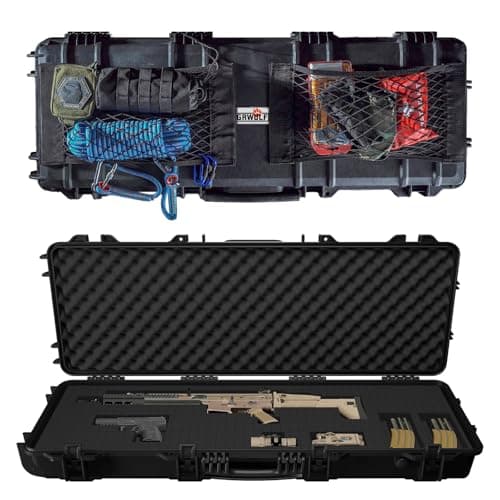
Gun cases split into two jobs that people conflate. A truck case protects against knocks, dust and weather in a vehicle. A travel case has to survive airline baggage handling and meet a legal requirement: a locked, hard-sided container that cannot be readily pried open.
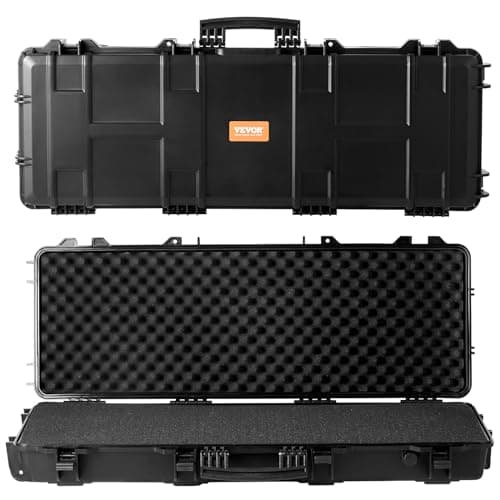
The specifications that tell you which you are looking at are a stated IP rating — IP67 means dust-tight and survives immersion — and lockable hasps that genuinely accept a padlock through a metal or reinforced eyelet rather than a thin plastic tab.
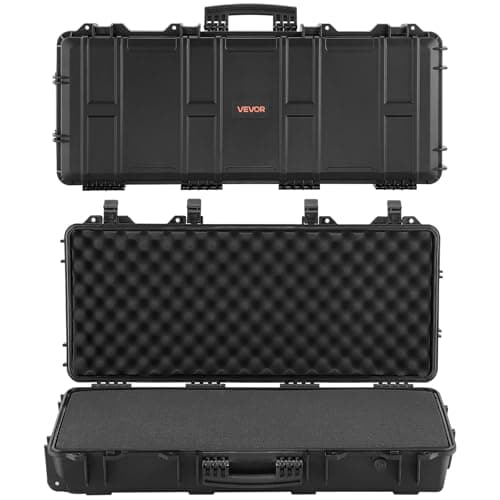
The third specification is one people get wrong constantly: internal length. A 36-inch case is a carbine case. A full-length hunting rifle with a scope needs 42 to 48 inches of internal space, and the external dimension in the listing is not the internal one. Measure the rifle first.
Note on rules: airline and carrier requirements change and vary by carrier and destination. Check the current rules directly with your airline before you travel — this page describes what cases do, not what any particular carrier requires today.
If the case is specifically for flying, the requirement is narrower than "hard case" and it is worth getting exactly right — our air travel case page quotes the TSA rule in full and reaches a different verdict about the cheap case than this page does. For a gun going into a case and then not being touched for a year, see long-term gun storage — a sealed case in a damp room is a rust problem, not a solution.
A case protects the gun in transit; a bag carries everything else. If what you actually need is the second one, the range bag roundup is the page — and the one accessory that belongs with a long gun in either is a sling that quick-adjusts.
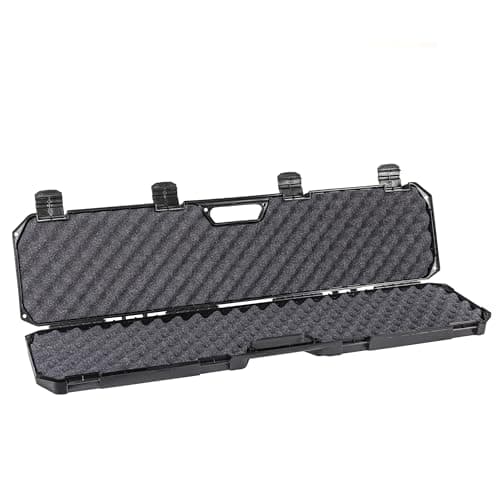
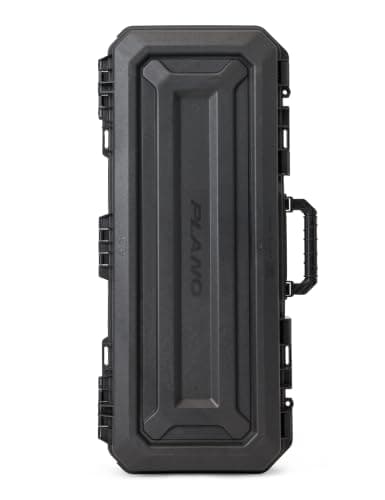
Fine as a padded case for the back of a truck. Not fine as a travel case, and the listing does not make that distinction: airlines require a lockable, hard-sided container, and an economy case with no stated ingress rating and light hasps is not what that means.
#ad · Live prices from the Amazon Creators API, as of October 19, 2026. Where we have no verified live price we show none — a gap beats a number that has rotted.
42 inFoam interiorEconomy constructionNo stated IP rating
5.0/10
Fine as a padded case for the back of a truck. Not fine as a travel case, and the listing does not make that distinction: airlines require a lockable, hard-sided container, and an economy case with no stated ingress rating and light hasps is not what that means.
Protection
5
Sealing
3
Lockability
4
Portability
7
Value
6
What's good
+Cheapest case here
+Foam interior protects against knocks
+Correct length
What's not
−No stated ingress protection rating, so no claim about water or dust is testable
−Airline firearm transport requires a locked hard-sided container that cannot be pried open — light economy hasps are the specific thing that fails that requirement
−Thin shells crush under airline baggage handling, which is the load case that matters
−The VEVOR 42in costs twice as much, states IP67, and has hasps designed to be padlocked
Skip it if…
…the case will fly, or hold anything valuable. As a truck-bed case it is fine; as a travel case it is the wrong product.
Measure your longest rifle including the muzzle device and any mounted optic, add two inches for foam, and buy internal length above that number. This is the single most common mistake in this category and it is entirely avoidable.
Foam type
Pluck-to-fit (pick and pluck) foam is pre-cut into cubes you remove to shape a cavity. It is fast, forgiving and slightly less precise. Solid foam that you cut yourself gives a better fit and is unforgiving of mistakes. Layered foam sheets let you build the depth you need.
The pressure valve
A sealed case flown in a cargo hold experiences a pressure change, and a case without an equalization valve either becomes very hard to open or stresses its seal. Any case claiming a real IP rating should have one, and it is worth checking for.
Padlocks
Rarely included. Non-TSA padlocks are generally required for firearm transport rather than TSA-recognized locks — the point is that only you can open it — but confirm the current rule with your airline, because this is precisely the area where guidance changes.
Wheels, if it is heavy
A loaded 43-inch case is genuinely heavy and airports are large. Wheels are worth the extra failure points if the case travels; they are dead weight if it lives in a truck.
How these were picked
I haven't handled these. Here's what I did instead.
Everyone in this category says they tested twenty of these. I haven't tested any, and I say so. What I do instead: read the manufacturer's manual and published specification, compile the numbers that decide the purchase, do the arithmetic in the open, check the live price, and name one product to skip. The scores above are judgments from that research against a published rubric — they are not measurements I took, because I do not have a lab and I am not going to pretend otherwise.
Questions
Frequently asked
What size gun case do I need?+
Measure your longest rifle with the optic and muzzle device mounted, add about two inches for foam, and buy internal length above that. A 36-inch case suits carbines; full-length hunting rifles usually need 42 to 48 inches.
What does IP67 mean on a gun case?+
Dust-tight, and protected against immersion in up to one meter of water for thirty minutes. It is a tested standard rather than a marketing word, which is why a case that states it is telling you something a case claiming "waterproof" is not.
Can I fly with a gun case?+
Firearms generally travel in checked baggage in a locked, hard-sided container, declared at check-in. The specific requirements vary by airline and destination and do change, so confirm directly with your carrier before you travel.
Soft case or hard case?+
Soft cases are lighter and fine for transporting a rifle to a local range in a vehicle. Hard cases are required for air travel, and they are the only option that protects against crushing and weather.
We do not run a testing lab and we do not pretend to. Where a measured number came from a manufacturer's published specification or someone else's lab, we name them and link them. Where we could not verify something, we say so on the page rather than quietly leaving it out. Read the full method.