We earn a commission when you buy through our Amazon links, at no extra cost to you. It never changes the order of the picks, and we say so when the cheaper thing is the better buy. How this works.
More rifles are worn by careless cleaning than by shooting. The two things that actually damage a barrel are the crown — the machined edge at the muzzle, which determines how evenly gas releases from the bullet — and the rifling at the throat.
Both are damaged by the same thing: a hard object dragged carelessly through the bore. That means the rules are simple and they are about technique before they are about products.
Clean from the chamber toward the muzzle whenever the action allows it, so nothing is dragged back across the crown. Use a bore guide to keep the rod centered and to stop solvent running into the action. Use coated or brass rods, never bare steel, and never a rod with grit on it — grit is the abrasive, not the rod.
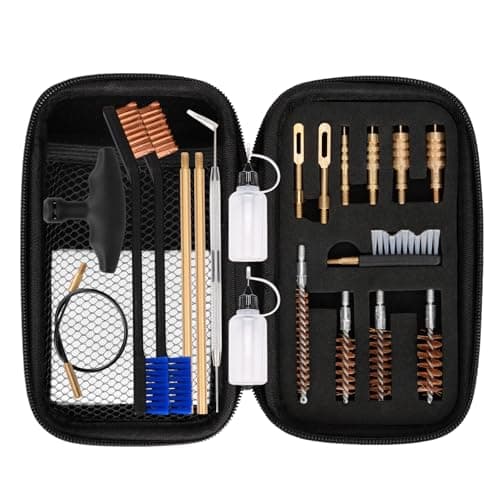
And for routine cleaning, a bore snake pulled chamber-to-muzzle avoids nearly all of these risks. Keep the rod kit for the occasional deep clean.
One case where the cleaning is not routine: a gun about to be put away for a season or a year. That wants a full clean, a thin oil film on every steel surface and attention to the air around it — the long-term storage page walks through the sequence, including why a foam-lined case can be the worst place to leave a rifle.
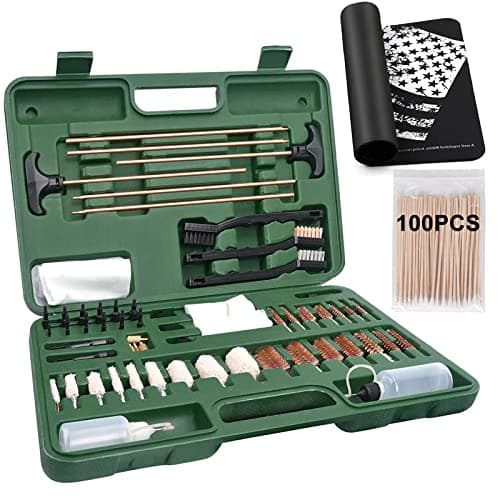
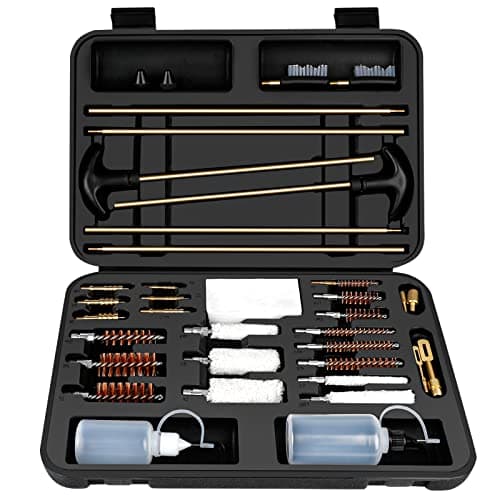
The components are fine. The problem is the format: multi-section rods flex at every joint and the joints trap grit, and a rod that flexes drags abrasive against your rifling. For routine cleaning a bore snake or a one-piece coated rod is genuinely better.
#ad · Live prices from the Amazon Creators API, as of October 19, 2026. Where we have no verified live price we show none — a gap beats a number that has rotted.
In detail
The picks, in full
01
Best overall
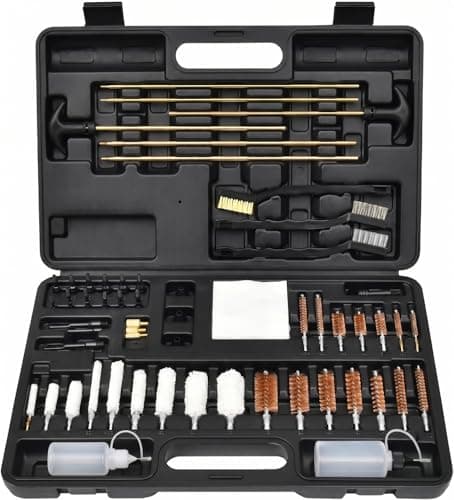
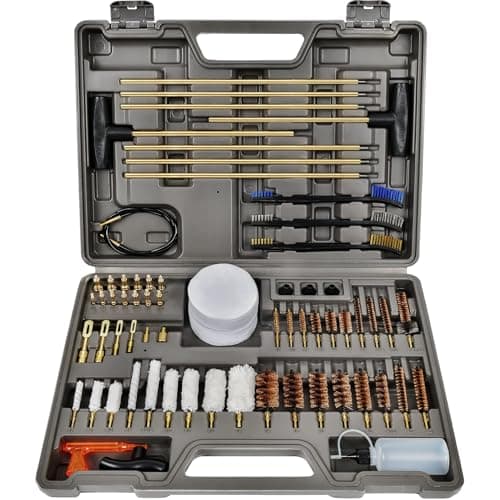
GLORYFIRE Elite Universal Kit
Universal, all calibersReinforced rodsBrass jagsHard case
8.0/10
Reinforced rods, a proper case and jags rather than only slotted tips — the kit that actually covers a mixed collection.
Completeness
9
Bore safety
7
Case quality
9
Value
7
What's good
+Brass jags give better patch contact than slotted tips, which is what actually cleans a bore
+Reinforced rods flex less at the joints than the thin rods in budget kits
+Organized hard case means you can tell what is missing
+Covers rifle, pistol and shotgun in one kit
What's not
−Multi-section rods still have joints, which can trap grit
−Most expensive kit here
Skip it if…
…you own one rifle. A bore snake and a bottle of solvent cost a fraction and do the routine job better.
The components are fine. The problem is the format: multi-section rods flex at every joint and the joints trap grit, and a rod that flexes drags abrasive against your rifling. For routine cleaning a bore snake or a one-piece coated rod is genuinely better.
Completeness
6
Bore safety
4
Case quality
5
Value
6
What's good
+Inexpensive
+Brass components will not score the bore themselves
What's not
−Sectioned rods flex at each joint, and a flexing rod lets the brush or jag ride against the rifling rather than centered in the bore
−Rod joints are exactly where grit collects, and grit dragged through a bore is what actually wears rifling
−Cleaning from the muzzle rather than the chamber — which sectioned rods encourage — risks damaging the crown, and crown damage measurably affects accuracy
−A $15 bore snake pulled from chamber to muzzle does the routine job with none of these risks
Skip it if…
…this will be your only cleaning tool. Buy a bore snake for routine cleaning and a one-piece coated rod for the occasional deep clean.
A jag pushes a patch tightly against the bore in every direction. A slotted tip drags a folded patch through, contacting unevenly. Kits that include brass jags in the right calibers are doing the job properly; kits with only slotted tips are cutting cost at the part that matters.
Brushes: bronze, not stainless
Bronze is softer than barrel steel and will not scratch rifling. Stainless brushes will. Nylon is gentler still and adequate for light fouling. Replace bronze brushes when the bristles splay — a worn brush does nothing.
Rod material and construction
One-piece coated rods are best: no joints to trap grit, no flex to let the brush ride into the rifling. Sectioned rods are portable and are a compromise. Bare aluminum is the worst choice, because aluminum is soft enough to embed grit and then act as a lap.
A bore guide is the accessory to add
Rarely included and genuinely worth buying. It centers the rod in the bore, keeps it off the throat, and stops solvent running back into the trigger group. For a bolt rifle it is the single best five dollars in this category.
Solvent and oil are consumables, not part of the kit decision
Most included solvents are adequate. Buy the kit for the hardware and buy solvent separately as you use it. What you should not do is over-oil: a bore left wet with oil collects dust and, in a semi-auto, causes more problems than it prevents.
How these were picked
I haven't handled these. Here's what I did instead.
Everyone in this category says they tested twenty of these. I haven't tested any, and I say so. What I do instead: read the manufacturer's manual and published specification, compile the numbers that decide the purchase, do the arithmetic in the open, check the live price, and name one product to skip. The scores above are judgments from that research against a published rubric — they are not measurements I took, because I do not have a lab and I am not going to pretend otherwise.
Questions
Frequently asked
How often should I clean a rifle?+
Less often than most people think. A light bore-snake pass and a wipe-down after each outing, a proper clean every few hundred rounds or before storage. Many accurate rifles shoot better slightly fouled than immediately after a deep clean.
Should I clean from the muzzle or the chamber?+
From the chamber whenever the action allows it. The crown at the muzzle is a precision surface, and dragging a rod or brush back across it is the most common way people damage accuracy. Where you must clean from the muzzle, use a muzzle guide.
Are bore snakes good enough?+
For routine cleaning, yes — arguably better, because there is no rod to flex into the rifling and no crown risk. For heavy copper fouling or a genuine deep clean you still want rods, brushes and solvent.
Do I need a bore guide?+
For a bolt rifle you clean with rods, yes — it centers the rod, protects the throat and keeps solvent out of the action. It is rarely included in kits and it costs very little.
We do not run a testing lab and we do not pretend to. Where a measured number came from a manufacturer's published specification or someone else's lab, we name them and link them. Where we could not verify something, we say so on the page rather than quietly leaving it out. Read the full method.