Section 06 · Shooting Gear
What Makes a Good 3-Gun & USPSA Pistol
Three tiers, three genuinely different arguments, and a strong opinion about which one a new competitor should actually start with. No links, no prices — the gun is a dealer purchase.
We earn a commission when you buy through our Amazon links, at no extra cost to you. It never changes the order of the picks, and we say so when the cheaper thing is the better buy. How this works.
The pistol is the gun a 3-Gun competitor is most likely to already own and least likely to have chosen for competition. It is also the one where the tiers are genuinely, obviously different from one another — unlike rifles, where the differences are subtle, a 2011 and a striker-fired polymer pistol feel like different sports.
There is nothing to buy on this page. This site does not link, price or recommend firearms, receivers, barrels, triggers or magazines anywhere, and that is not going to change for a page about competition guns. Amazon does not sell them. Buy the gun from a dealer, in person, with your hands on it first. The accessories it needs are ranked on the gear pages linked throughout, and those are the only things here anyone is paid for.
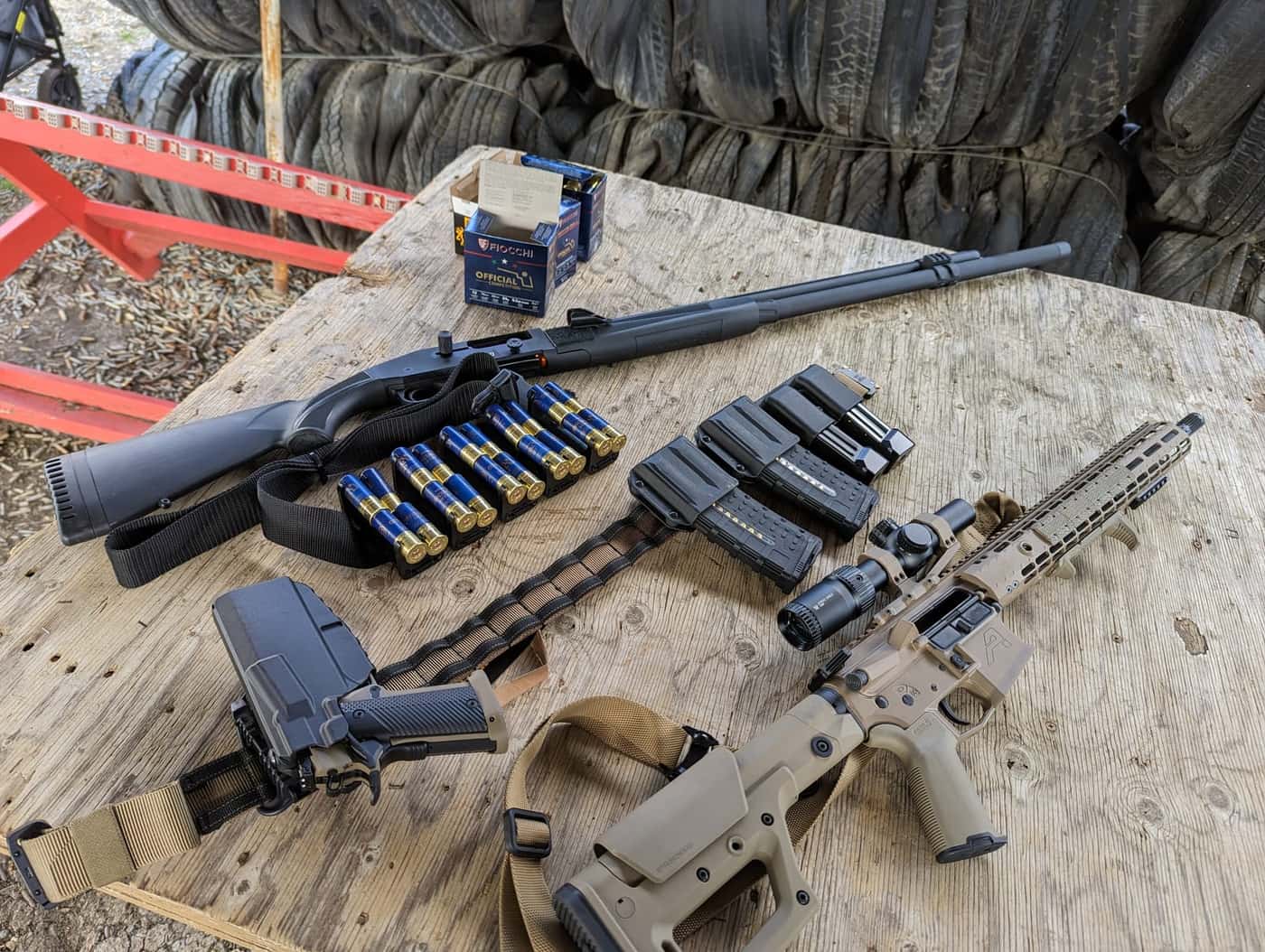
What actually makes a pistol fast
Before the tiers, the four things that matter, in the order they matter:
- Trigger. Weight, wall, break and reset. This is most of it. A trigger you can feel the reset on lets you shoot pairs at a speed the gun's sights cannot hold you back from.
- Grip. How high your hand sits relative to the bore, and how much of the grip your hand actually contacts. High and full means less muzzle flip for the same round.
- Sights or optic. A pistol red dot is now the default in most divisions that allow one, and it is a genuinely large difference for most shooters.
- Weight. Heavier guns recoil less. They are also heavier to hold up and to run with, which is a bigger deal in 3-Gun than in USPSA because you are carrying two other guns.
Notice that magazine capacity is not on that list. It is a division question, not a shooting question.
The 2011 tier
The 2011 is a double-stack 1911 — the 1911's single-action trigger and grip angle on a wider frame. What you are buying is that trigger. A good single-action trigger with a short, positive reset is the fastest thing you can put in your hand, and everything else about the platform is downstream of preserving it.
Staccato is the name that took this platform out of pure gamer territory and into general use, and I have written about why at length in why 2011 pistols earned the hype. The short version: they made a 2011 that people trust for duty and carry rather than only for match day, and that changed the platform's reputation.
The honest costs are steep. This tier is the most expensive by a wide margin. It demands more maintenance than a striker-fired gun. Magazines are expensive and need tuning. And the holster question is genuinely harder — which is why the Staccato holster page exists as its own thing. Current model specifications are at Staccato.
The CZ Shadow 2 tier
The Shadow 2 is the steel-framed hammer-fired answer, and it is the pistol that wins an enormous amount of USPSA Production and Carry Optics shooting. The argument for it is different from the 2011's: rather than a single-action trigger, you get a heavy steel frame and a grip geometry that sits your hand extraordinarily low relative to the bore.
That combination makes the gun track flat in a way that is immediately obvious the first time you shoot one. It is also, straightforwardly, heavy — which is a virtue standing on a USPSA stage and a cost when you are running a 3-Gun course with a rifle and a shotgun as well.
It sits well below the 2011 tier on price while being a genuinely serious competition pistol, which is why so many people land here. Specifications are at CZ-USA.
The Glock 34 tier
And here is the recommendation most pages will not make: if you are new, this is the tier to start in.
The long-slide striker-fired polymer pistol — the Glock 34 is the archetype, and there are several equivalents — gives you a longer sight radius, a slide that is easy to run, a trigger that is entirely adequate, a gun that is light enough to carry through a 3-Gun stage, and an aftermarket and parts availability that nothing else matches. It is the cheapest of the three tiers by a distance.
What you give up is trigger quality relative to a 2011 and flat tracking relative to a Shadow 2. For a new competitor, neither is the limiting factor. Your draw, your transitions and your trigger press are the limiting factor, and every dollar not spent on the pistol is a dollar spent on ammunition, which is what fixes those. Specifications are at GLOCK.
The optic question
Most competitive divisions now allow a pistol red dot, and for most shooters it is worth more than any upgrade to the gun underneath it. The dot removes the need to align two sights and lets you shoot with your focus on the target, which is where you actually want it when the target is moving or partially obscured.
The counterargument is real: dots have batteries, dots can fail, and learning to find the dot on the draw is a skill that takes deliberate practice before it is faster than irons. If you go this way, budget for the dry-fire time — see shot timers and dry-fire gear. Optic choices for this platform are covered in best red dots for 2011 pistols, which applies well beyond 2011s.
Holster and belt matter more than the gun
A cheaper pistol in a properly positioned holster on a stiff belt will out-draw an expensive pistol hanging off a soft belt every single time. The draw is where a competition pistol setup is won, and it is almost entirely a belt-and-holster problem rather than a gun problem. That is the one part of this subject we do rank and price: competition belts and holster setups.
Questions
Frequently asked
Is a 2011 worth it for a club-level shooter?
Shadow 2 or Glock 34 for USPSA?
Do I need a red dot on my pistol?
Why won't you link or price the pistols?
Keep reading
Related
- Competition belts & holster setupsWhere the draw is actually won. Ranked, with live prices.
- Why 2011 pistols earned the hypeThe long-form version of the 2011 argument, and its honest costs.
- Best holsters for StaccatoThe hardest holster-fit problem in the sport, solved properly.
- Best red dots for 2011 pistolsPistol optic choices, footprints and what actually survives a slide.
Receipts
Sources
- USPSA — Rifle, Shotgun and Multigun Rules, 2026-03 edition (digital rulebook)
- Staccato 2011 — pistol lineup and factory optic mounting kits
- CZ-USA — pistol specifications
- GLOCK — pistol specifications
- Safariland — holster retention levels and the ALS, SLS and GLS security mechanisms
We do not run a testing lab and we do not pretend to. Where a measured number came from a manufacturer's published specification or someone else's lab, we name them and link them. Where we could not verify something, we say so on the page rather than quietly leaving it out. Read the full method.